
Did you know that Colorado ranked sixth in the nation for major hail events in 2025, recording 244 instances of stones an inch or larger? For homeowners along the Front Range, a beautiful exterior isn’t just about curb appeal; it’s a critical defensive barrier against high-altitude UV exposure and evolving wildfire risks. You likely understand that standard materials often fail under the pressure of our intense sun and rapid freeze-thaw cycles. Choosing the right home siding options Colorado requires a forensic look at how different materials interact with our unique environment to prevent moisture intrusion and structural decay.
In this 2026 guide, you’ll discover the most durable, fire-resistant, and aesthetically superior materials engineered to withstand these extreme conditions while meeting the latest safety standards. We’ll examine high-performance solutions like James Hardie fiber cement and masonry that offer long-term peace of mind. By focusing on the complete outer system of your home rather than superficial fixes, you can ensure your property remains both protected and pristine for decades to come. Our approach prioritizes structural integrity and proactive protection to safeguard your family’s most significant investment.
Key Takeaways
- Learn why Colorado’s intense UV rays and temperature shifts require a siding system that serves as a structural shield rather than a simple cosmetic layer.
- Explore the most reliable home siding options Colorado homeowners can utilize, focusing on high-performance materials like fiber cement and specialized masonry.
- Understand how prioritizing durable materials over cheaper alternatives prevents hidden moisture damage and protects your long-term investment.
- Discover the essential role of non-combustible siding in home hardening strategies for residences located in wildfire-prone zones.
- Learn why a forensic evaluation of your home’s underlying structure is the only way to ensure new siding provides a permanent solution to environmental stress.
The Colorado Climate Challenge: Why Siding is Your First Line of Defense
Living in the Front Range means your home faces environmental stressors that would cause standard building materials in other regions to fail within a few years. We view siding not as a decorative skin, but as the most critical component of a building’s complete outer system. This system acts as a sophisticated barrier against moisture infiltration and air leakage, protecting the structural origins of the property. When evaluating Siding (construction), it’s vital to realize that Colorado’s 300 days of annual sunshine and rapid temperature fluctuations create a high-stakes environment for any material.
Urban homes in Denver often deal with intense heat and reflected UV, while high-altitude communities like Vail or Breckenridge face heavy snow loads and extreme cold. Regardless of location, the primary causes of siding failure in this state are thermal expansion and impact damage. Choosing the right home siding options Colorado requires a specialized understanding of how these forces interact with your home’s framing and insulation. Precision in the initial assessment is the only way to ensure a long-term solution rather than a temporary patch.
UV Exposure and High-Altitude Degradation
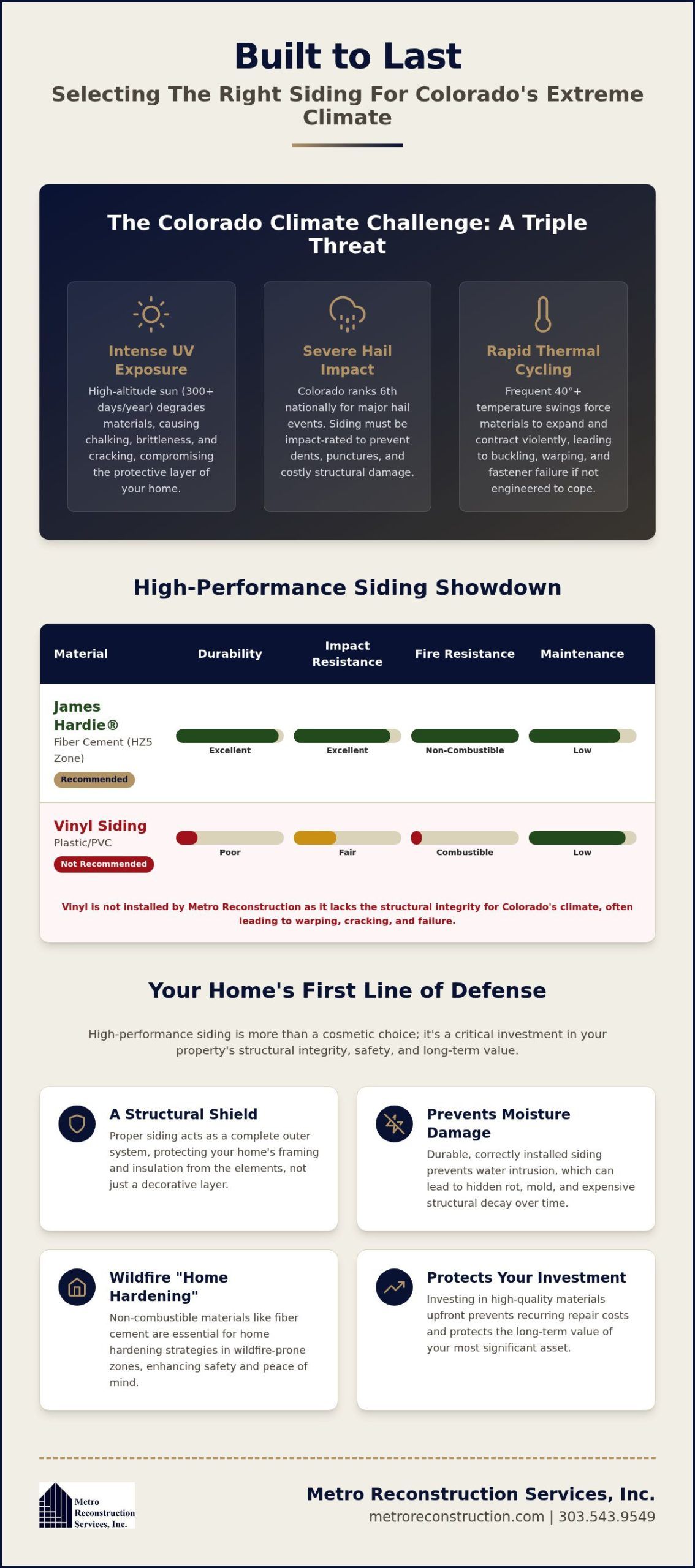
At 5,000 feet and above, solar radiation is significantly more intense than at sea level. This constant bombardment of UV rays breaks down the chemical bonds in inferior materials, particularly those with high plastic content. We often identify forensic signs of UV damage that homeowners miss, such as subtle chalking on the surface or increased brittleness that leads to hairline cracks. For any home siding options Colorado, color-fastness is essential. Materials must be able to maintain their structural integrity and aesthetic finish despite the relentless high-altitude sun. Without this resilience, the material will eventually warp and lose its protective capabilities.
Hail Impact and Thermal Cycling
Colorado sits firmly within “hail alley,” and as of 2025, the state remains a leader in major hail events. Impact-rated materials are no longer a luxury; they’re a necessity for long-term property preservation. Beyond physical impact, our climate is famous for rapid thermal cycling. A 40-degree temperature drop in just two hours is a common occurrence that forces siding materials to contract violently. If the installation doesn’t account for this movement, the siding will buckle or pull away from its fasteners. To maintain your home’s resilience, you can review our guide on Essential Exterior Home Repair in Boulder County for specialized maintenance insights. This proactive approach identifies underlying issues before they become expensive structural failures.
High-Performance Siding Options for Colorado Residences
Selecting the right material for your home’s exterior is a decision that impacts structural longevity for decades. At Metro Reconstruction, we focus exclusively on home siding options Colorado homeowners can trust to remain stable under pressure. This commitment to reliability is why we don’t offer or install vinyl siding. While vinyl is common in lower elevation regions, it lacks the structural integrity required to survive Colorado’s temperature swings without warping or cracking. We believe in providing solutions that address the building’s complete outer system rather than offering a temporary, low-quality patch.
James Hardie: Fiber Cement Excellence
James Hardie siding represents the industry standard for high-altitude performance, specifically through their HardieZone system. For our region, the HZ5 product line is engineered to resist freezing temperatures, snow, and ice. This material is non-combustible, which is a critical factor for homes in Wildland-Urban Interface (WUI) zones. It doesn’t just look like wood; it provides a level of fire protection that natural wood simply cannot match. However, the material’s performance depends entirely on precision. We emphasize professional installation because even the best fiber cement can fail if the moisture management layers behind it aren’t handled with forensic accuracy. If you’re considering an upgrade, you can explore our specialized siding services to see how we manage these technical complexities.
Stucco and Masonry: The Premium Protection
Traditional stucco and EIFS (Exterior Insulation and Finish Systems) offer a seamless thermal barrier that is highly effective at reducing air leakage. When installed with modern moisture mitigation techniques, stucco becomes a multi-generational solution for the Front Range. We also utilize stone masonry and masonry accents to provide superior protection for home foundations and high-impact areas. These materials offer a rugged aesthetic that complements the local landscape while serving as a dense shield against hail and wind-driven rain. For those dealing with existing issues, our expertise in Stucco and Masonry Repairs in Boulder ensures that restoration work addresses the underlying structural origins of the damage. By integrating these premium materials, we create an exterior that is as resilient as it is beautiful. You can reach our team at 303.543.9549 to discuss which high-performance system best suits your property’s specific elevation and exposure.
Durability vs. Maintenance: Evaluating Long-Term Siding Value
When evaluating home siding options Colorado, homeowners often mistake the lowest initial bid for the best value. We advocate for a more analytical approach that considers the total lifecycle cost of the building’s complete outer system. A superficial fix might save money today, but it frequently masks underlying structural origins of decay that lead to expensive restoration later. Choosing a material based solely on price ignores the reality of Colorado’s climate, where inferior products fail quickly, necessitating a second replacement within a decade.
The relationship between siding integrity and your home’s foundation is direct and undeniable. If the exterior cladding fails to shed water effectively, that moisture migrates downward, saturating the soil around your home. This process is a primary contributor to soil expansion and contraction, which eventually compromises the stability of the entire structure. Precision in the selection of high-performance caulking and sealants is equally vital; these components are the flexible joints of your siding system that prevent air and water from bypassing the primary barrier.
The Hidden Costs of Natural Wood
While cedar and redwood offer a classic aesthetic, they demand a constant maintenance cycle that many homeowners find exhausting. In our high-altitude environment, natural wood requires staining or sealing every three to five years to prevent the fibers from silvering and cracking under intense UV exposure. Beyond weather, woodpecker damage is a specific Colorado nuisance that can turn a beautiful cedar exterior into a perforated mess in a single season. We often recommend engineered alternatives, like James Hardie fiber cement, because they mimic the texture of natural wood while remaining impervious to pests and rot. This proactive choice eliminates the ongoing expense of repairs and repainting, providing true long-term value.
Moisture Intrusion and Structural Origins
Moisture mitigation is the prevention of water entering the structural envelope. When siding fails, the damage is rarely limited to the surface; it often reaches the wall sheathing and framing, creating a hidden environment for mold and rot. If these issues are left unaddressed, they can lead to significant foundation stabilization problems as water accumulates where it shouldn’t. Our forensic approach identifies these hidden failures before we install new materials, ensuring the new system rests on a healthy foundation. For a deeper understanding of how these elements interact, you can review our insights on Foundation Repair Services in Boulder. If you suspect your current siding is allowing moisture to reach your home’s core, contact us at 303.543.9549 to schedule a detailed evaluation.
Fire Mitigation and Home Hardening: Essential Colorado Siding Strategy
Home hardening is the process of making a structure more resistant to the intense heat and wind-driven embers associated with wildfires. In 2026, selecting home siding options Colorado is no longer just a matter of aesthetic preference; it’s a critical safety decision. The Colorado Wildfire Resiliency Code, which saw full enforcement begin in July 2026, now requires non-combustible or ignition-resistant materials in designated Wildland-Urban Interface (WUI) zones. This regulatory shift reflects a hard truth: most homes lost to wildfires are ignited by embers that find a weak point in the building’s complete outer system rather than by the fire front itself.
Choosing fire-rated siding materials offers significant insurance benefits in the current market. Carriers are increasingly prioritizing properties that demonstrate proactive risk reduction through certified non-combustible cladding. Beyond the financial advantages, proper siding installation ensures that fire cannot easily enter the attic or wall cavities. We focus on the precision of every joint and overlap to eliminate the entry points that embers use to bypass your home’s primary defenses. If you’re concerned about your property’s current vulnerability, you can contact our experts for a detailed evaluation of your exterior’s fire resilience.
Non-Combustible Materials and Fire Ratings
Class A fire-rated materials, such as traditional stucco and James Hardie fiber cement, provide the highest level of protection against flame spread. These materials are engineered to withstand extreme heat without contributing fuel to a fire. While the material itself is vital, the configuration of the system is equally important. Vertical seams and gaps are dangerous in fire-prone areas because they act as small pockets where embers can collect and smolder. By utilizing seamless thermal barriers or precision-fitted fiber cement, we create a continuous shield that protects the flammable structural origins of your home.
The Metro Approach to Wildfire Prevention Construction
Our methodology goes beyond the siding panels to include specialized vents and non-combustible trim that prevent ember ignition at the eaves and corners. We understand the cause and effect of how different siding types respond to radiant heat; for example, inferior materials can melt or warp long before the flames arrive, exposing the wooden framing beneath. Our team provides comprehensive fire mitigation inspections to identify these specific weaknesses. To learn more about our holistic approach to property preservation, visit our Fire Mitigation and Prevention Services page. For immediate assistance with your home hardening project, please call us at 303.543.9549 to speak with a seasoned specialist.
The Metro Reconstruction Approach: Precision Siding Installation
Since 1982, our family-owned firm has served as a dedicated partner for homeowners throughout the Front Range. We understand that selecting home siding options Colorado is more than a design choice; it’s a long-term investment in your property’s survival. Unlike contractors who focus on high-pressure sales and rapid turnover, Metro Reconstruction Services, Inc. shares the philosophy of reputable firms like Strother Built Construction by prioritizing the structural integrity of your home’s complete outer system. This philosophy ensures that our solutions address the root cause of failures rather than merely hiding them behind new panels.
Every project begins with a diagnostic phase that sets us apart. We employ a forensic approach to identify underlying rot, moisture intrusion, or framing issues that often go unnoticed by general installers. By uncovering these structural origins before the new siding is applied, we prevent the “superficial fix” trap that leads to recurring costs. Our process moves methodically from this initial diagnostic to a thorough final walkthrough, providing a level of precision that only four decades of local experience can offer.
Forensic Diagnostics and Accuracy
We never install new materials over a compromised base. This is why our technicians meticulously inspect the substrate and flashing before every installation to ensure a perfectly sealed envelope. Accuracy in this initial stage is our foundational promise. To provide our clients with absolute peace of mind, we utilize fixed-price project fees, eliminating the uncertainty of hidden costs during the reconstruction process. For homeowners envisioning a complete transformation, our Design-Build Services offer a seamless path from diagnostic discovery to a custom exterior remodel.
Your Partner in Property Preservation
Our commitment to craftsmanship is rooted in a sense of protective care for your investment. Metro Reconstruction Services, Inc. doesn’t just provide a service; we build long-term structural solutions that withstand the rigors of our high-altitude climate. If you’re ready to move beyond temporary patches and invest in the lasting health of your home, we invite you to explore our full range of Services for a comprehensive overview of our capabilities. You can reach our seasoned team directly at 303.543.9549 to schedule your initial consultation. Let’s ensure your home siding options Colorado provide the reliability and peace of mind you deserve. You can also visit our contact page to start your project today.
Securing Your Home’s Future Against the Colorado Elements
Protecting a property in the Front Range requires more than a simple cosmetic upgrade; it demands a strategic investment in the building’s complete outer system. We’ve explored how high-performance materials and home hardening techniques create a necessary shield against intense UV exposure and wildfire risks. With over 40 years of local expertise, Metro Reconstruction Services, Inc. specializes in identifying the structural origins of failure to provide permanent solutions. By choosing the right home siding options Colorado, you ensure your residence remains resilient despite our state’s demanding climate and rapid temperature shifts.
Our forensic approach to structural integrity guarantees that every installation rests on a healthy substrate, preserving your investment for decades to come. Whether you’re upgrading to James Hardie fiber cement or restoring premium masonry, precision in the initial diagnostic is the foundation of our promise. Protect your home with expert siding installation and the peace of mind that comes from a dedicated partner. Contact Metro Reconstruction Services, Inc. today or call us at 303.543.9549 to schedule your professional evaluation. We look forward to helping you preserve the beauty and safety of your Colorado home.
Frequently Asked Questions
What is the most durable siding for Colorado hailstorms?
Fiber cement and stone masonry are the most durable home siding options Colorado homeowners can choose for resisting hail impact. James Hardie products are specifically engineered to maintain their structural integrity when struck by high-velocity hailstones. While natural wood can dent or splinter, these high-performance materials absorb the energy of the impact without cracking. This durability is essential along the Front Range, where major hail events occur frequently throughout the spring and summer months.
How much does siding replacement cost in the Boulder area?
The cost of replacing your exterior depends on the material selected and the complexity of your home’s complete outer system. High-performance options like James Hardie fiber cement or traditional stucco require precision installation which influences the total investment. We recommend a forensic evaluation to identify any underlying structural issues before providing a fixed-price project fee. This approach ensures you receive a permanent solution rather than a superficial fix that might lead to hidden costs later.
Is fiber cement siding fireproof for wildfire zones?
James Hardie fiber cement is non-combustible and carries a Class A fire rating, meaning it won’t ignite when exposed to direct flame or fuel a fire. In Wildland-Urban Interface (WUI) zones, this material is a superior choice for home hardening. It acts as a critical defensive barrier that resists the intense heat and wind-driven embers common in Colorado wildfires. Proper installation ensures that these fire-resistant properties protect the structural framing of your residence effectively.
Can I install new siding over my old stucco?
We don’t recommend installing new siding directly over existing stucco because it prevents a thorough inspection of the underlying substrate. Our forensic approach requires removing the old material to identify any hidden moisture damage or structural decay in the wall cavities. Installing a new layer over old stucco traps moisture and compromises the building’s complete outer system. Starting with a clean, stable surface is the only way to ensure the long-term reliability of your new exterior.
How long does a typical siding installation take in Colorado?
A standard installation typically spans two to four weeks, though the timeline varies based on the size of the home and the materials selected. Projects involving masonry or stucco restoration may require additional time for proper curing and moisture mitigation. Weather conditions along the Front Range can also impact the schedule. We prioritize precision and thoroughness over speed to ensure every component of your home’s exterior is installed with forensic accuracy for lasting protection.
Does James Hardie siding require painting or maintenance?
James Hardie siding is significantly lower maintenance than natural wood, but it still benefits from periodic care. Products featuring ColorPlus technology come with a factory-applied finish that resists fading from intense high-altitude UV exposure. You won’t need to stain or paint nearly as often as you would with cedar. We recommend a simple annual cleaning with a garden hose and soft brush to remove dust and maintain the aesthetic integrity of your home’s complete outer system.
What are the signs that my siding has structural moisture damage?
Identifying structural moisture damage often requires a forensic eye, but common signs include peeling paint, warped boards, or soft spots in the material. You might also notice dark stains on your interior walls or a persistent musty odor. These symptoms often indicate that the primary barrier has failed, allowing water to reach the structural framing. If you observe these issues, it’s vital to address the underlying structural origins before the damage compromises your home’s foundation or safety.
How do I choose between stucco and fiber cement for my home?
Choosing between these home siding options Colorado homeowners prefer often depends on your aesthetic goals and specific environmental risks. Stucco provides a seamless thermal barrier and a classic look, while fiber cement offers exceptional impact resistance and fire protection. Both materials are excellent for high-altitude performance when installed with precision. We recommend a consultation to evaluate your home’s exposure to UV and wind-driven rain, helping you select the system that provides the best long-term structural integrity.
For a detailed forensic evaluation of your home’s exterior system, contact the experts at Metro Reconstruction Services, Inc. today or call us at 303.543.9549 to discuss your project.