
The baseline for a functional window in Colorado shifted on January 1, 2026, moving from a simple aesthetic choice to a rigorous engineering requirement. You’ve likely encountered the frustrations of a failing exterior system, such as seals that pop under altitude pressure or vinyl that warps in the unforgiving mile-high sun. It’s a common struggle for homeowners who find that standard products simply aren’t built for our rugged environment. At Metro Reconstruction Services, Inc., we believe in a holistic approach to property preservation, where every component of your home’s outer shell works together to provide lasting protection and peace of mind.
In this guide, you’ll discover how to select the best windows for Colorado climate by understanding the new 2026 standards, such as the mandatory 0.22 U-Factor and wildfire-resilient tempered glass. We’ll explain the relationship between advanced glass coatings and thermal stability, ensuring you find a solution that stops leaks and lowers energy bills. You’ll also learn why specific engineering standards are necessary to prevent fogging and structural degradation at high elevations. This overview provides the technical clarity needed to make an informed investment that matches your home’s unique structural needs and aesthetic character.
Key Takeaways
- Learn why the new 2026 energy standards mandate a 0.22 U-Factor and how these requirements protect your home from extreme temperature swings.
- Identify the best windows for Colorado climate by understanding how materials like fiberglass manage thermal expansion and intense UV exposure better than traditional options.
- Discover how advanced glass coatings and proper solar heat gain ratings work together to lower your energy bills and improve indoor comfort.
- Understand the importance of a forensic installation process that integrates windows into the building’s complete outer system to prevent moisture leaks.
- Recognize the value of addressing the underlying structural origins of window failure to ensure long-term property preservation and peace of mind.
The Colorado Climate Challenge: Why Standard Windows Fail
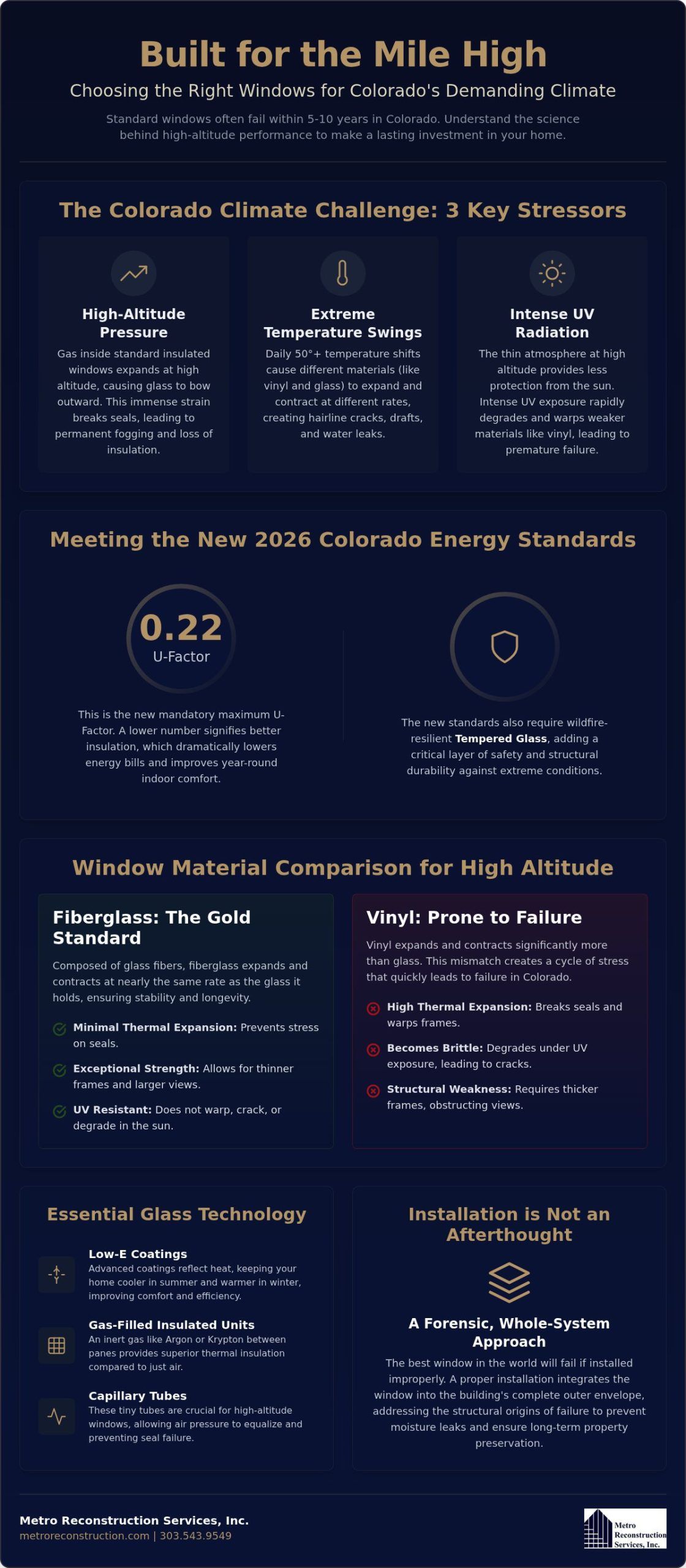
Colorado’s high-altitude environment acts as a relentless testing ground for residential architecture. While standard builder-grade windows might survive for a decade in more temperate regions, they frequently fail within five to ten years along the Front Range. This rapid degradation occurs because most products are engineered for sea-level conditions, ignoring the three primary stressors of our region: intense UV radiation, extreme temperature swings, and significant atmospheric pressure differences. Selecting the best windows for Colorado climate requires looking beyond surface aesthetics to the fundamental physics of how a window interacts with its environment. When a window isn’t designed for these specific forces, the results are predictable: seal failure, warped frames, and skyrocketing energy bills.
High-Altitude Pressure and Seal Failure
The “Mile High” effect is a physical reality that compromises many standard Insulated glazing technology systems. Most windows are manufactured at lower elevations where atmospheric pressure is higher. When these units are transported to 5,000 feet or above, the internal pressure of the gas trapped between the panes causes the glass to bow outward. This physical distortion puts immense strain on the primary and secondary seals. Over time, these seals breach, leading to the loss of insulating argon or krypton gas. To prevent this, specialized windows utilize capillary tubes to equalize pressure. Once a seal fails, moisture enters the unit, causing the permanent fogging and reduced thermal performance common in many Boulder and Denver homes.
Extreme Temperature Cycles and Thermal Stress
It isn’t unusual for Colorado residents to experience 50-degree temperature shifts within a single 24-hour period. This rapid cycling creates intense thermal stress on the building’s complete outer system. Different materials expand and contract at different rates. For instance, a dark vinyl frame will expand much faster than the glass it holds when hit by the intense high-altitude sun. This mismatch in expansion coefficients leads to hairline cracks in the frames and eventually breaks the bond between the window and the surrounding wall. We often see these structural origins of failure manifesting as drafts or water leaks during spring storms. The experts at Metro Reconstruction Services, Inc. focus on identifying these underlying mechanical issues rather than offering a temporary patch.
If you’re noticing signs of seal failure or structural warping, it’s time to consult with a partner who understands the hidden mechanics of high-altitude construction. Contact Metro Reconstruction Services, Inc. at 303.543.9549 or visit our contact page to discuss a long-term solution for your home.
Evaluating Window Materials for Colorado’s High Altitude
The selection of a frame material is the most critical decision in determining the best windows for Colorado climate. While many manufacturers promise durability, few materials can withstand the specific mechanical stresses found at high elevations. The primary challenge lies in the thermal expansion coefficient, which is a measurement of how much a material grows or shrinks when temperatures change. When a window frame expands significantly more than the glass it holds, the resulting friction creates a cycle of stress that eventually leads to structural failure. Metro Reconstruction Services, Inc. approaches this choice from a forensic perspective, prioritizing materials that maintain their integrity despite the relentless sun and cold.
Fiberglass: The Gold Standard for the Front Range
Fiberglass stands out as the superior choice for Colorado homes because it’s composed primarily of glass fibers and resin. This composition allows the frame to expand and contract at nearly the same rate as the glass panes themselves. By maintaining this physical harmony, the window avoids the seal-crushing pressure typical of other materials. This stability is vital in mountain communities like Evergreen or Genesee, where intense UV exposure can degrade weaker materials within a few seasons. Because fiberglass is exceptionally strong, it also allows for thinner frames that support the large, heavy glass units required for expansive mountain views without the risk of sagging or bowing.
The Limitations of Vinyl and Wood-Clad Windows
Vinyl is often marketed as a “lifetime” solution, but the reality in the mile-high sun is quite different. In our environment, dark-colored vinyl frames are prone to “oil-canning,” a term used to describe the visible warping and distortion caused by heat absorption. Once the frame loses its original shape, the window-to-wall interface is compromised, leading to air leaks and moisture intrusion. Wood-clad windows offer a classic aesthetic, yet they present a significant risk in our semi-arid climate. If the exterior cladding seal fails, moisture can become trapped against the wood core, leading to internal rot that remains hidden until the damage is extensive. For those seeking a truly permanent solution, choosing an engineering-led window replacement is essential to protect your property’s long-term value.
Ensuring your home’s exterior system remains intact requires a deep understanding of these material interactions. If you have questions about which material fits your specific elevation, call the experts at Metro Reconstruction Services, Inc. at 303.543.9549 or reach out through our contact page for a detailed evaluation of your home’s needs.
Glass Technology: Low-E Coatings and 2026 Energy Standards
While the frame provides structural support, the glass package is what dictates your daily comfort and long-term energy savings. Selecting the best windows for Colorado climate requires a strategic look at how glass interacts with our intense solar radiation. Modern window technology relies on Low-E (Low Emissivity) coatings, which are microscopic layers of metal or metallic oxide applied to the glass surface. These coatings act as a thermal mirror, reflecting interior heat back into the room during winter and blocking outdoor solar heat in the summer. This protection extends to your interior assets, as high-performance glass can filter out a significant portion of the UV rays that typically cause fading in hardwood floors and expensive upholstery.
Decoding the 2026 Colorado Energy Code
Effective January 1, 2026, Colorado House Bill 23-1161 mandates that all replacement windows meet the Energy Star Northern Climate Zone standard. This update requires a maximum U-factor of 0.22, a significant jump in efficiency from previous requirements. U-factor is the rate of heat loss through the window assembly. To ensure compliance, homeowners should look for Energy Star 7.0 certified products, which indicate the unit has been tested for the specific thermal demands of our region. These standards aren’t just bureaucratic hurdles; they’re benchmarks that ensure your investment provides genuine property preservation against the biting Front Range winters.
Selecting Glass Based on Home Orientation
A holistic approach to the building’s complete outer system involves tailoring glass specifications to each side of the house. For southern-facing windows that receive constant sun, the Solar Heat Gain Coefficient (SHGC) is a critical metric. A lower SHGC helps prevent your living space from becoming a greenhouse during July afternoons. Conversely, north-facing rooms often benefit from glass configurations that prioritize retaining interior warmth since they receive no direct sunlight to assist with heating.
The choice between double and triple-pane glass often comes down to your specific elevation and exposure. In mountain communities, the extra investment in triple-pane units is frequently justified by the added layer of insulation and superior sound dampening. However, altitude affects how gas fills like Argon and Krypton behave. While Krypton offers high thermal resistance, the atmospheric pressure at high elevations can lead to faster gas-fill loss if the units aren’t precision-engineered for the “Mile High” effect. We focus on identifying the underlying structural origins of these failures to recommend a glass package that maintains its R-value for decades. If you’re ready to upgrade to a system that meets these rigorous new standards, contact Metro Reconstruction at 303.543.9549 or visit our contact page for an engineering-led consultation.
Forensic Installation: Integrating Windows into the Building Envelope
Selecting the best windows for Colorado climate is only half the battle; the true challenge lies in the forensic integration of those units into your home’s unique building envelope. The interface where the window frame meets the wall is statistically the most common point of moisture failure in Front Range properties. When an installation ignores the complex relationship between the window and the surrounding cladding, even the most expensive fiberglass unit cannot prevent structural decay. We approach every project by viewing the window as a vital organ within the building’s complete outer system, ensuring that every transition is engineered for long-term property preservation. Precision is our baseline requirement.
Window Transitions for Stucco and Masonry Homes
Stucco and masonry exteriors present specific challenges that standard window companies often overlook. In these systems, the window flange must be perfectly integrated into the existing weather-resistive barrier to prevent water from migrating behind the exterior finish. A common mistake in Colorado retrofits is failing to properly tie the new window flashing into the existing layers, which leads to hidden water damage and the eventual need for costly stucco restoration. Before any new unit is installed, we perform forensic diagnostics to identify the underlying structural origins of previous failures. This analytical depth allows us to build a solution that addresses the root cause of leaks rather than merely hiding them behind a new frame.
Moisture Mitigation and Flashing Best Practices
Effective moisture mitigation relies on the physics of water management, specifically the use of pan flashing to direct gravity-fed moisture away from the interior framing and toward the foundation. Many low-cost installers rely on a “caulk-and-walk” methodology, where heavy beads of sealant are used to bridge gaps that should have been managed with mechanical flashing. In the face of intense Colorado wind and driving snow, these topical seals inevitably fail, allowing moisture to reach the building’s core. By linking window performance to a comprehensive plan for exterior home repair, we ensure that your new windows contribute to the overall health and longevity of the structure. We don’t just replace windows; we restore the integrity of your home’s protective shell.
For homeowners who value engineering-led solutions over superficial fixes, we invite you to discuss your project with our seasoned experts. Contact Metro Reconstruction today at 303.543.9549 or visit our contact page to schedule a detailed evaluation of your home’s exterior system. We are your dedicated partner in window replacement and long-term property preservation.
The Metro Reconstruction Approach to Window Replacement
Metro Reconstruction brings over four decades of regional expertise to every project, serving Boulder, Denver, and our mountain communities with a focus on structural longevity. We’ve witnessed the evolution of building codes and the recurring failures of standard builder-grade installations across the Front Range. Our approach differs from typical contractors because we don’t just sell products; we provide engineering-led solutions for property preservation. By identifying the underlying structural origins of window failure, we ensure your new installation addresses the root cause of previous drafts or moisture intrusion. Choosing the best windows for Colorado climate involves more than a simple replacement; it requires a partner who understands the hidden mechanics of your home.
Consultative Planning and Design-Build Excellence
Our design-build services bridge the gap between aesthetic desires and rigorous structural requirements. This consultative phase allows us to tailor window selections for specific micro-climates, whether you’re facing the high-wind exposure of Parker or the intense UV levels of Evergreen. We prioritize a holistic view of the building’s complete outer system, ensuring that new windows harmonize with existing siding or masonry. To provide peace of mind during the budgeting process, we utilize fixed-price project fees. This transparency eliminates the uncertainty of “estimates” and ensures that our commitment to precision remains the primary focus of the work.
Protecting Your Investment
As a family-owned firm, we treat your home as a significant investment that deserves meticulous care. We avoid the high-pressure tactics of the industry, opting instead for a grounded and professional relationship with our clients. Every project concludes with a thorough final walkthrough to verify the structural integrity of the installation and the seamless integration of all flashing and seals. We believe in providing long-term value rather than superficial, low-quality patches that only mask deeper issues. If you’re ready to secure your home’s future with a dedicated partner in property preservation, contact our team at 303.543.9549 to schedule a detailed structural evaluation. You can also reach us through our contact page to discuss how our window replacement solutions can enhance your home’s efficiency and durability.
Securing Your Home’s Future with Engineering Precision
Identifying the best windows for Colorado climate requires a shift from viewing windows as isolated products to understanding them as part of a building’s complete outer system. As discussed, the 2026 energy mandates and the physical stresses of high altitude demand materials that mirror the thermal expansion of glass and installations that prioritize forensic wall integration. By choosing a partner who focuses on underlying structural origins rather than quick patches, you protect your property from the inevitable seal failures and moisture leaks that plague standard builder-grade units.
Metro Reconstruction brings over 40 years of regional expertise to every family-owned project, ensuring your investment is handled with meticulous care. We invite you to Schedule a Forensic Window Evaluation with Metro Reconstruction today. You can also reach our seasoned experts by calling 303.543.9549 to discuss a long-term solution for your home. Your property deserves the peace of mind that comes from precision-led restoration and the enduring protection of a correctly engineered exterior.
Frequently Asked Questions
What is the best window material for high-altitude Colorado homes?
Fiberglass is the most reliable material for our region because its expansion rate closely mimics that of glass. This physical harmony prevents the frame from pulling away from the panes during rapid temperature shifts. Unlike vinyl, which can warp under intense mile-high sun, fiberglass maintains its structural integrity for decades. It’s widely considered the top choice when searching for the best windows for Colorado climate due to its durability and low maintenance needs.
Do I need special windows if I live above 6,000 feet?
Living at higher elevations requires window units equipped with capillary tubes to equalize internal pressure. Without these small tubes, the pressure difference between the manufacturing facility and your mountain home can cause the glass to bow or the seals to burst. We ensure every high-altitude installation accounts for these atmospheric factors to prevent premature failure. This technical detail is a foundational part of our property preservation approach for mountain residences.
How do the 2026 Colorado Energy Codes affect my window replacement?
Effective January 1, 2026, state law requires all new and replacement windows to meet a U-factor of 0.22 or less. This standard aligns with the Energy Star Northern Climate Zone requirements to ensure maximum heat retention during winter. While these regulations increase initial costs, they provide long-term value through lower utility bills and improved comfort. Our team stays current with these evolving standards to keep your home compliant and efficient.
Can new windows be installed without damaging my stucco exterior?
New windows can be seamlessly integrated into a stucco exterior through a forensic installation process that respects the building’s complete outer system. We avoid the common mistakes that lead to moisture intrusion and structural rot. By properly tying the new flashing into the existing weather barrier, we protect your stucco restoration and ensure a watertight transition. Accuracy in the initial setup is our primary brand promise to every client.
Why is my double-pane glass fogging or showing condensation between the panes?
Condensation between the panes indicates a total seal failure, meaning the insulating gas has escaped and moist air has entered. This often happens in Colorado because of atmospheric pressure changes or frame warping from intense sun exposure. Once a seal is breached, the window’s insulation value drops significantly, making replacement necessary to restore thermal performance. We identify these underlying structural origins to help you choose a more resilient long-term solution.
How much energy can I save by upgrading to high-performance windows in Boulder?
Upgrading to high-performance units can significantly reduce heating costs by minimizing heat loss through the glass. In Boulder, where winters are harsh and summers are bright, moving to a 0.22 U-factor window provides a noticeable difference in indoor temperature stability. While exact savings vary by home design, the reduction in furnace cycling often leads to lower monthly bills. These improvements are a key benefit of choosing the best windows for Colorado climate.
Is triple-pane glass necessary for Colorado mountain homes?
Triple-pane glass is highly recommended for mountain homes because it offers an extra layer of insulation and superior sound dampening. This configuration is particularly effective at blocking the biting winds and extreme cold found at higher elevations. While the initial investment is higher, the increased comfort and energy efficiency often justify the cost in rugged environments. We evaluate your home’s specific exposure to determine if this upgrade fits your preservation goals.
How do I know if my window leak is a frame issue or a structural stucco problem?
Determining if a leak stems from the window frame or the surrounding stucco requires a professional forensic evaluation. Water often travels through the window-to-wall interface, making the source difficult to see from the surface. We use diagnostic tools to find the structural origins of moisture failure rather than offering a temporary patch. To schedule a detailed assessment, contact Metro Reconstruction at 303.543.9549 or visit our contact page today.