
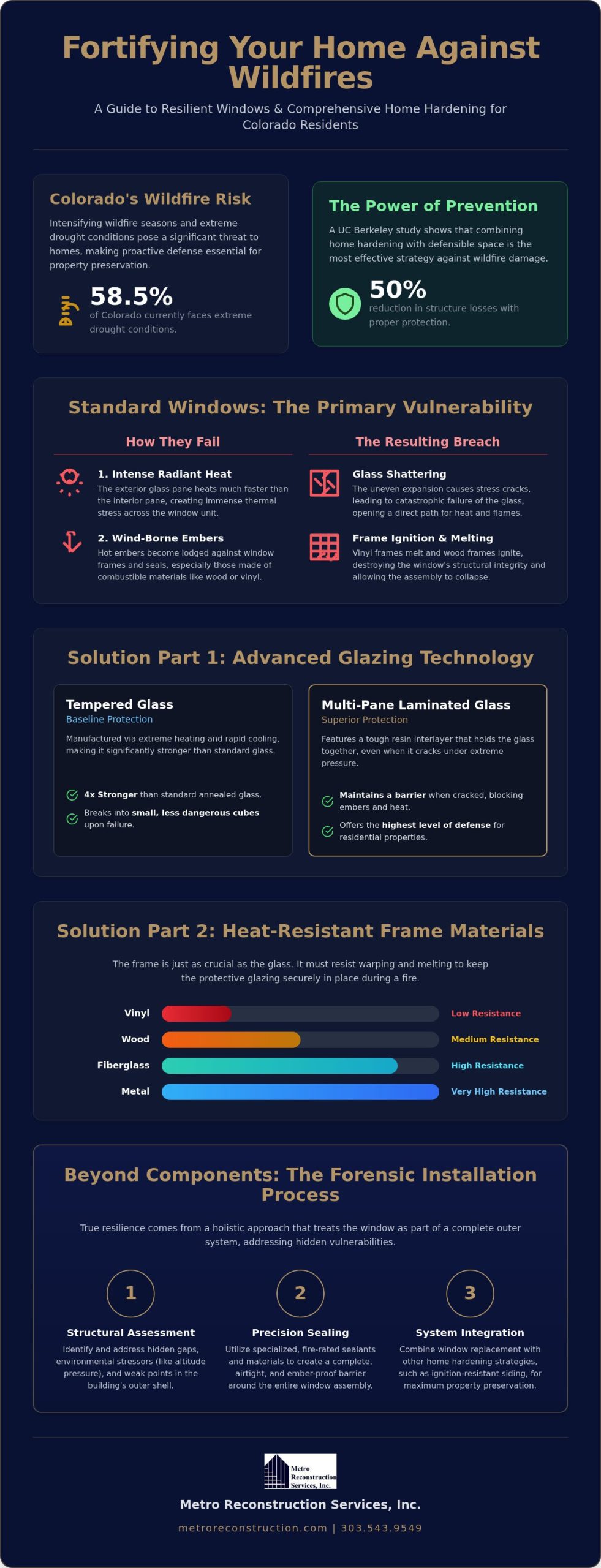
Did you know that a 2025 study from UC Berkeley found that proper home hardening, when paired with defensible space, can reduce wildfire structure losses by as much as 50 percent? For many Colorado residents, the sight of smoke on the horizon brings a familiar tightening in the chest because 58.5 percent of our state currently faces extreme drought conditions. You likely understand that your home needs better protection, yet the confusing overlap between fire-rated and fire resistant windows often makes it difficult to know where to start. It’s frustrating to feel like you have to choose between the safety of your family and the architectural beauty of your residence.
This guide provides the clarity you need to transform your home into a resilient fortress against the elements. We’ll demonstrate how specialized fire resistant windows act as a critical shield for your building’s complete outer system, ensuring that heat and embers don’t find a way inside. By the end of this article, you’ll have a clear understanding of the 2026 Colorado Wildfire Resiliency Code and a forensic plan for home hardening. We’ll explore the technical differences in glass and frames so you can achieve total peace of mind regarding your property preservation without compromising on style.
Key Takeaways
- Understand why standard windows are the primary vulnerability in your home’s exterior and how they fail when exposed to extreme temperature changes.
- Learn how specialized fire resistant windows serve as a durable shield by preventing embers and heat from breaching your home’s living space.
- Identify the most reliable frame materials that resist warping and melting to keep your protective glass securely in place during an emergency.
- Discover the importance of a forensic installation process that addresses hidden gaps in your building’s outer system with fire-rated sealants.
- Gain a clear plan for combining window replacements with home hardening strategies like ignition-resistant siding for maximum property preservation.
Understanding Fire-Resistant Windows and Wildfire Risks in Colorado
In the context of Colorado’s intensifying wildfire seasons, your home’s windows are more than just a view; they are the most vulnerable component of your building’s complete outer system. During a fire event, windows often serve as the primary entry point for wind-borne embers and intense radiant heat. While many homeowners assume their standard double-pane windows offer sufficient protection, these units typically fail under the extreme temperature gradients created by a nearby blaze. This failure isn’t just a matter of the glass breaking; it’s a structural collapse that invites disaster into your living space.
Choosing fire resistant windows requires a deep understanding of how residential needs differ from commercial standards. While commercial buildings often use fire-rated glazing designed to contain a fire within a room, residential fire resistance focuses on keeping an external fire out. This distinction is vital for effective home hardening in high-risk zones like Evergreen and Genesee, where the goal is to create a defensive shell that remains intact even when the surrounding environment is under extreme stress.
The Science of Window Failure During Wildfires
The mechanics of window failure usually begin with radiant heat. As a wildfire approaches, the exterior pane of a standard window heats up much faster than the interior pane, causing the glass to expand at different rates. This uneven tension leads to stress cracks, often causing the entire unit to shatter before the flames even reach the structure. Beyond the glass itself, the frames and seals are susceptible to ember ignition. If an ember lodges in a combustible vinyl or wood frame, it can smolder and eventually breach the interior. Our forensic approach emphasizes that initial accuracy in component selection is a foundational requirement for safety. These decisions are part of broader Passive fire protection strategies that prioritize structural integrity over temporary fixes.
Colorado’s Front Range: A Unique Environmental Stressor
Homeowners along the Front Range face specific challenges that aren’t found in lower elevations. High altitude affects the pressure between window panes, which can compromise seals over time if not properly addressed during installation. In mountain communities, rapid temperature shifts can cause materials to expand and contract violently, putting additional strain on the window assembly. This is why we view window replacement as a critical part of our Fire Mitigation and Prevention Services. By identifying these underlying environmental stressors, we ensure that your fire resistant windows provide long-term reliability rather than just a superficial upgrade.
Protecting your home begins with a precise understanding of its structural vulnerabilities. If you are ready to evaluate your property’s defenses with a team that values substance over style, contact us at 303.543.9549 or visit our contact page to schedule a detailed assessment.
Technical Standards: Ratings and Glass Types for Maximum Protection
Selecting the correct glass is the first step in ensuring your home’s outer system remains uncompromised during a wildfire. While standard glass is prone to shattering under minimal thermal stress, fire resistant windows utilize advanced material science to maintain a solid barrier. The 2026 Colorado Wildfire Resiliency Code now mandates specific glazing standards for homes in high-risk zones, focusing on materials that can withstand the intense heat of a passing fire front. Understanding these technical differences allows you to move beyond superficial fixes and invest in long-term structural integrity.
Tempered vs. Laminated Glass: Which is Right for You?
Tempered glass serves as the baseline for wildfire protection. It’s manufactured through a process of extreme heating and rapid cooling, which makes it about four times stronger than standard annealed glass. When it eventually fails, it breaks into small, relatively harmless cubes rather than dangerous shards. However, multi-pane laminated glass offers a superior level of protection. It contains a resin interlayer that acts as a powerful adhesive. Even if the glass cracks under the pressure of a wildfire, the resin holds the fragments in place, preventing the window from falling out and leaving your home’s interior exposed to embers. Following Colorado home hardening guidelines involves choosing these multi-pane systems to create a reliable thermal buffer. Low-emissivity (Low-E) coatings further enhance this by reflecting radiant heat away from your living space.
Deciphering Fire Ratings Without the Jargon
Fire ratings can often feel like a maze of technical codes, but they represent a simple promise of time. A ’20-minute’ fire rating means the window assembly has been tested under laboratory conditions to remain intact for at least twenty minutes when exposed to direct heat and flame. For a homeowner, this duration is often the difference between a house that survives a fire and one that is lost. Testing labs like UL and standards like NFPA 257 simulate the rapid temperature spikes of a forest fire to verify these claims. As a diagnostic step, you can always look for a permanent etch in the corner of the glass, which confirms the rating and the manufacturer’s commitment to precision. If you’re unsure about your current window ratings, our team can provide a detailed fire mitigation inspection to identify your home’s specific needs.
Accuracy in these technical details is what separates a premium installation from a low-cost alternative. If you have questions about which glass type best suits your property’s unique exposure, we’re here to help. You can reach our specialists at 303.543.9549 or visit our contact page to begin a professional evaluation of your home’s defenses.
Frame Materials: Comparing Durability and Heat Resistance
While the glass provides the primary thermal barrier, the frame ensures that this barrier remains securely anchored to the building’s structural openings during the intense pressure of a wildfire event. If a frame warps, melts, or pulls away from the wall, the most advanced fire resistant windows in the world will still fail. Our forensic approach to property preservation emphasizes that the frame is the skeleton of your window system. It must maintain its shape and strength even when external temperatures spike. This is why we prioritize long-term structural integrity over the low-cost, superficial fixes often found in the residential market.
Many homeowners are surprised to learn that common materials like vinyl are often unsuitable for high-risk wildfire zones. Vinyl has a relatively low melting point and can deform quickly when exposed to radiant heat, causing the glass to lose its seal or fall out entirely. To ensure your home meets the highest safety standards, we look to FEMA window recommendations, which highlight the necessity of using non-combustible or high-performance materials that can withstand extreme environmental stressors without compromising the building’s outer system.
Fiberglass: The Expert Choice for High-Altitude Homes
Fiberglass is frequently the most reliable option for Colorado’s demanding mountain environments. Because fiberglass is made primarily of glass fibers and resin, it expands and contracts at a rate nearly identical to the glass panes it holds. This harmony prevents the seal failures that often plague other materials during the rapid temperature shifts common in the Front Range. Additionally, fiberglass provides superior thermal insulation, which protects your home from winter cold and keeps interior surfaces cooler during a fire. For a deeper look at why this material excels in our region, explore our guide on Fiberglass Replacement Windows for High-Altitude Homes.
Aluminum and Steel Frames: Strength vs. Conductivity
Metal frames offer exceptional structural strength, making them highly resistant to the wind-driven debris that often accompanies a wildfire. However, metals are naturally conductive. Without a proper thermal break, an aluminum frame can transfer enough heat to the interior of your home to ignite curtains or furniture. We focus on precision in frame selection, ensuring that any metal system includes specialized insulators to prevent this heat transfer. Whether you prefer the rugged look of metal or the classic appeal of treated wood, our goal is to balance aesthetics with a dedicated partner’s care for your investment. Precision in these early stages ensures your home remains a safe haven.
Selecting the right frame material is a diagnostic process that requires local expertise. If you’re ready to discuss how these systems can protect your specific property, call us at 303.543.9549 or visit our contact page to schedule a professional consultation.
The Forensic Installation Process: Ensuring Long-Term Reliability
Installing fire resistant windows involves much more than simply swapping one unit for another. A window is only as effective as the seal it maintains with the rest of your home’s envelope. If there’s a gap between the frame and the wall, wind-driven embers can penetrate the interior during a wildfire, rendering the high-performance glass useless. Our forensic approach identifies these potential vulnerabilities before they become failures. We treat every installation as an engineering challenge, ensuring that the transition between your window and your home’s exterior siding or stucco is seamless and airtight.
Precision in the details matters most. We utilize specialized fire-rated caulking and sealants that are designed to maintain their integrity under extreme heat. These materials don’t just block air; they serve as a critical barrier against the physical intrusion of sparks. Proper flashing is equally vital. While flashing is traditionally used for moisture protection, we use high-temperature flashing tapes that prevent both water damage and ember penetration, securing the building’s complete outer system.
Identifying Underlying Structural Origin Points
Our team begins by checking for underlying structural issues like dry rot or moisture damage within the wall cavity. Installing a heavy, fire-rated window into a compromised opening is a superficial fix that we refuse to provide. We ensure the rough opening is structurally sound and capable of supporting the increased weight of multi-pane glass. This commitment to initial accuracy is a foundational brand promise. We’d rather explain the difficult truth of a structural failure than offer a temporary patch that won’t hold up in an emergency.
The Step-by-Step Installation Methodology
Our methodology follows a steady, logical flow. We prepare every opening with high-temperature flashing tapes that can withstand the radiant heat levels discussed in previous sections. The frame is then leveled and squared with meticulous care to ensure the unit remains airtight. Once the window is set, we perform final diagnostic checks. We verify that the window operates smoothly, as emergency egress is just as important as fire resistance. If you’re ready to secure your home with a partner who values substance over style, contact us at 303.543.9549 or visit our contact page to schedule your fire mitigation evaluation.
Integrating Windows into a Complete Home Hardening Strategy
Treating a window as an isolated component is a common mistake that can lead to catastrophic failure during a wildfire. While the glass and frame are critical, they are only as effective as the materials that surround them. A holistic strategy requires that fire resistant windows work in tandem with non-combustible siding, such as James Hardie products or traditional stucco. This integrated approach ensures that radiant heat and wind-borne embers don’t find a weak point in your building’s envelope. If a fire can bypass a window by igniting a nearby combustible wall, the investment in high-performance glazing is lost. We focus on the building’s complete outer system to ensure that every element supports the other.
Structural home hardening should also be complemented by a well-maintained defensible space. This involves managing the vegetation and combustible materials in the immediate zones around your home. When you combine fire-resistant building materials with a clear perimeter, you significantly increase the likelihood that your property will survive a wildfire event. Masonry work and stucco restoration act as the primary line of defense, reinforcing the window’s protective capabilities by providing a seamless, ignition-resistant shell. This level of thoroughness offers a sense of reliability that superficial fixes simply cannot provide.
The Synergy of Stucco and Fire-Resistant Windows
There’s a natural synergy between high-quality stucco and fire-rated windows. When these two systems are installed with precision, they create a continuous barrier that is exceptionally difficult for fire to breach. Our team specializes in Professional Stucco Restoration in Boulder County, applying a forensic approach to ensure that the transition points between the window frame and the stucco are perfectly sealed. We also recognize that safety shouldn’t come at the expense of your home’s character. Matching textures and finishes is vital for maintaining aesthetic appeal while we upgrade your structural defenses. This balance of form and function is a hallmark of our craftsmanship.
Partnering for Property Preservation
Metro Reconstruction acts as more than just a service provider; we’re a dedicated partner in protecting your home from the unique environmental stressors of the Front Range. As a family-owned firm with over four decades of experience, we understand the rugged Colorado landscape and the specific challenges it presents to residential structures. Our forensic methodology allows us to identify underlying structural origins of failure rather than just treating symptoms. We believe in substance over style, providing engineering-led solutions that offer long-term value. If you’re ready to secure your investment with a comprehensive evaluation of your home’s outer system, contact our experts today. You can reach us at 303.543.9549 or visit our contact page to schedule a professional assessment.
Securing Your Home’s Future Against the Elements
Protecting your residence from the increasing frequency of Colorado wildfires requires moving beyond superficial fixes. The effectiveness of fire resistant windows depends entirely on their integration into your building’s complete outer system. By combining high-performance glass with non-combustible frames and a forensic installation process, you create a reliable shield that preserves both your home’s integrity and its aesthetic value. This holistic strategy ensures your structural defenses remain intact during extreme environmental stress.
At Metro Reconstruction Services, we bring over 40 years of Front Range expertise to every project. Our forensic approach identifies underlying structural origins rather than offering temporary patches. As specialists in wildfire prevention construction, we’re here to act as your dedicated partner in property preservation. Our commitment to initial accuracy serves as a foundational promise for every home hardening project. Protect your home with a specialized evaluation by contacting Metro Reconstruction Services today or call us at 303.543.9549. We’re ready to help you achieve lasting peace of mind for your investment.
Frequently Asked Questions
Are fire-resistant windows the same as fire-rated windows?
Fire resistant windows are not identical to fire-rated units found in commercial settings. While fire-rated glazing is designed to contain flames within a building, residential fire resistance focuses on preventing external wildfires from breaching your home’s interior. This distinction is critical for homeowners in mountain communities like Evergreen. Choosing the right system requires a forensic understanding of how radiant heat interacts with your building’s complete outer system during a high-intensity fire event.
Can I install fire-resistant glass in my existing window frames?
We do not offer glass replacement as a standalone service because the frame and glass must work as a unified system. Fire-resistant glass is significantly heavier than standard annealed glass, requiring a structurally sound frame to support its weight. If your current frames are made of combustible materials like vinyl, they will fail under heat regardless of the glass type. A full window replacement ensures that the entire assembly maintains its integrity during an emergency.
How much more do fire-resistant windows cost compared to standard ones?
These specialized windows are a premium investment in your property’s long-term preservation. While the initial cost is higher than standard units, they provide essential protection that common alternatives cannot match. For residents in high-risk zones like Genesee or Golden, the value lies in the peace of mind that comes from a hardened structure. We focus on engineering-led solutions that prioritize reliability over low-cost, superficial fixes that often fail when environmental stressors are highest.
Do fire-resistant windows also provide better energy efficiency for Colorado winters?
Yes, these high-performance windows offer exceptional thermal insulation that benefits your home year-round. The same multi-pane technology and Low-E coatings that reflect radiant heat during a wildfire also keep your interior warmth from escaping during a Silverthorn winter. By choosing materials like fiberglass, you benefit from a frame that doesn’t warp or contract, ensuring a tight seal that lowers energy costs while simultaneously reinforcing your home’s structural defense system.
Is tempered glass enough to meet wildfire safety codes in Boulder County?
Tempered glass is the baseline requirement under the 2026 Colorado Wildfire Resiliency Code for many jurisdictions, including Boulder County. However, it’s often combined with multi-pane designs to meet specific safety standards in higher intensity zones. Our team provides fire mitigation evaluations to determine exactly what your specific property requires. We ensure your upgrades meet local codes while providing the quiet confidence that your home is prepared for the unique challenges of the Front Range.
How do I know if my current windows are fire-resistant?
You can identify tempered or fire resistant windows by looking for a permanent etch in the corner of the glass. This mark confirms the manufacturer’s rating and compliance with safety standards. If your windows lack this etch or use single-pane annealed glass, they are likely a vulnerability in your home hardening strategy. We recommend a professional diagnostic check to evaluate your current windows and identify any underlying structural origins of potential failure before fire season.
What is the lifespan of a fire-resistant window in high-altitude environments?
In high-altitude environments like Vail or Breckenridge, these windows are built for extreme durability. High-performance materials like fiberglass have a lifespan that often exceeds thirty years because they resist the intense UV radiation and rapid temperature shifts common in the mountains. Our forensic installation methodology ensures that seals remain airtight despite pressure changes. This long-term reliability makes them a cornerstone of property preservation for families who value substance and meticulous craftsmanship over temporary patches.
Does the frame material really matter if the glass is fire-rated?
The frame material is just as vital as the glass for maintaining structural integrity. If you use fire-rated glass in a vinyl frame, the vinyl may melt or deform at relatively low temperatures, causing the glass to fall out entirely. We prioritize materials like fiberglass or metal with thermal breaks because they remain stable under extreme heat. This holistic approach ensures that your window assembly acts as a continuous shield for your home’s complete outer system.