
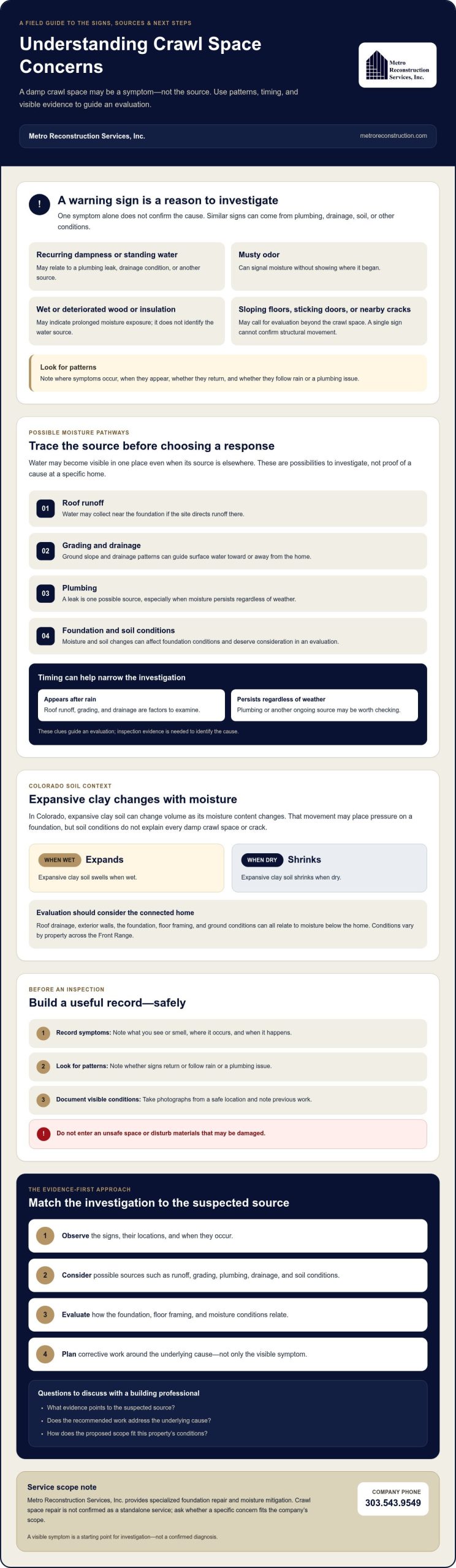
A damp crawl space may be a symptom, not the source of the problem. Standing water, musty odors, or sloping floors can point to drainage concerns, plumbing leaks, or foundation movement. A surface-level patch may hide the signs without addressing what caused them. If you’re unsure whether the condition needs prompt attention, start by recording what you’ve noticed and when it occurs.
Effective crawl space repair starts with finding the cause. In Colorado, expansive clay soil can swell when wet and shrink when dry, placing pressure on foundations. But soil conditions are only part of the picture. Roof runoff, grading, drainage, and plumbing may also affect moisture below your home. An evaluation should consider how these factors interact before a repair plan is set.
This guide explains warning signs to look for, what they may indicate, and how moisture and foundation conditions can contribute to crawl space problems. You’ll also learn what information to gather and what questions to ask a qualified building professional, so you can discuss next steps with greater confidence.
Key Takeaways
- A single sign, such as dampness or a musty odor, doesn’t confirm the cause. Look for patterns in where and when symptoms appear.
- In Colorado, expansive clay soil can swell when wet and shrink when dry, while drainage patterns and plumbing leaks may also contribute to crawl space moisture.
- Effective crawl space repair begins with evidence. Match the investigation and repair scope to the suspected source rather than treating symptoms alone.
- Before an inspection, note symptoms, timing, locations, and previous work. Don’t enter an unsafe space or disturb materials that may be damaged.
- Ask whether the recommended work addresses the underlying cause and fits your property’s needs. Contact Metro Reconstruction Services, Inc. to ask whether your concern fits its scope, or call 303.543.9549.
Crawl Space Repair: What Warning Signs Should You Look For?
A single symptom doesn’t identify what’s happening beneath your home. Persistent dampness might relate to a plumbing leak, drainage conditions, or another source. A musty odor can signal moisture without showing where it began. A warning sign points to a condition that needs investigation; it is not a confirmed diagnosis.
Crawl space repair means corrective work selected in response to observed conditions and their underlying cause. Because this area sits between the ground and the home’s floor structure, its condition can affect more than the space itself. A general overview of a crawl space can help explain its role, but an assessment of your property is needed to identify a specific problem.
Which crawl space symptoms deserve a closer look?
Recurring dampness, standing water, or a musty smell merits investigation, particularly when signs return or appear alongside visible damage. Wet or deteriorated insulation and wood may indicate prolonged exposure to moisture, but they don’t establish whether the water came from plumbing, drainage, or another source. When damaged materials require replacement after repairs, working with a specialized provider like Third Coast Spray Foam can help ensure modern spray foam and moisture-resistant solutions are installed.
Record where you notice each symptom and when it appears. Note whether water follows rain or a plumbing issue, and photograph visible conditions from a safe location. These details can help a professional compare the evidence with possible sources.
When might crawl space concerns point beyond the crawl space?
Sloping or uneven floors, doors that begin sticking, or cracks near foundation areas may call for evaluation beyond the crawl space. These signs can have different causes, and a photograph or isolated symptom cannot confirm structural movement. An assessment should consider the home as a connected structure, including how the foundation, floor framing, and moisture conditions relate.
If foundation concerns are part of what you’re seeing, learn about foundation repair services in Boulder. Metro Reconstruction provides specialized foundation repair and moisture mitigation. Crawl space repair is not confirmed as a standalone service, so ask whether your specific concern fits the company’s scope through the contact page or by calling 303.543.9549.
How Moisture and Expansive Clay Soil Can Affect Colorado Crawl Spaces
Moisture below a home can come from several directions, and visible water is not always close to its source. Roof runoff may collect near the foundation if the site directs it there, while grading can guide surface water toward the house. Plumbing leaks and drainage conditions are other possibilities to investigate. These are potential pathways, not proof of what is happening at a particular property.
How can water reach a crawl space?
Water patterns and timing can help narrow the investigation. Dampness that appears after rain may lead an inspector to examine roof runoff, grading, and drainage around the foundation. Water that persists regardless of weather may make plumbing or another ongoing source worth checking. These clues guide the evaluation, but inspection evidence is needed to identify the cause.
The crawl space is connected to the home’s wider building envelope. Roof drainage, exterior walls, the foundation, and the ground around the home can all affect moisture conditions below the floor. If water is directed toward the foundation, it may add to moisture concerns. The appropriate foundation drainage solutions depend on the site and the path water takes. Corrective work should address the source, not just the area where water becomes visible.
Trace the water source before selecting a repair: roof runoff, grading, plumbing, drainage, and foundation conditions can produce similar signs but require different responses.
What does expansive clay soil mean for a home?
Expansive clay soil swells when wet and shrinks when dry. As its moisture content changes, the soil’s volume can change too, potentially placing pressure on a foundation. Soil is therefore a relevant factor to consider when evaluating foundation movement, but it does not explain every damp crawl space or crack.
Conditions vary by property across the Front Range. Soil composition, slope, drainage patterns, and the way a home was built all affect what an evaluation should examine. A regional assumption cannot replace site-specific evidence. Where floor or foundation changes raise concern about movement, review Boulder foundation repair guidance as background, then seek an assessment suited to the property.
Because moisture management and foundation conditions can overlap, crawl space repair should follow an evaluation that identifies which factors are present and how they interact. Metro Reconstruction provides specialized foundation repair and moisture mitigation, but crawl space repair is not confirmed as a standalone service. Contact the company to ask whether your concern fits its scope, or call 303.543.9549.
Crawl Space Repair Options: Match the Response to the Cause
A useful repair plan connects what was found, what caused it, and which parts of the home are affected. Moisture management, drainage correction, material repair, and foundation work are distinct scopes, though one property may need more than one if the evidence shows overlapping conditions. The right crawl space repair approach follows the findings, not a one-size-fits-all solution.
Use this comparison as a starting point for discussion, not as a diagnosis. The EPA guidance on moisture control also explains why moisture conditions should be evaluated as part of the building system.
| Observed problem | Investigation needed | Possible response category |
|---|---|---|
| Recurring dampness or musty odor | Look for the moisture source and determine whether affected materials remain damp. | Moisture management, with material repair if damage is confirmed. |
| Water collecting near or below the foundation | Review runoff paths, grading, drainage, and possible plumbing sources. | Drainage correction or moisture management, based on the source. |
| Soft, deteriorated, or damaged materials | Identify the extent of damage and whether moisture exposure is ongoing. | Material repair after the moisture cause is addressed. |
| Cracks or changes that suggest possible movement | Assess the foundation and related structural areas; don’t infer movement from one sign alone. | Foundation work only when the evaluation supports it. |
How do you distinguish moisture control from structural repair?
Moisture work addresses how water or damp air reaches or remains in the space. Structural work addresses documented movement or damage to the foundation or other building components. These scopes can overlap. An evaluation, for example, may find both a moisture pathway and affected materials. Don’t select a specific system or structural method until the site findings show what’s needed.
Covering damaged materials or masking an odor doesn’t establish that persistent moisture has been corrected. Understand the source and extent before finish work conceals the evidence. If chronic dampness has led to insect activity or damaged structural timbers, learn more about Hughes Termite Control for integrated pest management and home improvement services.
What should a repair comparison include?
Ask each contractor to identify the diagnosed cause, the observations that support it, the affected materials, and the proposed scope. Clarify how the work addresses the source and whether separate moisture, drainage, material, or foundation work is included. Metro Reconstruction’s services overview can help you understand its confirmed service scope. Crawl space repair isn’t confirmed as a standalone offering.
If you’re unsure whether a concern fits the company’s foundation repair or moisture mitigation work, contact Metro Reconstruction to ask. You can also call 303.543.9549.
How to Prepare for a Crawl Space Inspection in the Front Range
A clear record of what you’ve noticed can help an evaluator focus on the right areas. Dates, locations, and changes over time can show whether a condition is recurring or isolated. You don’t need to identify the cause before the inspection. Bring observations, not conclusions.
What information should you gather before an evaluation?
- Record the symptoms. Note whether you’ve seen water, dampness, odors, damaged materials, or changes in floors or doors.
- Track timing and location. Write down when each condition began, where it appears, and whether it returns after rain or another event.
- List relevant history. Include known plumbing leaks, changes to exterior drainage, and previous repairs. These details may help guide the investigation, but don’t assume they caused the current concern.
- Prepare questions. Ask what the evaluator observed, what evidence supports the likely cause, which materials are affected, and how the proposed scope would address the source.
Documenting when and where recurring conditions appear gives an evaluator a clearer pattern to compare with visible moisture, drainage context, and structural observations.
Stay safe. Don’t enter a crawl space if access appears unsafe, and don’t disturb materials that may be damaged. Share photographs taken from a safe location instead.
What should a careful evaluation explain?
A useful evaluation connects observations to a likely cause and explains the evidence behind that conclusion. It should distinguish confirmed damage from conditions that need further review, and clarify whether the concern relates to moisture, drainage, foundation movement, or more than one factor. That distinction helps keep the proposed crawl space repair scope tied to the property’s actual needs.
If the discussion includes permits or code requirements, ask which local authority applies and confirm current requirements with that city or county building department. Rules can vary by jurisdiction, so don’t rely on a general statement as confirmation for your property.
For background on the company’s local construction experience, see Boulder construction expertise. To ask whether your concern fits the company’s scope, contact Metro Reconstruction or call 303.543.9549.
Choosing a Crawl Space Repair Partner and Planning Your Next Step
A sound repair plan should explain what was found, why it matters, and how the proposed work addresses the cause. Before agreeing to a scope, confirm that the contractor’s services match the needs identified at your property. If moisture, drainage, and foundation conditions overlap, the plan should clarify how the work accounts for related building components.
What questions help you assess a repair plan?
Use these questions to understand the reasoning behind the recommendation:
- What observations or test results support the diagnosis?
- What other possible causes were considered, and why were they ruled out or left for further review?
- Which materials or parts of the home are affected, and how will the work address the source?
- How will the proposed work account for related areas, such as drainage, the foundation, or floor structure?
- Who is responsible for each part of the project, and what additional evaluation may be needed?
Clear answers help you distinguish confirmed findings from assumptions. They also make it easier to compare scopes on substance, rather than choosing a repair method before the underlying conditions are understood.
When should you contact a local construction professional?
Consider arranging a discussion if moisture keeps returning, visible damage appears to be spreading, or you notice changes in floors, doors, or foundation areas. These signs don’t establish a diagnosis, but they can justify a closer assessment. Bring your notes, photographs, and history of previous work so the discussion can start with the evidence you’ve gathered.
Metro Reconstruction serves Front Range and Mountain communities and provides specialized foundation repair and moisture mitigation. The company’s experience may be relevant when an evaluation identifies concerns within those scopes, but crawl space repair is not confirmed as a standalone service. Review Boulder construction expertise for local company information, then ask whether your property concern fits the confirmed service scope.
Have questions about a moisture or foundation concern? Contact Metro Reconstruction to discuss whether the issue fits its scope, or call 303.543.9549.
Take the Next Step With Clear Evidence
Lasting crawl space repair begins with understanding what the signs show and what caused them. Recurring moisture, damaged materials, or changes near floors and foundation areas call for a careful assessment, not an assumption. A repair plan should identify the evidence, clarify which parts of the home are affected, and match the work to the confirmed need.
Metro Reconstruction is a family-owned construction firm with more than four decades of industry experience. The company serves Front Range and Mountain communities and provides foundation repair and moisture mitigation. Crawl space repair is not confirmed as a standalone service, so ask whether your specific concern fits its scope.
Contact Metro Reconstruction to discuss your property concern or call 303.543.9549. Clear observations and focused questions can help you move toward a well-informed plan for protecting your home.
Frequently Asked Questions
What are the signs that a crawl space needs repair?
Recurring dampness, standing water, musty odors, deteriorated wood, or damaged insulation are signs that a crawl space needs closer inspection. Changes in floors, doors, or foundation areas may also warrant a broader assessment. None of these signs alone confirms the cause or the repair needed. Note where and when symptoms appear, and share that history with a qualified building professional to help guide the evaluation.
What causes moisture in a crawl space?
Moisture may come from roof runoff, site grading, plumbing leaks, drainage conditions, or other property-specific sources. The timing and location of dampness can help narrow the possibilities. For example, water noticed after rainfall may make exterior runoff worth investigating, but inspection is needed to confirm a source. Effective crawl space repair should address the identified moisture pathway rather than only covering damp or damaged materials.
Can expansive clay soil affect a crawl space or foundation?
Yes. Expansive clay soil swells when wet and shrinks when dry, and those volume changes can place pressure on a foundation. Soil conditions vary by property, so this is one possible factor, not a diagnosis for every crawl space concern. An evaluation should consider soil and moisture evidence alongside visible foundation and floor conditions before recommending structural work.
Is standing water in a crawl space an emergency?
Standing water deserves prompt attention, but whether it is an emergency depends on the circumstances. Active flooding, water near electrical equipment, suspected sewage, or sudden changes in floors or foundation areas call for urgent professional guidance. Avoid entering an unsafe space or touching wet electrical components. If there is no immediate hazard, document the water’s location and timing and arrange an inspection to identify its source.
How do you know whether crawl space damage is structural?
You can’t confirm structural damage from a single crack, uneven floor, or photograph. An evaluator should examine the affected area and related parts of the home, then explain which conditions are confirmed and what evidence supports that conclusion. Ask whether observed changes indicate movement, material deterioration, or another issue, and whether further assessment is needed before setting a repair scope.
Can crawl space moisture cause problems elsewhere in a home?
It can. Moisture conditions below the floor may affect nearby wood, insulation, or other materials, while the source may involve exterior drainage, plumbing, or the foundation. The crawl space is connected to the home’s wider building system, so an evaluation should consider related components rather than treating an odor or damp patch in isolation. Persistent moisture merits investigation to understand its source and extent.
What should I expect during a crawl space inspection?
Expect the evaluator to review reported symptoms, visible moisture clues, drainage context, and accessible structural conditions. Be ready to share when problems began, where they recur, and any known leaks or previous repairs. Ask what observations support the likely cause, what damage is confirmed, and whether more evaluation is needed. Don’t enter an unsafe crawl space or disturb materials that may be damaged.
Does Metro Reconstruction Services perform crawl space repair?
Metro Reconstruction Services, Inc. has not confirmed crawl space repair as a standalone service. The family-owned construction firm provides specialized foundation repair and moisture mitigation across Front Range and Mountain communities. Its listed local coverage includes Parker, Morrison, Boulder, Longmont, Niwot, Evergreen, Cherry Creek, Cherry Hills Village, Golden, Genesee, Littleton, Broomfield, Denver, Silverthorn, Breckenridge, Vail, and Larkspur. Contact Metro Reconstruction to ask whether your concern fits its scope, or call 303.543.9549.