
The biggest resale gains often come from focused upgrades, not the most extensive remodel. For homeowners weighing what adds most value to a home remodel in Boulder, national estimates point to garage-door replacement, with a 2025 estimate of about 268% of the project’s cost recovered in resale value; a minor kitchen remodel is estimated at about 113%. These figures offer useful context, not a prediction for an individual Boulder home.
It makes sense to choose improvements that feel worthwhile now and help your home appeal to future buyers. But resale value is only part of the decision: consider how well an upgrade suits the home, improves daily use, and performs in Boulder’s climate.
This guide compares exterior improvements, energy-efficiency updates, and interior remodels, and explains why highly personalized or luxury projects may bring less resale appeal. You’ll also learn how to weigh marketability against features you’ll enjoy living with, and plan work around the home’s condition and your priorities.
Key Takeaways
- Prioritize visible exterior improvements that also protect the home, since curb appeal and durable finishes can support buyer interest.
- Assess windows, insulation, and heating and cooling systems together to identify upgrades that may improve comfort and energy performance.
- Be cautious with highly personalized or maintenance-heavy projects; they may appeal to you more than to a broad range of future buyers.
- Balance resale considerations with how long you expect to stay and which changes will make daily life better.
- Choose materials and finishes for practical performance as well as appearance, rather than assuming the most luxurious option adds the most value.
1. Exterior updates and curb appeal
Exterior work can influence a buyer’s first impression before they see the kitchen, appliances, or interior finishes. National 2025 estimates put garage door replacement at about 268% of its cost in resale value. A steel entry door replacement is estimated at about 216%. These figures make both upgrades worth considering when visible wear weakens the home’s presentation.
A garage door covers a large, prominent part of the front elevation, so damage, fading, or an outdated design can stand out. Replacing a worn door can refresh the exterior while improving a practical feature. Before choosing a design, compare its color and proportions with the siding, trim, roof, and entry door. A door that suits the home’s architecture is less likely to look like a disconnected upgrade.
The entry door also shapes curb appeal because visitors see it at close range. A steel door replacement has a national 2025 resale-value estimate of about 216% of its cost. Check how the door relates to the porch, exterior lighting, and surrounding trim. If the frame or nearby wall shows signs of moisture, address those conditions as part of the work rather than focusing only on the visible door.
Exterior finish upgrades can also contribute to resale appeal. National 2025 estimates place manufactured stone veneer at about 208% of its cost in resale value, while fiber cement siding replacement is estimated at about 114%. Those estimates don’t mean every home should receive stone or new siding. Consider the existing facade, the amount of finish being changed, and whether the updated materials suit the home’s scale and style.
Landscaping can improve curb appeal by making the entrance and exterior easier to see and approach. Trim plants away from doors, windows, and siding, remove dead growth, and tidy visible walkways. A clear path to the front door and neatly trimmed shrubs, for example, can make the entry feel more defined. Keep plants from hiding areas that need inspection, including siding edges and the ground beside the foundation.
Plan exterior upgrades as connected parts of the home’s outer system. Water can enter where roof edges, walls, windows, and doors meet, so inspect these transitions before replacing finishes. Look for damaged caulking, gaps, or staining, and check where water drains. New siding or a door won’t fix a moisture source elsewhere. For Boulder homeowners weighing remodel options, durable repairs and coordinated curb appeal improvements can make the exterior more functional and visually consistent.
2. Energy-efficient windows, insulation, and HVAC
Boulder building and energy requirements can shape remodel costs by affecting project scope and specifications. The applicable requirements and existing conditions determine which improvements are needed, so consider windows, insulation, and HVAC as connected parts of the home rather than isolated upgrades.
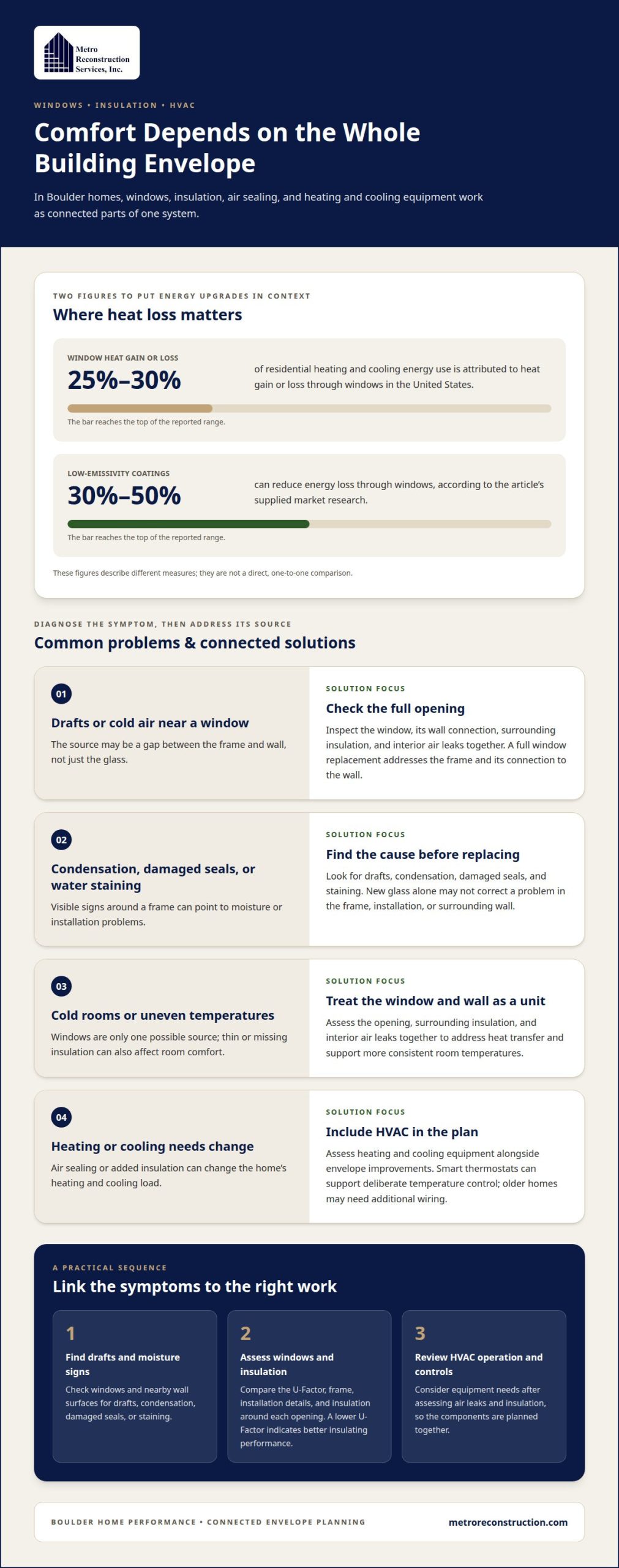
Windows are a practical place to assess heat loss. In the United States, heat gain or loss through windows accounts for 25% to 30% of residential heating and cooling energy use. Replacing older windows may improve comfort, but compare the window’s U-Factor, frame, and installation details. A lower U-Factor indicates better insulating performance. In Boulder’s high-altitude conditions, proper window selection and installation matter to long-term function.
Replacing older windows may improve resale appeal, but the return varies by project and market. Treat that as a broad benchmark, not a promise for a particular property. Before replacing windows, inspect for drafts, condensation, damaged seals, or water staining around the frame. Those signs can point to installation or moisture problems that new glass alone won’t fix. A full window replacement addresses the frame and its connection to the wall.
Insulation and air sealing affect how well new windows perform. For example, a draft near a window may come from a gap between the frame and wall, while cold rooms can also reflect thin or missing insulation. Addressing the opening, surrounding insulation, and interior air leaks together can reduce heat transfer and help maintain consistent room temperatures. Low-emissivity coatings can reduce energy loss through windows by 30% to 50%, according to the supplied market research.
Heating and cooling equipment should suit the home’s needs and the building envelope’s performance. If you seal air leaks or add insulation, the heating and cooling load may change, so assess the equipment as part of the plan. Smart thermostats can support more deliberate temperature control, though older homes may need additional wiring—an area where home improvement specialists like BrightWise Handyman can assist with smart technology integration. Energy-efficient appliances can complement these upgrades, but replacing a refrigerator won’t fix drafts or uneven temperatures in a bathroom or bedroom.
Use a practical sequence: identify drafts and signs of moisture, assess windows and insulation, then consider HVAC operation and controls. This helps link symptoms to their source before you add equipment or replace finishes. Energy improvements can support buyer appeal when they also make the home more comfortable and functional. Focus on how the components perform together, not just a product label: even a well-rated window depends on sound installation and a properly insulated opening.
Required specifications and existing conditions can expand the work beyond the planned upgrade and affect the remodel’s overall cost. The impact depends on what changes are needed to the windows, insulation, and HVAC system.
3. Home upgrades with poor returns: pools, luxury remodels, sunrooms, and wallpaper
There’s no fixed value gap between remodeled and unremodeled Boulder homes. Sale value depends on location, condition, layout, and buyer demand, so fresh finishes alone can’t establish a reliable premium. Compare similar homes in the same area, then separate improvements that solve functional problems from cosmetic changes. A dated bathroom with water damage, for example, raises a different resale concern than dated wallpaper.
Permit requirements for a Boulder remodel depend on its scope. A surface-level finish change differs from an addition or work affecting the structure, plumbing, or electrical systems. Identify those elements early and include permitting in the project plan rather than assuming appearance determines requirements. A kitchen remodel’s budget also depends on room size, cabinets and appliances, finishes, and layout changes. Updating finishes while keeping the layout differs from moving plumbing or electrical connections.
For bathroom resale, the national estimate for a mid-range remodel is about 80% of project cost. Boulder results depend on the home’s condition, finish choices, and buyer preferences. Replacing worn tile or improving ventilation can address function without enlarging the room. Fix leaks and failed waterproofing before decorative work, since hidden moisture can damage nearby materials.
Pool projects can be weak resale investments in markets where buyers weigh upkeep against seasonal use. In Colorado and Wyoming, pools may be used for only 3 to 4 months of the year; they can also involve additional work and insurance. A sunroom may similarly add maintenance and energy use while appealing to a narrower group of buyers. Luxury renovations can also underperform when they make a home substantially more elaborate than nearby properties. Wallpaper is another risk: distinctive patterns may feel dated to buyers who anticipate removing them.
A deck can serve daily life while supporting resale, but its estimated return varies by material. National estimates place deck installation at 68.2% to 82.9% return on investment, depending on material. A functional design with usable access from the home may have broader appeal than an oversized or highly personalized layout. Compare the deck’s condition, intended use, and relationship to the yard before adding features. Practical improvements tend to make a clearer case than upgrades chosen only for a dramatic first impression.
4. Balancing resale value with lifestyle
Choose remodels by looking at how your household actually uses each space. For a week, note where routines slow down: a narrow entry where bags pile up, a dining area that doubles as a workspace, or a bedroom without a quiet place for calls. These observations help define the project before you choose finishes or features. A remodel that addresses a recurring need is easier to assess than one prompted only by a passing idea.
Consider how your needs may change while you live in the home. If you plan to stay five or more years, give personal enjoyment weight alongside resale value. A room used for remote work today might later serve as a study or hobby space. Choose layouts and built-ins that serve their current purpose without making future changes difficult.
Map the routes between rooms before changing the floor plan. For example, trace how groceries move from the entry to the kitchen, or how laundry travels from bedrooms to the washer. If a proposed change adds steps or narrows a busy passage, its visual appeal may not outweigh the daily inconvenience. A simple floor-plan sketch can expose these conflicts before construction decisions are made.
Treat storage as part of a room’s function, not an afterthought. A mudroom bench with closed storage can make an entry easier to manage, while shelves near the activities they serve can reduce clutter elsewhere. The right choice depends on what your household needs to store and where those items are used. Avoid adding storage that takes up valuable floor space without solving a clear problem.
Evaluate outdoor improvements by how you’ll use the space. Will it be for quiet mornings, meals, or gathering with friends? Plan access and shelter around that purpose. A simple patio beside the kitchen may get more use than an elaborate layout far from the rooms you occupy. Consider sun exposure, views, and the transition from indoor flooring to the outdoor surface.
Before selling, consider whether a feature’s usefulness is clear without explanation. A defined entry, practical storage, and an easy-to-follow layout communicate function immediately. Keep a brief record of why you chose each improvement and how the space works. This can help distinguish lasting household benefits from changes that mainly reflect personal taste, and guide decisions about what to keep or adjust before listing.
5. Luxury materials and buyer preferences
Premium materials can improve how a Boulder home feels, but resale appeal depends on fit and function. A custom stone countertop may suit the kitchen, yet buyers also notice its condition, care requirements, and relationship to the cabinetry. Choose finishes that work with the home’s scale and architecture. A dramatic material can feel out of place if the surrounding rooms are modest or visually unrelated.
When choosing countertops, weigh appearance against everyday use. A busy cooking area needs a surface suited to how you prepare meals and clean up. In bathrooms, quality tile or stone can create a finished look, while ventilation helps manage moisture. Pairing an expensive surface with poor ventilation or unresolved water intrusion won’t address the source of damage. Function comes first.
Flooring involves a similar choice. Some buyers may prefer porcelain tile to marble because it can be easier to care for. Consider where the material will go, how it connects to adjoining rooms, and whether it suits the home’s overall style. A continuous, practical finish between a kitchen and living area can feel more cohesive than several competing patterns.
Judge luxury upgrades against the neighborhood, too. If a home already has well-maintained finishes, a highly customized project may add little that buyers recognize. An unusually bold stone pattern or specialized built-in, for example, may reflect one homeowner’s taste rather than broad buyer preferences. Before selecting materials, compare them with the home’s exterior, interior palette, and the character of nearby homes.
Before committing to an upscale material, consider its care requirements, durability in the room, visual fit, and compatibility with other design choices. A distinctive countertop, for instance, can be balanced with simple cabinet fronts and neutral flooring. This preserves character without making every surface compete for attention. Buyers can then focus on the room’s function as well as its finishes.
Prioritize materials that solve a real need as well as improve appearance. A worn exterior finish may need replacement for protection, while an interior surface may be ready for an update based on use or condition. If an exterior material decision is part of your project, explore exterior remodeling services as a next step. Sound planning connects finish choices to the home’s complete exterior system.
Metro Reconstruction Services: Stucco Restoration
Metro Reconstruction Services, Inc. can help when stucco shows cracking, staining, or areas that no longer bond securely. These signs may point to movement or moisture behind the finish, so consider the wall beneath the visible surface, too.
If you’re planning an exterior remodel, an assessment can help clarify whether the stucco needs repair or broader replacement. Addressing the cause rather than covering the symptom gives you a more informed starting point for planning exterior work.
For a Boulder home with stucco concerns, contact Metro Reconstruction Services, Inc. to discuss your project.
Plan Your Next Remodel Step With Confidence
A sound project starts with a clear understanding of your home’s condition and your priorities. Before choosing finishes, identify what needs repair, what would improve daily use, and which changes could remain useful to future owners. This order helps you make decisions based on the whole property, not just the most visible room or surface.
For exterior work, Metro Reconstruction Services, Inc. provides Stucco Restoration, Masonry Work, and Stucco installation. The team can assess exterior materials and how planned work fits the home’s outer system, giving your remodel a practical starting point.
For a closer look at what adds the most value to a home remodel in Boulder, focus your next step on the needs of your specific property. Contact Metro Reconstruction Services, Inc. today or call 303.543.9549 to discuss your project and move forward with a clear plan.
Frequently Asked Questions
What renovations add the most value to a home?
Projects that address visible wear, improve everyday function, or repair an aging building component often make a strong case. To assess what adds the most value to a home remodel in Boulder, start with a specific need, such as a failing exterior finish or a kitchen layout that limits storage. Then choose a scope that suits the home. Future buyers can more readily understand practical improvements than highly personalized changes.
Is it worth renovating before selling?
A remodel before selling can be worthwhile if it addresses an issue buyers may notice, such as damaged finishes, poor lighting, or an exterior that needs attention. Before starting, separate essential repairs from optional design changes and consider how much time remains before listing. A focused refresh may make the home easier to present, while a larger project can be harder to fit to your timeline and likely buyer preferences.
Which home remodel projects have the highest resale ROI in Boulder, Colorado?
National renovation return figures are benchmarks, not proof of which project will bring the highest return in Boulder. Local resale outcomes depend on the property, its condition, and buyer preferences. Use national estimates to identify projects worth researching, then compare similar homes in the same area. That local comparison is more useful than treating a national ranking as a Boulder-specific forecast.
Do energy-efficiency upgrades increase home resale value in Boulder?
Energy improvements can support buyer appeal when they address drafts, uneven room temperatures, or aging equipment. Their value depends on whether they solve a noticeable problem and work together as a system. New windows, for example, may have limited impact if air leaks remain around their frames. Keep records of completed work and product information so prospective buyers can understand what changed and how the home’s performance was improved.
Which Boulder neighborhoods or home types benefit most from specific remodels?
No single Boulder neighborhood or home type has one best remodel without a comparison of properties. Match your home with nearby sales that share its age, size, layout, and overall condition. Then note differences in features, such as usable outdoor space or updated systems. A remodel should address a clear gap between your property and comparable homes, not rely on a broad assumption about the neighborhood.
Which remodel projects are least likely to recoup their cost when selling a Boulder home?
Highly personalized projects and upgrades that require substantial upkeep may appeal to fewer buyers. Examples include a room designed for one specialized hobby or finishes that need particular care. Before proceeding, consider whether the space could serve another purpose and whether future owners could adapt it without major changes. Broad utility usually matters more to resale appeal than a design that works only for your household.
How can homeowners estimate remodel ROI using recent Boulder home sales?
Compare recent sales of similar homes in the same area, then note differences in condition and features that resemble your planned work. When deciding what adds the most value to a home remodel in Boulder, account for layout, lot, size, and sale timing, which all affect prices apart from remodeling. Treat the comparison as evidence, not proof that one upgrade caused a particular sale result.