
A simple patch on a cracked stucco wall is often just a cosmetic mask for a much deeper structural crisis. You likely feel a sense of unease when you spot staining or hairline fractures, wondering if the damage extends into the very bones of your home. It’s frustrating to face the uncertainty of whether a quick fix will suffice or if your property’s value is quietly eroding behind the surface. Surface fixes are not enough. Because your home represents your most significant investment, we believe in identifying the underlying structural origins of a failure. Understanding the stucco remediation process is the first step toward reclaiming your home’s safety.
This guide provides a professional roadmap to restore your home’s structural integrity and provide the peace of mind that comes with a permanent solution. You’ll learn why a forensic approach is necessary to identify root causes of moisture intrusion rather than just treating visible symptoms. We will explain how every stage of restoration protects your building’s complete outer system, ensuring the structure remains dry. This overview gives you the confidence to move forward with a 40-year solution that preserves your property for the long term.
Key Takeaways
- Learn why surface-level patches can actually accelerate rot and why true remediation is necessary to save your home’s structural framing.
- Explore how forensic diagnostics identify the exact origins of building failure to ensure your restoration is precise and effective.
- Follow the professional stucco remediation process through its critical stages, ensuring every structural element is restored and protected.
- Understand the vital role of a complete outer system, where moisture barriers and window flashing work together to keep your home dry.
- Secure your property’s future with a permanent solution by reaching out to our specialists at 303.543.9549 or through our contact page.
Stucco Remediation vs. Repair: Understanding the Structural Difference
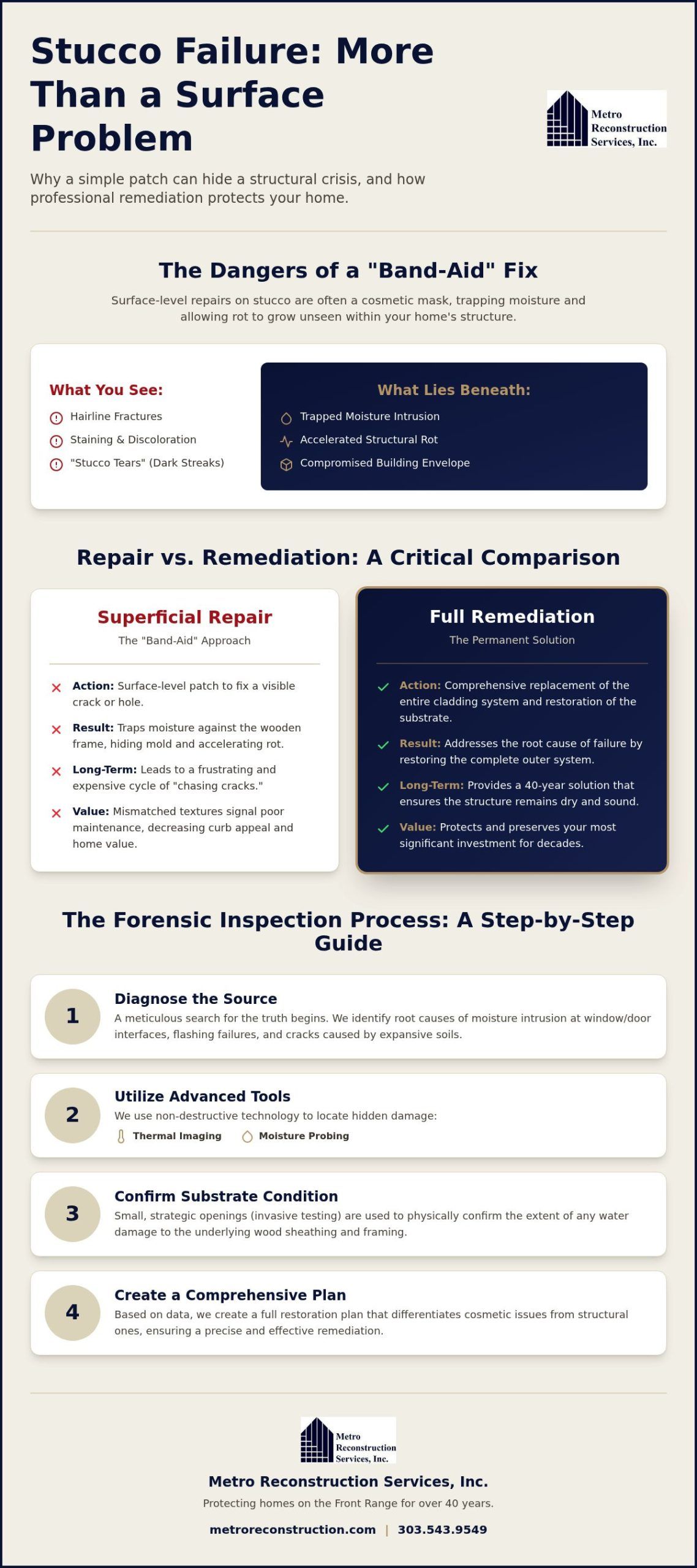
Many homeowners mistake a simple repair for a long term solution. A repair is usually a surface level patch intended to fix a visible crack or hole. In contrast, the stucco remediation process is a comprehensive replacement of the entire cladding system combined with the restoration of the building’s substrate. While Traditional stucco is known for its durability, it relies on a complex interaction between the outer finish and the inner moisture barriers. When these systems fail, a cosmetic fix often traps moisture against the wooden frame. This leads to accelerated structural rot that remains hidden until the damage is severe. We view cracks not as isolated events but as symptoms of deeper structural movement or improper drainage.
The Limitations of Traditional Stucco Repair
Systemic failure occurs when the building’s complete outer system can no longer manage moisture. You might notice “stucco tears,” which are dark streaks under the corners of windows, or efflorescence, a white powdery substance on the surface. These aren’t just aesthetic issues. They indicate that water is moving through the wall and pulling minerals out of the material. In many Front Range homes, improper original installation is the root cause. When the drainage plane is missing or flashing is installed incorrectly, the only way to preserve the home is through full stucco restoration services. We’ve seen these issues across Boulder and the Front Range for over 40 years. This thorough stucco remediation process ensures that every layer is built correctly to protect your investment for decades.
The Forensic Inspection: Identifying the Origins of Failure
A successful stucco remediation process begins with a meticulous search for the truth. Rather than assuming the damage is limited to what’s visible, our team conducts a forensic inspection to diagnose building envelope failures at their source. This analytical depth is necessary because moisture often travels through hidden pathways before manifesting as a surface stain. We pay close attention to window and door interfaces. These areas serve as primary points of entry when flashing is absent or degraded. In Colorado, we must also consider the impact of expansive soils. These shifting ground conditions exert pressure on your home’s exterior cladding, often leading to structural cracks that a standard repair would ignore.
Advanced Diagnostic Tools and Techniques
We utilize thermal imaging and moisture probing to locate hidden damage without premature demolition. Thermal cameras reveal temperature variations that often signal trapped water. To confirm these findings, moisture meters determine the exact saturation levels of the underlying wood sheathing during the stucco remediation process. Invasive testing, which involves small, strategic openings, allows us to confirm the substrate’s condition. We also evaluate the existing drainage plane to see if it allows the wall to breathe. If you suspect hidden damage, our restoration services can provide the clarity you need.
Mapping the Scope of Structural Damage
Once we gather the data, we create a comprehensive restoration plan based on our specific diagnostic findings. This process allows us to differentiate between cosmetic surface cracks and cracks caused by structural settling. Identifying this distinction is critical. If the cracks originate from movement in the soil or foundation, a simple stucco patch will fail within months. We examine the building’s complete outer system to ensure the solution is permanent. Every diagnostic finding informs our methodology, ensuring that we resolve the root architectural failure rather than just masking the problem.
The Systematic Stucco Remediation Process: A Step-by-Step Guide
Executing a high-quality stucco remediation process requires a disciplined, multi-stage approach that prioritizes structural health over visual speed. We follow a Systematic Stucco Remediation Process that aligns with industry standards to ensure every layer of your home’s exterior performs as intended. This sequence isn’t just about construction; it’s about correction. By moving through distinct phases, we ensure that the root causes identified during our forensic inspection are fully resolved before the new cladding is applied. This meticulous methodology is what distinguishes a permanent restoration from a temporary patch.
The process typically follows five critical phases:
- Phase 1: Controlled removal of the existing system to prevent secondary damage to your home.
- Phase 2: Forensic evaluation of the now-exposed substrate and structural framing.
- Phase 3: Comprehensive repair of wood rot, mold, and any compromised sheathing.
- Phase 4: Installation of high-performance moisture management and drainage systems.
- Phase 5: Application of the final cladding with precise window and door integration.
Controlled Demolition and Material Removal
Demolition is a delicate phase that requires more than just brute force. We focus on protecting your surrounding landscape and property because we understand the value of your entire investment. During this complex tear-off, our team systematically removes materials to identify exactly where the original moisture barrier failed. This step often reveals the difficult truth of a structural failure that was previously hidden. By managing debris carefully and maintaining a clean, safe workspace, we prepare the site for the precision work that follows. It’s during this phase that the stucco remediation process provides the most clarity regarding the extent of hidden damage.
Substrate Restoration and Structural Mitigation
Once the walls are bare, we address the building’s “bones.” This is the point where many general contractors cut corners, but we believe it’s the most vital step for long-term value. We replace rotted studs, sills, and sheathing with high-quality, durable materials that meet modern standards. Any remaining structural elements are treated to prevent future mold or fungal growth. This mitigation ensures the structure is perfectly sound before we begin building the new outer system. If you have questions about our methodology or need an evaluation of your home’s exterior, you can reach us at 303.543.9549 or visit our services page. We are dedicated to providing a restoration that lasts for decades.
Moisture Mitigation and the Complete Outer System Approach
The moisture barrier is the most critical component of the stucco remediation process. It’s the invisible shield that protects your home’s wood frame from the elements. While the outer stucco layer provides beauty and impact resistance, the underlying barrier manages the water that inevitably gets past the surface. We view this as a complete outer system. If one part fails, the entire structure is at risk. This is especially true in Colorado. Our high-altitude UV rays and intense freeze-thaw cycles put immense stress on building materials. Standard solutions often crack or degrade under these conditions, making high-quality material selection vital for a 40-year solution. We choose materials that can withstand the Front Range’s rapid temperature swings without losing their seal.
High-Performance Weather Resistant Barriers (WRB)
Traditional felt paper was once the industry standard, but it often becomes brittle and fails over time. We prefer modern liquid-applied barriers or advanced wrap systems that offer superior durability. These materials create a continuous air and moisture seal across the entire home facade. Proper overlapping and shingling are non-negotiable. We ensure every layer is installed so that water sheds correctly toward the ground rather than toward your wall studs. This precision prevents the moisture entrapment that leads to hidden rot. By creating this seamless layer, we give your home a second line of defense that works even when the exterior cladding is under pressure.
Integrating Windows and Critical Transitions
Many stucco failures start at the corners of windows and doors. These transitions are difficult to seal correctly. If the flashing isn’t integrated into the drainage plane, water will find its way behind the stucco. We utilize kick-out flashings and weep screeds to direct water away from the home’s foundation. This holistic approach ensures that your window installation services work in harmony with the new stucco. We also incorporate rainscreen systems. These create a small air space behind the cladding, allowing any moisture that enters to evaporate quickly. It’s a proactive way to keep the substrate dry.
It’s about more than just a dry wall. It’s about protecting your legacy. If you’re concerned about the health of your home’s exterior, schedule a forensic evaluation with our team today or call us at 303.543.9549 to ensure your property is truly protected.
Choosing a Specialist for Stucco Remediation in Boulder
Selecting a partner for your home’s restoration is a decision that impacts your property’s value for decades. In Boulder and the Front Range, our unique environment demands a level of expertise that goes beyond standard construction. We bring over 40 years of experience to every project, having operated as a family-owned firm since 1982. This longevity is rooted in our commitment to precision. While a general contractor might offer a competitive bid for a surface fix, they often lack the forensic expertise required for a true stucco remediation process. They may see a crack and suggest a patch. We see a symptom and investigate the underlying structural origins. This diagnostic depth ensures that your investment is protected by a solution that addresses the root cause of failure.
Evaluating Credentials and Forensic Expertise
When interviewing potential specialists, you should ask specific questions about their diagnostic process. Do they use moisture testing? How do they evaluate the building’s complete outer system? A true expert will explain the relationship between your window flashing, the drainage plane, and the final cladding. Reviewing past projects is also essential. Look for experience in complex structural mitigation and masonry work. Our deep roots in communities like Boulder, Denver, and Evergreen mean we understand the local building stressors better than anyone. We also believe in financial transparency. By offering fixed-price project fees, we provide you with peace of mind and eliminate the anxiety of unexpected costs during the restoration.
The Long-Term ROI of Professional Remediation
A professional restoration is an investment in your home’s future. It prevents the catastrophic loss that occurs when moisture is allowed to rot the structural framing. By choosing a holistic, engineering-led solution, you’re not just fixing a wall; you’re preserving your legacy. This approach provides a 40-year solution that standard repairs simply cannot match. You can move forward with the confidence that your home is dry, sound, and safe. If you suspect your stucco is failing, don’t wait for the damage to spread. Reach out to a partner who values substance over style and understands the hidden mechanics of your home.
Contact Metro Reconstruction Services for a forensic evaluation at 303.543.9549. We are here to guide you through every stage of the stucco remediation process with integrity and care.
Protecting Your Home’s Structural Integrity for the Long Term
Protecting your property requires a shift from surface level fixes to long term preservation. You’ve seen how identifying the underlying structural origins of moisture failure is the only way to ensure a dry, healthy home. By following a forensic stucco remediation process, you aren’t just repairing a wall; you’re restoring the building’s complete outer system. This holistic approach resolves hidden rot and integrates critical drainage components to withstand Colorado’s unique environmental stressors.
With over 40 years of structural restoration expertise in Colorado, our family-owned firm remains committed to high-quality craftsmanship and technical precision. We don’t believe in low quality patches that hide the truth. Instead, we provide the peace of mind that comes from a permanent, engineering led solution. It’s time to move forward with the confidence that your investment is secure.
Secure your home’s future; contact Metro Reconstruction Services for a forensic stucco evaluation today. You can also reach our team directly at 303.543.9549 to discuss your project. We look forward to being your partner in property preservation.
Frequently Asked Questions
What is the difference between stucco repair and stucco remediation?
Stucco repair typically involves fixing localized cracks or surface damage without addressing the underlying wall assembly. In contrast, the stucco remediation process is a comprehensive restoration that involves removing the entire cladding to inspect and replace the moisture barrier and damaged wood. This holistic approach ensures that the root cause of the failure is resolved, protecting your home from future rot rather than just masking a cosmetic issue.
How long does the stucco remediation process typically take?
The duration of the project depends on the size of your home and the extent of hidden structural damage discovered during the forensic phase. Most comprehensive remediation projects take between four and eight weeks to complete from the initial tear-off to the final finish application. We prioritize precision over speed to ensure that every structural element is dry and sound before we install the new building’s complete outer system.
Does homeowners insurance cover the cost of stucco remediation?
Most homeowners insurance policies don’t cover remediation because they categorize stucco failure as a maintenance issue or the result of improper original installation. However, some policies might cover resulting damage, such as internal mold or water damage to finished rooms, depending on your specific coverage. It’s always best to review your policy with your agent to understand what structural mitigation costs might be eligible for a claim.
What are the most common signs that my home needs remediation?
Visible symptoms often include dark streaks under window corners, known as “stucco tears,” or white powdery mineral deposits called efflorescence. You might also notice bulging walls, a persistent musty odor inside the home, or cracks that reappear shortly after being patched. These signs indicate that moisture is trapped behind the surface, suggesting that the building’s moisture management system has failed and requires a professional forensic evaluation to prevent catastrophic loss. In cases of significant structural damage, firms like TBC Restoration specialize in comprehensive property recovery to ensure the building is safely restored.
You can typically remain in your residence while we perform the work, as the majority of the restoration takes place on the exterior. However, you should expect significant noise during the demolition phase and limited access to certain outdoor areas for safety reasons. We take great care to manage debris and maintain a clean workspace to minimize the impact on your daily life while we restore your home’s structural integrity.
Why is stucco failure so common in the Boulder and Denver areas?
Colorado’s Front Range presents a challenging environment for exterior cladding due to intense UV radiation and rapid freeze-thaw cycles. These temperature swings cause building materials to expand and contract at different rates, often leading to fractures in the stucco surface. Additionally, our region’s expansive soils can cause subtle foundation shifts that stress the building’s outer system, allowing moisture to enter through gaps that standard building wraps can’t protect.
How much does professional stucco remediation cost in Colorado?
The total investment for remediation varies based on the square footage of the facade and the amount of structural wood rot that needs replacement. Because we focus on a permanent, 40-year solution rather than a cheap patch, our projects are priced to include high-quality moisture barriers and forensic diagnostics. We provide fixed-price project fees after our initial inspection to give you complete financial transparency and peace of mind before the work begins.
What happens if I ignore the cracks in my stucco exterior?
Ignoring small fractures allows moisture to seep into the wall cavity, where it can rot the wooden studs and sheathing without being seen. Over time, this moisture leads to mold growth and weakens the structural frame of your home, potentially resulting in extremely expensive repairs later. Addressing these issues early through the stucco remediation process preserves your property value and ensures the long-term safety of your home’s complete outer system.
If you have additional questions or need a professional evaluation, please reach out to us at 303.543.9549 or through our contact page. We are here to help you protect your investment.