
Could the very material you chose for its timeless beauty be the hidden source of your home’s future structural fatigue? In the Front Range, many homeowners select an exterior based on initial curb appeal, yet they often find themselves battling unexpected maintenance cycles when the first winter temperature swing arrives. Choosing between stucco vs james hardie siding is not merely an aesthetic preference; it’s a strategic decision regarding how your property interacts with Colorado’s demanding environment. We understand the pressure of protecting your largest investment while facing the reality of expansive soils and intensifying wildfire risks.
You deserve the peace of mind that comes from a building’s complete outer system that’s designed to last for decades, not just until the next hail season. This comparison provides a detailed analysis of durability, maintenance requirements, and the latest 2026 fire resiliency standards to ensure your choice adds lasting value. We’ll explore how these materials perform under stress, the impact of the 2026 Colorado Wildfire Resiliency Code, and which solution offers the most reliable protection for your home’s unique structural needs.
Key Takeaways
- Evaluate how different materials respond to Colorado’s intense sun and rapid freeze-thaw cycles to prevent long-term structural fatigue.
- Compare the maintenance realities of stucco vs james hardie siding, focusing on crack prevention and the longevity of modern factory finishes.
- Understand the implications of the 2026 Colorado Wildfire Resiliency Code on your material choices for superior home hardening.
- Learn why a forensic approach to moisture management is more important for your home’s integrity than the choice of siding alone; precision in the complete outer system is vital.
- Determine the best path for your property by contacting our experts at 303.543.9549 or visiting our contact page.
Stucco vs James Hardie Siding: Understanding the Fundamentals
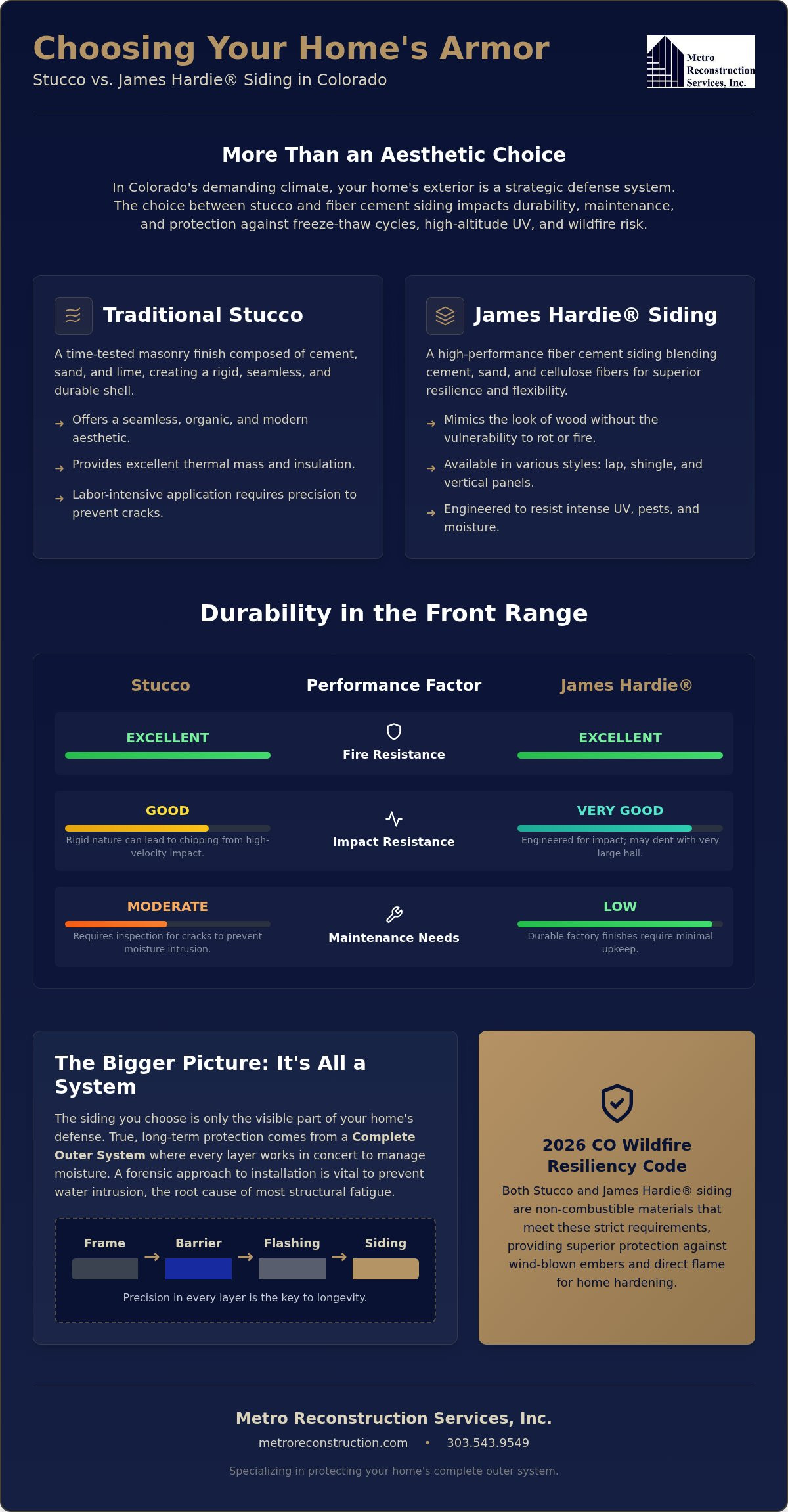
Homeowners across the Front Range often find themselves at a crossroads when evaluating their building’s complete outer system. The decision between stucco vs james hardie siding isn’t just about color; it involves understanding how different materials interact with Colorado’s extreme climate. While one offers a seamless, Mediterranean or modern aesthetic, the other provides the structured, clean lines of traditional lap siding. Both materials are now highly sought after in 2026 because they satisfy the strict requirements of the Colorado Wildfire Resiliency Code, making them excellent choices for those prioritizing safety and long-term value.
What is Traditional Stucco Siding?
Stucco is a time-tested masonry finish that has protected structures for centuries. It’s primarily composed of cement, sand, and lime, applied in a meticulous multi-layer process that creates a rigid, durable shell. This material is prized for its thermal mass and its ability to provide a continuous, gap-free exterior. For many older properties in neighborhoods like Chautauqua or Hilltop, maintaining this original look through professional stucco restoration is essential for preserving both historical character and structural health. It’s a labor-intensive craft that requires precision to ensure the bond between layers remains intact over decades of freeze-thaw cycles.
The Rise of James Hardie Fiber Cement
James Hardie has emerged as a high-performance leader in the siding industry by blending the strength of cementitious materials with the flexibility of cellulose fibers. This unique composition creates a plank that’s far more resilient than traditional wood or vinyl, which often fails under the intense UV radiation of our high-altitude environment. Homeowners can choose from various styles, including traditional lap siding, shingle-style shakes, or modern vertical panels. In 2026, the popularity of the “Iron Gray” finish from the Statement Collection highlights a shift toward bold, sophisticated exteriors that require minimal upkeep. It’s a premium solution for those who want the look of wood without the constant threat of rot, fire, or woodpecker damage.
The choice between these two often comes down to the architectural DNA of the home. Modern farmhouses lean toward the vertical lines and varied textures of fiber cement, while custom builds in the foothills often favor the organic, earthy texture of masonry finishes. Both represent a commitment to quality over the superficial fixes offered by lower-cost alternatives. Understanding these fundamental differences is the first step in identifying which material will best protect your investment against the specific environmental stressors of the Colorado landscape.
Comparing Durability: Fire, Hail, and Colorado Weather
Colorado’s environment acts as a laboratory for material failure. High-altitude UV radiation and sudden shifts in temperature test the limits of every building envelope. When debating stucco vs james hardie siding, homeowners must look beyond the surface. They need to consider how these materials withstand the physical stress of the Front Range. Weather doesn’t wait. Choosing a material that resists the unique environmental stressors of our region is the only way to ensure long-term structural preservation.
Fire Hardening and Wildfire Protection
The 2026 Colorado Wildfire Resiliency Code has transformed how we approach residential construction. In mountain communities like Evergreen and Genesee, choosing non-combustible materials is a necessity. Both stucco and fiber cement siding are rated as non-combustible, making them superior to wood or vinyl. This choice is a cornerstone of fire mitigation and prevention efforts. Home hardening protects your structure from wind-blown embers. These embers often cause more destruction than the fire front itself by finding small vulnerabilities in the home’s exterior system.
Impact Resistance: Surviving the Hail Season
Hail is a seasonal certainty in Boulder and Denver. Fiber cement siding is engineered for impact resistance, though extremely large stones can still cause localized denting. Stucco is incredibly hard, but its rigid nature means a high-velocity strike might cause surface chipping. These small breaches allow moisture to enter the system. We specialize in exterior home repair to address these vulnerabilities before they compromise the underlying structure. Precision matters when sealing these entry points to maintain the integrity of the building’s complete outer system.
Thermal expansion remains a silent threat to rigid exteriors. In Boulder, a sunny afternoon can quickly turn into a freezing night, causing materials to expand and contract rapidly. Stucco is a masonry product that doesn’t move easily. This rigidity often leads to hairline cracks when the house settles or shifts during these temperature swings. James Hardie siding is installed as individual panels, which allows for slight movement without sacrificing the seal. Managing these stresses is part of a holistic approach to Moisture Control for New Residential Buildings. This ensures that water doesn’t find its way into the wall cavity during the spring thaw.
High-altitude sun is brutal on exterior finishes. James Hardie’s ColorPlus technology is baked on at the factory, resisting the fading that often plagues painted surfaces. Stucco requires repainting or recoating every 5 to 10 years to maintain its UV protection and water resistance. Choosing between stucco vs james hardie siding in 2026 requires a forensic understanding of how these materials age. If you’re noticing signs of impact damage or structural fatigue, our team at 303.543.9549 can provide a detailed assessment of your exterior protection systems through our contact page.
Maintenance and Long-Term Value Assessment
Protecting your home’s exterior is a long-term commitment that goes beyond the initial installation phase. When comparing stucco vs james hardie siding, the total cost of ownership is often dictated by how much attention the system requires over its lifespan. While both materials offer premium protection, they demand different levels of proactive care to ensure they continue to perform as intended in our demanding climate. Neglecting these requirements doesn’t just hurt your curb appeal; it can lead to hidden structural fatigue that’s expensive to remediate.
The Maintenance Schedule for Stucco
Traditional masonry is a rigid system. Because of Colorado’s shifting soils and rapid temperature swings, hairline cracks are almost inevitable over time. It’s vital for homeowners to distinguish between a superficial surface crack and one that indicates a deeper structural issue. Left unaddressed, these small openings allow moisture to reach the wood framing, leading to rot that remains hidden until the damage is severe. Regular inspections are the only way to catch these vulnerabilities early. For homeowners seeing signs of fatigue, professional stucco and masonry repairs are necessary to reseal the envelope and prevent water from compromising the building’s complete outer system. Most stucco surfaces also require recoating every 7 to 10 years to maintain their water-resistant properties.
James Hardie Upkeep Requirements
Some installers claim that fiber cement is a maintenance-free solution, but this is a dangerous oversimplification. While the planks themselves won’t rot or warp, the system relies heavily on the integrity of the caulking at joints and transitions. Over time, intense UV exposure can cause sealants to shrink or pull away, creating entry points for moisture. We recommend cleaning the surface annually with a low-pressure garden hose to prevent dirt buildup that can hold moisture against the finish. The advantage of factory-applied ColorPlus technology is its resistance to fading and chipping, which significantly extends the time between paint cycles. This provides a predictable maintenance schedule that many Colorado buyers find reassuring during a resale inspection.
Resale value in the Front Range is increasingly tied to a home’s ability to withstand environmental threats. Buyers in 2026 look for exteriors that offer both fire resistance and low-maintenance longevity. A well-documented maintenance history, whether for masonry or fiber cement, acts as a certificate of health for the property. If you’re unsure about the current state of your exterior or need a professional evaluation, our experts are available at 303.543.9549. You can also reach out through our contact page to schedule a detailed diagnostic of your home’s protective systems.
Moisture Mitigation: The Forensic Perspective
The choice between stucco vs james hardie siding often focuses on the visible finish, yet the true success of any exterior depends on the hidden mechanics of the drainage plane. In Colorado, where wind-driven rain and heavy snow accumulation are seasonal certainties, the material acts as a shield, but the drainage system behind it handles the water that inevitably penetrates the surface. We view every project through the lens of the building’s complete outer system. This holistic approach ensures that moisture doesn’t just reach the siding; it’s actively directed away from the structural framing and foundation to prevent long-term fatigue.
Managing Water Intrusion in Stucco Systems
Traditional masonry is designed to manage moisture, not just block it. High-quality installations utilize drainage mats and a weep screed at the base of the wall to allow absorbed water to exit the system safely. When these components are missing or improperly installed, the home often displays signs of internal distress. You might notice efflorescence, which appears as white, salty staining on the surface, or dark water marks at the base of the walls. These surface symptoms often point to underlying structural origins where water is trapped. Our forensic experts use these indicators to diagnose moisture accumulation before it leads to rot in the wall cavity.
Flashing and Drainage for Fiber Cement
James Hardie siding requires precise execution at every transition point to remain effective. Proper clearances from rooflines and the ground are vital to prevent the planks from wicking moisture, which can cause the material to soften or the finish to fail over time. The most critical vulnerabilities often exist around new window installations. If the flashing isn’t correctly integrated with the house wrap, water will find a path behind the siding. We frequently identify installation errors like missing kick-out flashing at roof-to-wall intersections, which can direct gallons of water into the structure during a single storm.
Precision in these hidden details separates a premium restoration from a temporary, superficial fix. Understanding how water moves in high-altitude environments is essential for maintaining your home’s integrity. If you’re concerned about the health of your building’s envelope, schedule a structural evaluation with our team. You can reach us at 303.543.9549 or visit our contact page to ensure your property preservation plan is built on forensic accuracy.
Making the Choice: Restoration or Full Replacement?
Deciding between a targeted restoration and a complete exterior overhaul is a strategic choice that impacts your property’s value for decades. When evaluating stucco vs james hardie siding, the first step is a forensic assessment of your home’s current structural health. If the underlying framing and moisture barriers are intact, a full replacement may be an unnecessary expense. However, if previous installation errors have allowed water to compromise the wall cavity, stripping the exterior to its studs is the only way to ensure long-term integrity. We help homeowners navigate this decision by identifying the underlying origins of surface-level distress rather than simply suggesting the most expensive option.
When Stucco Restoration is the Best Path
Restoration is often the most sustainable and cost-effective route if the drainage plane behind your masonry remains functional. By addressing hairline cracks and applying advanced elastomeric coatings, we can preserve the traditional masonry aesthetic while enhancing moisture resistance. This path minimizes environmental impact by keeping perfectly viable materials out of Colorado landfills. Our design-build services can even modernize the look of your existing stucco through updated textures and contemporary color palettes. It’s an ideal solution for those who value the thermal mass and seamless appearance of traditional finishes but want a refreshed, modern curb appeal without the waste of a full tear-off.
Choosing a Local Expert in Boulder
High-altitude construction requires a level of precision that many general contractors overlook. In Boulder County, the combination of intense UV radiation and rapid freeze-thaw cycles creates a unique set of stressors for any building material. A local expert understands that the performance of your siding is only as good as the flashing and sealants protecting the transitions. Before signing a contract, ensure your provider has a proven track record of managing moisture intrusion in demanding regional environments. You need a partner who views your home as a complete outer system, not just a series of isolated components. Ask about their experience with high-altitude moisture management and their approach to forensic diagnostics.
Integrity in property preservation means prioritizing substance over superficial fixes. Whether you choose the enduring strength of masonry or the modern resilience of fiber cement, the accuracy of the initial diagnostic remains the foundation of a successful project. We’re here to provide the clarity you need to protect your investment. For a forensic evaluation of your home’s exterior protection systems, contact Metro Reconstruction Services, Inc. at 303.543.9549 or visit our contact page to discuss your specific structural needs. We’re dedicated to helping you make the most informed choice for your home’s long-term preservation.
Securing Your Colorado Home’s Future
Choosing the right exterior involves more than picking a style; it requires a deep understanding of how your property interacts with the Front Range climate. Throughout this guide, we’ve examined the technical nuances of stucco vs james hardie siding, from fire resiliency to the mechanics of moisture management. The success of your investment depends on the precision of the complete outer system. Accuracy at the start prevents expensive structural failures later, ensuring your home remains a safe and durable sanctuary against the elements.
As a family-owned and operated firm with 40+ years of Colorado expertise, Metro Reconstruction Services, Inc. prioritizes substance and structural integrity over superficial fixes. Our specialized moisture mitigation focus provides the peace of mind you need when facing the region’s unique environmental stressors. Protect your home investment with a forensic exterior evaluation. Contact Metro Reconstruction Services, Inc. today or call us at 303.543.9549. We look forward to partnering with you on your property preservation journey and ensuring your home stands strong for decades to come.
Frequently Asked Questions
Is stucco or James Hardie siding better for fire protection in Colorado?
Both materials offer exceptional fire protection because they are classified as non-combustible. Stucco is a masonry product that provides a seamless barrier against embers, while James Hardie fiber cement is specifically engineered to resist ignition. In mountain communities like Evergreen and Genesee, these choices are vital for home hardening. Both options meet the strict 2026 Colorado Wildfire Resiliency Code requirements, ensuring your home’s exterior doesn’t act as fuel during a wildfire event.
How much does it cost to replace stucco with Hardie board?
The cost to replace your existing exterior depends on several variables, including the complexity of the tear-off and the state of the underlying structural framing. Replacing stucco with James Hardie siding involves removing the original masonry layers to inspect the drainage plane. We focus on identifying underlying structural origins of any damage before installation. Because every property has unique moisture mitigation needs, we provide detailed assessments to ensure your new system is built on a reliable foundation.
Does James Hardie siding crack as easily as stucco in the winter?
James Hardie siding is less likely to crack than stucco during Colorado’s intense freeze-thaw cycles. Stucco is a rigid masonry finish that can develop hairline fractures when the ground shifts or temperatures swing rapidly in Boulder. Fiber cement planks are installed as individual components, which allows the system to handle minor structural movements without surface failure. This flexibility is a significant advantage for homeowners who want to avoid the frequent maintenance cycles associated with traditional masonry.
Can I install James Hardie siding over my existing stucco?
We don’t recommend installing fiber cement directly over existing stucco because it prevents a proper forensic evaluation of the building’s complete outer system. Trapping old masonry behind new siding can hide active moisture intrusion and lead to structural rot. A full tear-off allows us to install modern drainage mats and flashing. This ensures that the transition between stucco vs james hardie siding is handled with the precision necessary for long-term property preservation and structural health.
What is the lifespan of stucco compared to fiber cement siding?
Both materials offer impressive longevity when they are supported by a high-quality drainage system. James Hardie siding typically has a lifespan of 30 to 50 years, while traditional stucco can last over 50 years with proactive maintenance. The key to reaching these milestones in the Front Range is consistent care. Stucco requires periodic resealing and repainting, whereas the choice of stucco vs james hardie siding relies on maintaining the integrity of the caulking and factory finishes to resist UV exposure.
How does hail damage affect stucco differently than James Hardie?
Hail affects these materials differently based on their physical composition. Large hailstones can cause surface chipping in rigid stucco, which creates entry points for water. James Hardie siding is engineered for impact resistance, though extreme storms may cause localized denting or cracking in the planks. Regardless of the material, any breach in the exterior shell requires immediate attention. We specialize in identifying these vulnerabilities to prevent moisture from compromising your home’s underlying structural framing.
Why is moisture mitigation so important for Colorado siding?
Moisture mitigation is the most critical factor in protecting your home’s foundation and framing from Colorado’s seasonal snow melt. Without a functional drainage plane, water becomes trapped behind the exterior, leading to hidden rot and structural fatigue. We utilize a forensic approach to ensure that your building’s complete outer system effectively directs water away from sensitive areas. This proactive strategy preserves your investment and avoids the high costs associated with major structural repairs in the future.
Do I need a specialized contractor for stucco restoration in Boulder?
Yes, hiring a specialized contractor for stucco restoration is essential due to the technical complexities of masonry in high-altitude environments. General handymen often lack the forensic expertise required to identify the root causes of moisture intrusion. Our team brings over 40 years of experience to every project in Boulder and the surrounding mountain communities. We focus on long-term structural preservation rather than superficial patches. Reach us at 303.543.9549 or visit our contact page for an evaluation.