
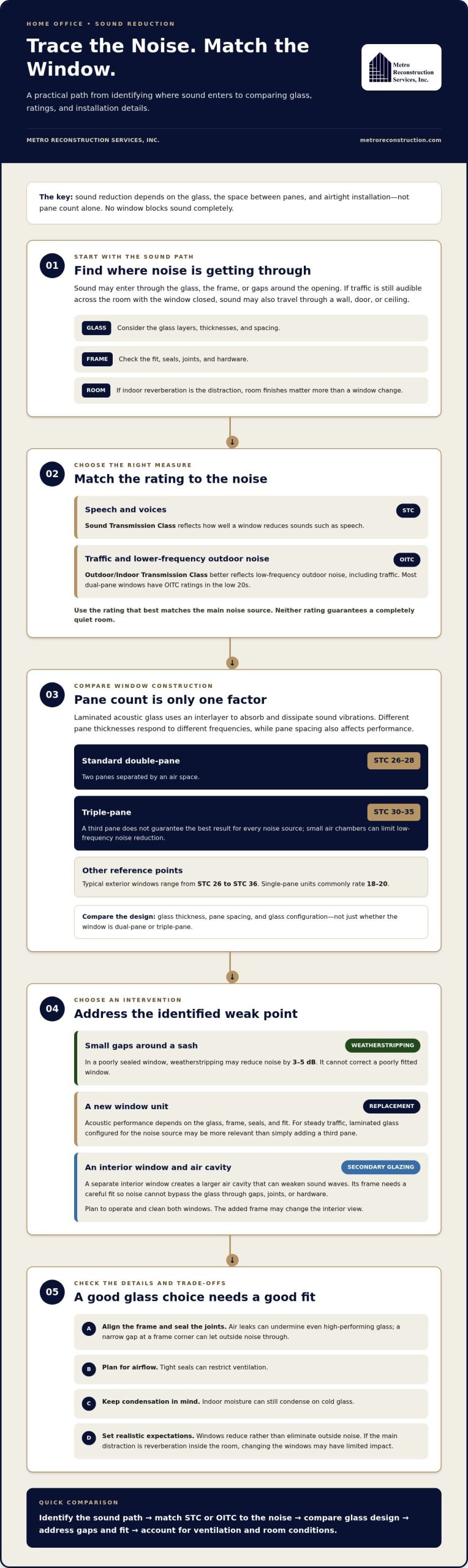
A replacement window isn’t automatically the quietest choice for a home office. Sound dampening windows for a home office reduce, rather than eliminate, outside noise by using features such as laminated glass, different glass thicknesses, and well-sealed frames to limit sound vibrations and air leaks. Standard double-pane windows commonly have Sound Transmission Class ratings of 26-28, while triple-pane windows commonly rate 30-35, but pane spacing and glass configuration also affect performance.
If traffic, voices, or other outdoor noise interrupt your work, a window upgrade may help. The right option depends on the window’s construction and installation, and on whether sound is entering through the glass, frame, or gaps around the opening. This article explains how sound-dampening windows work, how they compare with dual-pane and replacement windows, and when an upgrade is likely to address the source of the noise.
Key Takeaways
- Sound reduction depends on the glass, the space between panes, and airtight installation; no window completely blocks sound.
- Secondary glazing adds an interior window and air cavity, but it also means operating and maintaining two windows.
- Compare glass thickness, pane spacing, and sealing, not just whether a window is dual-pane or triple-pane.
- If stucco around a window needs attention, Metro Reconstruction Services, Inc. offers stucco restoration. Contact the team or call 303.543.9549.
What Are Soundproof Windows & How Do They Work?
Soundproof windows can reduce outside noise, but no window blocks sound completely. Laminated acoustic glass places an interlayer between glass sheets to absorb and dissipate sound vibrations. Different pane thicknesses respond to different frequencies, while an optimized air space limits sound transmission. In a Denver home office, sound dampening windows may help when traffic or voices are a persistent distraction.
Secondary glazing adds an interior window behind the existing one, creating a larger air cavity that can weaken sound waves. Its separate frame needs a careful fit: gaps around the original frame, joints, or hardware can let noise bypass the glass. You will need to operate and clean both windows, and the added frame may change the interior view.
Weatherstripping closes small gaps around a sash, but it can’t correct a poorly fitted window. In a poorly sealed window, weatherstripping may reduce noise by 3-5 dB. Professional installation aligns the frame and seals joints, preserving the acoustic barrier. Air leaks can undermine even high-performing glass. A narrow gap at a frame corner, for example, can let outside noise through.
The installed price depends on the glass type, opening size, frame condition, and installation work. Request a quote to establish the project price. Tight seals can restrict airflow, so plan for ventilation. Indoor moisture can still condense on cold glass. Secondary glazing adds a pane and frame, which may affect the view, though clear glass generally lets daylight through. If reverberation inside the room is the main distraction, changing the windows may have limited impact. Room finishes matter more.
Comparison with dual-pane and replacement windows
Compare glass design and acoustic ratings, not pane count alone. Depending on your jurisdiction and property documents, local codes, permits, and HOA rules may apply.
Dual-Pane Window Comparisons
A dual-pane window has two panes separated by an air space. Standard double-pane units commonly rate STC 26-28. STC means Sound Transmission Class, a rating that reflects how well a window reduces sounds such as speech. Most dual-pane windows have Outdoor/Indoor Transmission Class, or OITC, ratings in the low 20s. OITC better reflects low-frequency outdoor noise, including traffic. For sound dampening windows for home office use, compare the rating that best matches your main noise source.
Replacement Window Comparisons
A replacement window is a new unit fitted into an existing opening. Its acoustic performance depends on the glass, frame, seals, and fit. Typical exterior windows range from STC 26 to STC 36; single-pane units commonly rate 18-20. Triple-pane windows commonly rate 30-35, but small air chambers can limit low-frequency noise reduction. Against steady traffic, sound dampening windows for home office use may benefit from laminated glass configured for the noise source, rather than simply adding a third pane.
Near busy traffic, compare OITC ratings; for speech, consider Sound Transmission Class ratings. No rating guarantees a completely quiet room.
Metro Reconstruction Services, Inc.: Stucco Restoration
Metro Reconstruction Services, Inc. provides stucco restoration when cracking or deterioration around a window signals damage to the exterior finish. The window, stucco, and surrounding wall are parts of the same building envelope, so repairing visible stucco damage can help protect the wall from moisture intrusion. Stucco restoration addresses the exterior finish, not sound transmission through window glass.
If the stucco around your window needs installation or replacement, the right scope depends on the condition of the existing finish and wall. For help with stucco restoration, contact Metro Reconstruction Services, Inc..
Plan the Next Step for a Quieter Workspace
Choose sound dampening windows for your home office based on how you use the room. Note when distractions matter most, such as during calls or focused work, and how much daylight you want to retain. These priorities help you compare options against your actual workday rather than relying on pane count alone.
If window replacement is part of your plan, Metro Reconstruction Services, Inc. can discuss the project with you. A clear description of your goals is a useful starting point.
Contact Metro Reconstruction Services, Inc. about your window project, or call 303.543.9549. A well-considered next step can bring more focus to your workday.
Frequently Asked Questions
Do window inserts really reduce noise?
Yes, a well-fitted window insert can reduce sound entering through an existing window. It works best when the window is a main path for outside noise; sound traveling through a wall, door, or ceiling needs attention elsewhere. For example, if traffic remains audible across the room with the window closed, other parts of the exterior envelope may also transmit sound.