
A missing siding panel doesn’t automatically mean the whole exterior needs replacement. Localized damage may be repairable, while widespread deterioration, repeated failures, or water intrusion can make replacement the more durable option. For siding replacement in Boulder, first assess how far the damage extends and whether it has reached the wall behind the panels.
Loose or damaged panels can raise practical questions, especially after hail or strong winds. Siding is only one part of your home’s exterior system: moisture may also affect the protective barrier and sheathing behind it. These conditions help determine the right scope of work.
This guide explains how to assess siding damage, weigh repair against replacement, and account for local weather and wildfire exposure. It’s useful for homeowners in Boulder and nearby Longmont, Niwot, Golden, and Evergreen, as well as Parker, Morrison, Cherry Creek, Cherry Hills Village, Genesee, Littleton, Broomfield, Denver, Silverthorne, Breckenridge, Vail, and Larkspur. The right approach depends on each property’s exposure and existing exterior assembly.
Key Takeaways
- Look beyond a missing or cracked panel: damage to the barrier or sheathing behind it can change the right scope of work.
- Localized damage may call for a different approach than widespread deterioration, recurring failures, or water intrusion.
- Choose siding with Boulder’s hail, snow, strong winds, and wildfire exposure in mind; material properties affect long-term performance.
- Replacement planning should account for the home’s full exterior system, including how siding connects with trim, windows, and moisture protection.
- For exterior finish concerns involving stucco or masonry, Metro Reconstruction Services offers restoration and replacement work.
Boulder-area siding contractor listings
Contractor listings can help you identify companies that work on siding in the Boulder area, but treat them as a starting point, not proof of workmanship. Look for experience relevant to your project, whether that means replacing several panels, repairing damaged trim, or installing fiber cement siding. A listing focused on wood siding repairs may not demonstrate experience with another material or a full exterior project.
Review any stated credentials carefully. A useful credential names the issuing organization and the type of work it covers. An award is more informative when its source, year, and category are clear. A badge or award without context doesn’t show how a contractor handles siding details, moisture protection, or wall transitions.
Reviews are most useful when they describe the project, not just give a general rating. Look for details about materials, work scope, communication, and how the finished exterior met adjoining trim or openings. A review about replacing siding on one wall, for example, gives more context than a rating alone. Compare several specific comments rather than relying on a single review.
- Project fit: Match the listing’s described work to your material and scope.
- Credentials: Note the issuer and the work covered by each qualification.
- Awards: Look for the awarding organization, year, and category.
- Reviews: Prioritize descriptions of completed siding work and project communication.
How do Boulder siding contractors handle hail damage and insurance claims? They can photograph visible impacts, inspect affected walls, and prepare a written scope describing the observed damage. Keep these records with your claim documents so the damaged areas and proposed work are clearly identified.
When reviewing a listing, distinguish visible siding damage from signs that need further investigation. A useful project description identifies affected wall sections and nearby details, such as corners, trim, and openings. This helps clarify whether the work is a localized repair or broader replacement and makes project descriptions easier to compare in Boulder, Longmont, Niwot, and Golden.
Use listing and review details to understand a proposed scope, not to assume a rating guarantees a particular result. Cement siding and wood siding, for example, require different installation details. Clear project descriptions help you compare those differences. If hail has affected multiple walls, document the visible damage and proposed work to keep the discussion focused on your home’s actual condition.
Damaged, loose, or missing siding panels
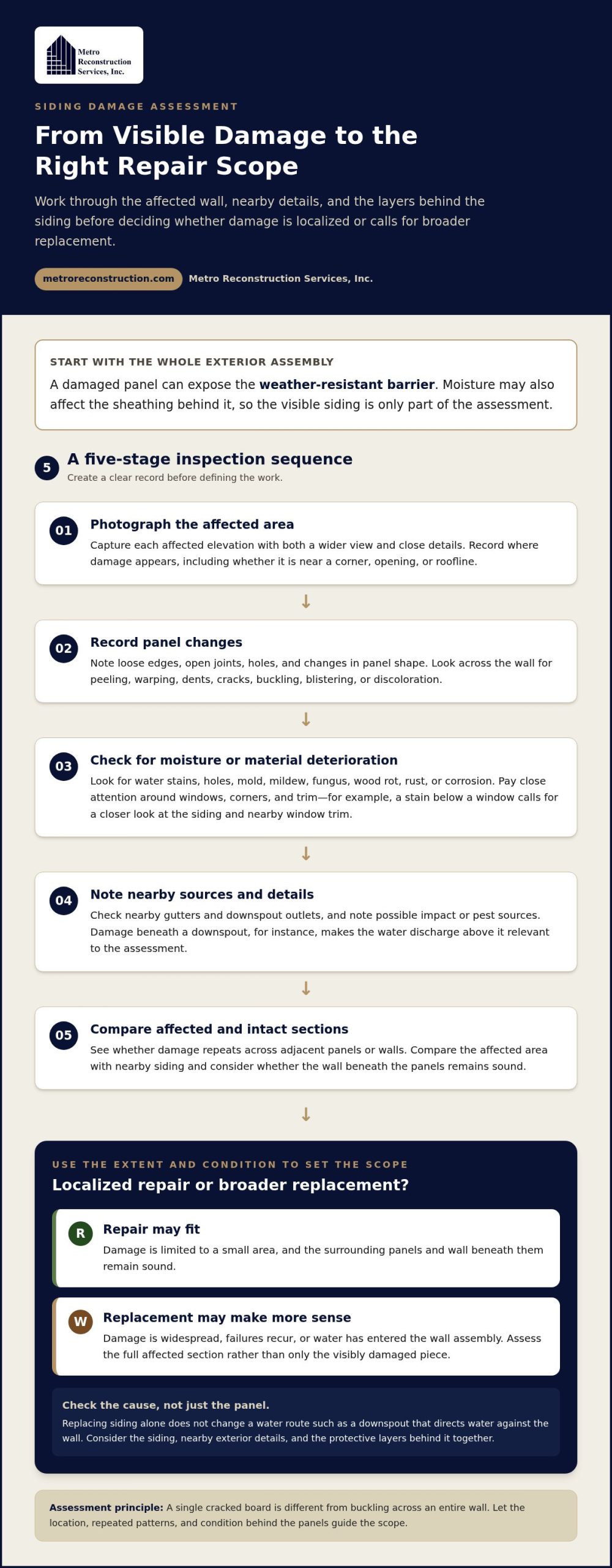
A damaged panel can expose the wall’s protective layers to the weather. In Boulder County, hail can crack, dent, or puncture siding, creating openings that let water pass behind the panels. A missing section may leave the weather-resistant barrier exposed. Record the damage’s location and extent, including whether it is near a corner, opening, or roofline. This can help show whether the failure is isolated or part of a wider pattern.
Inspect the entire wall, not just the first visible defect. Peeling, warping, dents, cracks, buckling, blistering, and discoloration may indicate siding needs attention. Water stains, holes, mold, mildew, fungus, wood rot, rust, or corrosion can signal moisture or material deterioration. A stain below a window, for example, warrants a closer look at the siding and nearby window trim. A bowed panel beside a straight, intact section may point to a more localized issue.
Damage may start beyond the siding itself. Sports equipment or heavy furniture can strike panels, while termites, pests, and rodents can affect siding or materials behind it. Damaged gutters or downspout outlets may direct water against a wall. Note where the damage is and what’s nearby. A dent beneath a downspout, for instance, calls for attention to both the panel and the water discharge above it.
Use this inspection sequence to create a useful record:
- Photograph each affected elevation, including a wider view and close details.
- Record loose edges, open joints, holes, and changes in panel shape.
- Look for staining or deterioration around windows, corners, and trim.
- Note nearby gutters, downspouts, and possible impact or pest sources.
- Compare affected areas with adjacent panels to see whether damage repeats.
Repair may be suitable when damage is limited to a small area and surrounding panels and the wall beneath them remain sound. Replacement may make more sense when damage is widespread, failures recur, or water has entered the wall assembly. One cracked wood board is different from buckling across an entire wall. Vinyl siding also needs assessment of adjoining panels and connections, not just the damaged piece. Base the scope on the condition of the full affected section.
Don’t treat a replacement panel as a complete fix until you understand the cause. If a downspout directs water against the wall, replacing the siding alone leaves the water route unchanged. If an impact has damaged several adjacent panels, assess the full affected area before defining the work. Record the location, visible symptoms, and nearby exterior features to guide a discussion of repair or replacement.
Climate durability and wildfire resistance
Boulder’s siding faces several stresses at once: moisture, hail, intense sun, wind, and fire exposure. The city sits at 5,400 feet and receives over 300 days of sunshine annually. Sunlight and temperature changes challenge exterior finishes, while rain, snow, and hail can carry moisture into gaps or damaged areas. A durable assembly depends on siding and the layers beneath it working together. Projects in Boulder and nearby Longmont should account for these exposures when selecting materials and planning exterior details.
Temperature can shift by 50 degrees in a single day in Boulder. That movement makes material selection and installation details important, since siding and trim expand and contract as temperatures change. Wind adds another load: Boulder’s downslope winds regularly exceed 80 mph and have been recorded above 100 mph. Secure attachment and careful detailing at corners and openings help the exterior system withstand exposure. Transitions deserve particular attention because loose edges can admit water or wind-driven debris.
Moisture management matters even with durable cladding. Rain, snow, and hail can reach the wall through gaps, damaged joints, or poorly directed runoff. The weather-resistant barrier behind siding helps protect the sheathing, but it relies on properly integrated flashing and sealed transitions. During replacement, review windows, roof-to-wall intersections, trim, and drainage paths. Replacing panels without addressing a water route leaves the cause in place.
Wildfire history gives material choice added weight. The Marshall Fire occurred in December 2021 and destroyed over 1,000 structures in Louisville and Superior, Colorado. Fiber cement is durable, low-maintenance, and resistant to warping, rot, pests, and mold or mildew growth. It is also fire-resistant; James Hardie fiber cement siding is non-combustible. These properties make fiber cement a durable option for homes in fire-prone areas, but siding alone does not protect every part of a property from wildfire.
Compare materials by relevant performance, not by one label. Fiber cement siding lasts about 50 years, while metal siding, including aluminum, lasts 30 years. Wood siding can last up to 40 years. Durability depends on exposure and upkeep, so inspect joints, edges, and finish conditions during regular exterior maintenance. A shaded wall with persistent runoff may face different wear than a sun-exposed elevation.
- For moisture: Check flashing, joints, and drainage paths alongside the siding.
- For wind: Review attachment and vulnerable corners across exposed elevations.
- For wildfire: Consider non-combustible siding as one part of broader property protection.
For siding replacement in Boulder, match the material to the home’s exposure and consider the complete exterior system. This helps protect the home through local weather conditions.
What is the average cost to replace siding on a house in Boulder, Colorado?
There’s no single average that accurately describes every Boulder home. The project scope depends on the area being replaced, the siding material, and the condition of the wall beneath it. Sound sheathing and straightforward wall sections call for a different scope than concealed moisture damage or complex transitions. A project-specific quote is more useful than a broad average.
Several details shape the work included in a replacement project:
- Wall area: The siding coverage and the number of separate elevations determine how much material and installation work the project involves.
- Material: Wood, metal, and fiber cement have different handling and installation requirements. The selected product also affects trim and finishing details.
- Existing layers: Removing siding may reveal damaged sheathing, a compromised weather-resistant barrier, or moisture that needs attention before new cladding goes on.
- Openings and transitions: Windows, doors, corners, and roof-to-wall junctions require careful integration with flashing and siding.
- Access and layout: Steep grades, multiple stories, and architectural details can affect how crews reach and complete each wall.
Replacing siding on a simple rectangular wall differs from cladding one with several windows, corners, and roof intersections. These junctions require careful cuts and water-management details, not just extra panels. If removal exposes rot, the affected sheathing may also need attention before installation continues.
In Boulder, full siding replacement requires permits from the City of Boulder and Boulder County. That requirement belongs in project planning because it affects the steps involved before work begins. Most residential siding projects take 1-2 weeks, depending on property size and weather; installation for a typical single-family replacement takes 3-6 days. These timelines describe different parts of the project, not a guaranteed schedule for every home.
To compare proposals, make sure they cover the same work. Look for the material, wall areas, removal scope, treatment of damaged sheathing, weather-resistant barrier, flashing, trim, and cleanup. If one proposal excludes a wall transition or underlying damage, its total may not represent the same finished scope as another.
The project amount depends on the home and scope, and is provided after a quote request. Before requesting one, note the affected walls, siding type, visible water stains, and areas needing repair. These observations help define whether replacement addresses the complete exterior system or only its visible surface.
How much does siding replacement cost per square foot in Boulder by material?
A per-square-foot figure alone can’t describe a complete siding replacement project in Boulder. Material is one factor; the final scope also depends on wall area, removal, access, and the condition of the sheathing. A quote should define the measured area and included work so you can compare proposals consistently. Without those details, two rates may represent different projects.
Materials have different installation requirements as well as different appearances. Fiber cement, metal, and wood siding each need compatible trim and carefully detailed joints. A fiber cement estimate, for example, should identify the walls covered, trim details, and treatment of openings. A wood siding estimate should clarify whether existing boards will be removed and which wall areas are included. Material names alone don’t make estimates comparable.
The area used for a per-square-foot calculation also needs a clear definition. A home with several windows, doors, corners, or roof-to-wall transitions requires different detailing from a flat wall with few interruptions. Check whether the measured area accounts for these features and how the proposal handles them. An estimate for one wall shouldn’t be compared directly with one covering the entire exterior.
Removal and concealed conditions can change the scope. Once existing siding comes off, the wall may reveal damaged sheathing or a compromised weather-resistant barrier. New siding can’t fix a moisture route by covering it. A complete proposal should explain how exposed wall layers, flashing, trim, and transitions will be addressed before new cladding is installed. These details affect the work even when the measured siding area stays the same.
Use these steps to compare material-specific proposals:
- Confirm the material: Check that each proposal names the siding type and identifies the walls it covers.
- Compare included work: Review removal, trim, flashing, barrier, and repair of exposed wall layers.
- Clarify measurements: Make sure each estimate uses the same elevations and explains how openings are treated.
- Review exclusions: Note any work left outside the stated scope, such as concealed damage discovered during removal.
For a Boulder home, compare the complete scope for each material, not an isolated rate. Wall layout, access, removal, and underlying conditions all affect the work. Note your preferred material and affected walls before requesting a quote, then compare proposals line by line. This helps you see what each project includes and avoid mistaking a limited installation figure for the cost of full exterior replacement.
Metro Reconstruction Services: Stucco Restoration
Metro Reconstruction Services, Inc. provides Stucco Restoration when exterior damage involves stucco rather than siding panels. If an inspection reveals cracked or deteriorated stucco beside damaged siding, the materials need separate, compatible repair scopes. Addressing both finishes as parts of the same exterior envelope helps account for transitions where water can reach the wall behind them.
Metro Reconstruction Services, Inc. also provides stucco installation, stucco replacement, and Masonry Work. These services can address damage that extends beyond siding panels to adjoining stucco or masonry surfaces. Identifying which finish is damaged helps define the work and prevents unlike materials from being treated as a single system.
Contact Metro Reconstruction Services, Inc. to discuss your home’s exterior damage and the right restoration work.
Set a Clear Direction for Your Exterior Project
Start by defining what you want the finished exterior to accomplish. Consider how new siding should meet existing windows, trim, and adjoining finishes, and note any other areas you want assessed. These priorities help shape a scope that treats your home as a connected exterior system, not a set of isolated surfaces.
For siding replacement in Boulder, a focused conversation about your property and concerns can clarify the next steps. Raise the questions that matter to you, whether they involve material selection, damaged areas, or how new siding will meet existing exterior components. Clear priorities make it easier to define the project.
When you’re ready to discuss your home’s exterior, contact Metro Reconstruction Services. A thoughtful start can help you move forward with greater clarity and confidence.
Frequently Asked Questions
Is there special permitting required for siding replacement in Boulder?
Yes. Full siding replacement in Boulder requires permits from the City of Boulder and Boulder County. Include permitting in the project schedule and make sure the work scope identifies the walls and exterior materials involved. Permit requirements can depend on the scope of the work, so confirm them before starting. A clearly defined scope helps distinguish full replacement from limited panel work.
What siding brands do you recommend for Boulder homes and businesses?
James Hardie fiber cement siding is an option for Boulder properties where fire resistance is a priority. It is non-combustible, and fiber cement resists warping, rot, pests, and mold or mildew growth. Compare these properties with your home’s exposure, appearance, and maintenance needs. A brand name alone doesn’t determine suitability; installation details and the complete wall assembly matter too.
Does new siding improve my home’s energy efficiency?
New siding can contribute to a better-performing exterior, but replacing cladding alone doesn’t guarantee lower energy use. Results depend on the whole wall assembly, including insulation, air leakage, and the weather-resistant barrier. Replacing damaged siding while leaving gaps around wall openings, for example, may not address drafts. Consider how new cladding will connect with existing windows, trim, and other parts of the building envelope.
How Many Years Should a Siding Last?
Expected service life varies by material and upkeep. Wood siding can last up to 40 years, fiber cement siding lasts about 50 years, and metal siding, including aluminum, lasts 30 years. These figures offer material-specific guidance, not a guarantee for an individual wall. Persistent moisture, damaged finishes, or neglected joints can affect performance, so assess the siding’s condition rather than relying on age alone.
What Are the Telltale Signs My Siding Needs To Be Fixed?
Look for peeling, warping, buckling, cracks, holes, or loose panel edges. Water stains, discoloration, mold, mildew, fungus, wood rot, rust, or corrosion can indicate moisture or material damage. Staining below a window, for example, may point to an issue near the opening, not just on the siding surface. Photograph the area and note nearby trim, joints, and drainage features to support a clearer assessment.
What are the pros and cons of fiber cement, engineered wood, vinyl, and metal siding in Boulder?
Fiber cement resists warping, rot, pests, and mold or mildew growth, and it is fire-resistant. Metal siding, including aluminum, has a stated service life of 30 years; wood siding can last up to 40 years. Engineered wood and vinyl vary by product. Compare documented properties, maintenance needs, and suitability for your home instead of assuming one material is best for every Boulder property.
Do Boulder homeowners need a permit to replace siding, and what are the local requirements?
Full siding replacement requires permits from the City of Boulder and Boulder County. Plan for this requirement and define whether the work covers the full exterior or a limited area. Keep the proposed material and work scope clear in project documents. Accurate scope helps distinguish full replacement from localized panel work and supports permitting coordination.
Are there Boulder energy codes, wildfire rules, or historic district restrictions for new siding?
Boulder siding projects must account for local building codes, permits, and inspections. With wildfire exposure, material combustibility and exterior details matter; James Hardie fiber cement siding is non-combustible. Energy performance depends on the complete wall assembly, not siding alone. If your property is in a historic district, identify applicable design constraints early so the material and project scope suit the building.