
New windows can improve a home’s appeal, but they don’t guarantee a higher sale price. If you’re considering whether to migrate from old wood windows to Andersen clad wood windows, the resale impact depends on the existing windows’ condition, installation quality, and how the finished exterior suits the home.
It’s understandable to want to preserve wood’s character while addressing peeling paint, drafts, or moisture concerns. Clad wood has a wood interior and exterior cladding designed to shield the frame from weather, which may balance appearance and protection. This article explains how replacement can affect buyer perception, what clad wood may offer, and why the window openings and surrounding exterior need careful assessment before you decide.
Key Takeaways
- Replacement windows may support resale appeal, but the condition of the existing windows and the quality of installation also matter.
- Accurate opening measurements help determine which replacement approach can fit the existing frame.
- Insert and full-frame replacements differ in how much of the existing window assembly remains, which affects what the installation can address.
- Choosing a window series starts with matching its available options to the home, the opening, and your priorities.
- DIY installation requires careful attention to fit, sealing, and moisture management around the window opening.
Window replacement and resale value
Replacing old windows may improve a home’s appearance and function, but it doesn’t guarantee a higher resale price. The result depends on window condition, installation quality, and protection around the opening. If you plan to migrate from old wood windows to Andersen clad wood windows, weigh these factors alongside the home’s character and buyer appeal.
Considering Resale Value
For resale, consider what buyers will see and how the windows perform. Peeling paint, difficult operation, drafts, or water stains can raise questions about upkeep. Replacement may address those concerns and refresh the exterior, but its contribution depends on the home and local buyer priorities. Sound, well-maintained wood windows may not need replacement just to prepare for a sale.
Base the decision on observed conditions. If frames show decay or sashes no longer operate properly, replacement can address functional problems as well as appearance. If the wood is sound, preserving it may be reasonable. Choosing to migrate from old wood windows to Andersen should reflect the home’s needs, not an assumed resale return.
Choosing Replacement Window Types and Series
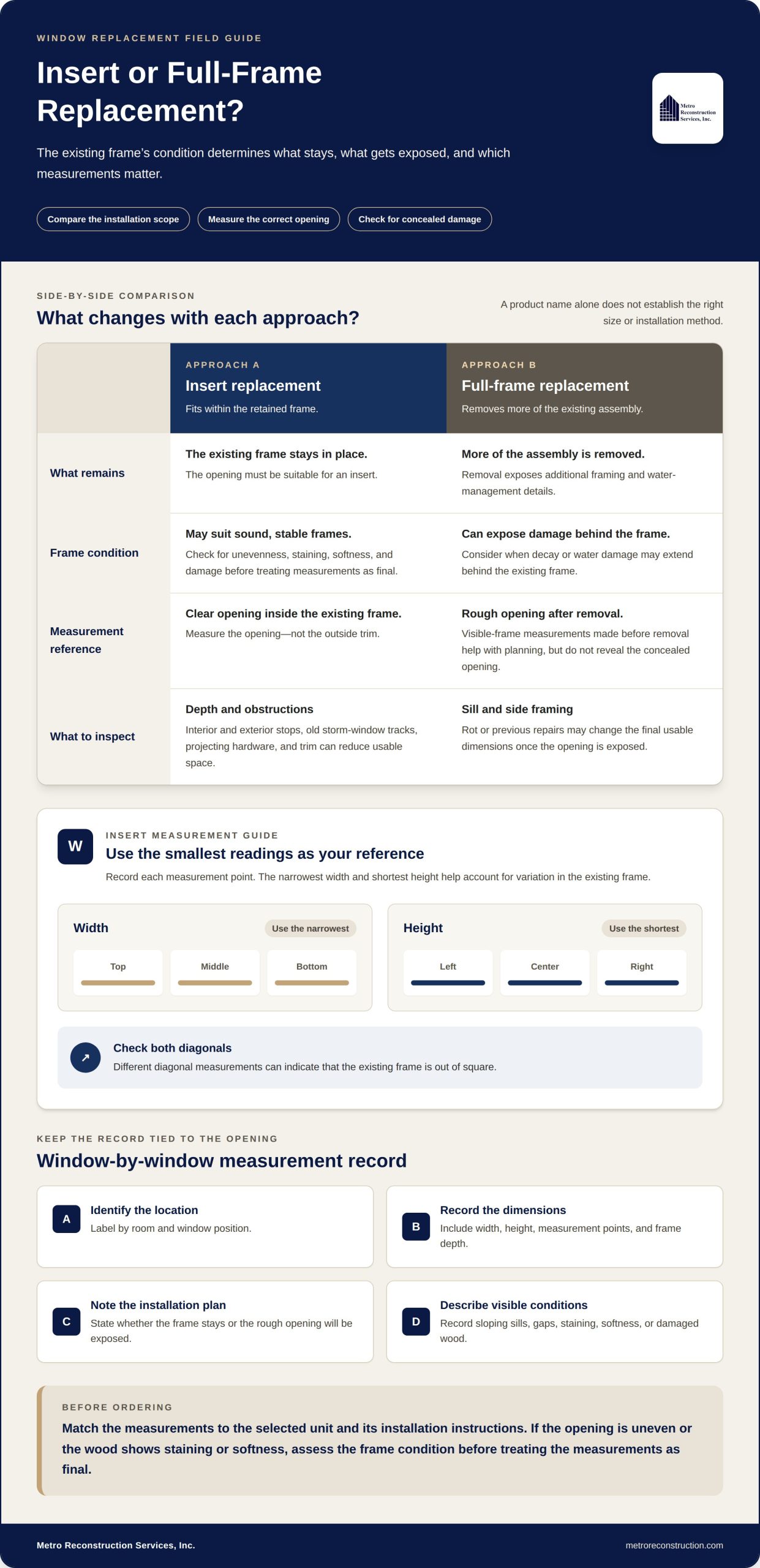
An insert replacement fits within a retained frame, while full-frame replacement removes more of the existing assembly. An insert may suit sound, stable frames; full-frame work can expose the opening when decay or water damage extends behind the frame. The right Andersen series depends on the opening, operation, finish, and documented product options.
No single series suits every old wood window. Compare the product’s installation instructions with the opening and frame condition. Check the selected unit’s dimensions, configuration, materials, and performance information before ordering. A product name alone doesn’t establish that its size or installation method suits your home.
Measuring Existing Wood Frames
For an insert, measure the clear opening inside the existing frame. Record the width at the top, middle, and bottom, then use the narrowest reading. Measure the height at the left, center, and right, using the shortest. Check both diagonals, too. Different diagonal measurements can indicate that the frame is out of square.
For full-frame work, the rough opening matters once the old assembly is removed. Before removal, note the frame depth, sill condition, and trim that may affect fit. Measurements taken beforehand can’t reveal concealed decay or establish the final rough-opening dimensions. Label each record by room and window location to avoid mix-ups.
Planning Window Removal and Installation
Removal starts by protecting the room and taking out movable sash parts. Next, inspect the opening, address damaged materials, then secure, insulate, and seal the replacement. With an insert, the existing frame stays. With full-frame work, more of the assembly is removed, exposing additional framing and water-management details.
Common risks include hidden rot, water damage behind trim, and lead in old paint. Avoid disturbing suspect painted surfaces. For warranty coverage, read the written Andersen product warranty and any separate installation terms; these documents define coverage, exclusions, and claim steps. To locate an Andersen-certified installer near you, search local listings for that exact designation and confirm the installer’s certification before scheduling.
What measurements are needed to order Andersen replacement windows for old wood windows?
Accurate measurements help match an Andersen replacement window to an existing wood opening. First, determine whether the plan is an insert installation or a full-frame replacement. The two methods use different reference points, so measurements from the wrong surfaces can result in a unit that doesn’t fit.
For an insert, measure the clear opening inside the existing frame, not the outside trim. Record the width at the top, middle, and bottom, then use the narrowest measurement as a reference. Measure the height at the left, center, and right, using the shortest reading. Check both diagonals, too. A difference can indicate that the frame is out of square.
Record the frame’s depth, too. Interior and exterior stops, along with old storm-window tracks, can reduce the space available for an insert. Note any projecting hardware or trim that might interfere with the replacement. These details help distinguish a usable opening from one that only appears large enough when measured at its widest points.
Full-frame replacement relies on the rough opening, exposed after the existing window assembly is removed. Before demolition, measurements of the visible frame can help with planning, but they can’t reveal the concealed opening or hidden damage. Once exposed, measure the opening’s width and height, check its diagonals, and inspect the sill and side framing. Rot or previous repairs may change the final usable dimensions.
Keep the measurement record clear and tied to each opening. Label windows by room and location, such as “north bedroom” or “kitchen over sink.” For each one, record:
- Width and height readings, including the measurement locations.
- Frame depth and details about stops, tracks, and trim.
- Whether the proposed installation retains the frame or exposes the rough opening.
- Visible conditions such as sloping sills, gaps, or damaged wood.
Don’t assume that matching one old sash measurement is enough to order a replacement. Andersen product lines and installation methods can call for different dimensions or details. Match the measurements to the specific unit and its installation instructions before ordering. If the opening is uneven, or the wood shows staining or softness, address the frame condition before treating the measurements as final.
A careful assessment of the window opening can clarify which surfaces and dimensions matter before replacement planning moves ahead.
The original wood windows measure 36X52. Treat that as a reference for those windows, rather than assuming the same dimensions apply to every opening. The measurements still need to be associated with the particular window and installation approach being considered; a recorded size alone does not establish whether an insert or full-frame unit is appropriate. Keeping the room and location labels alongside the dimensions makes it easier to revisit an opening if its condition or replacement plan changes.
That comparison offers context for weighing repair against replacement, but it doesn’t change the measurements required for a unit. Measure the relevant opening from the reference surfaces for the selected installation, and consider the frame condition before treating dimensions as final. A clear record can support the decision without relying solely on the old sash size when ordering.
What are the differences between Andersen insert replacement windows and full-frame replacement windows?
An insert replacement fits inside an existing window frame, while full-frame replacement removes the frame and window assembly. With an insert, the wood frame remains part of the installation. With full-frame work, the opening is exposed, allowing inspection of framing and moisture-control details the old assembly may conceal. The choice depends on the frame’s condition and the scope of work.
An insert may suit an existing wood frame that is sound, stable, and shaped to accept the new unit. The installer retains much of the surrounding trim, which can help preserve the home’s exterior appearance. However, an insert doesn’t repair rot or water damage behind the retained frame. It may also reduce visible glass area because the replacement sits inside the old frame.
Full-frame replacement removes more material, including the old frame and often the surrounding trim. This approach gives the installer access to the rough opening, sill, and adjacent framing. That access matters if water has entered around the window or damaged wood lies behind the visible surface. The work also creates an opportunity to address how flashing and the weather-resistant barrier connect to the new window.
Let the existing assembly’s condition guide the decision. Peeling paint alone doesn’t mean a frame needs removal, but soft wood, persistent staining, or a misshapen sill can signal deeper concerns. Full-frame installation may be more appropriate when the frame is out of square or surrounding materials need repair. Sound framing may support an insert, provided the selected Andersen unit suits its intended application.
- Insert: Retains the existing frame and surrounding trim when those parts are serviceable.
- Full-frame: Removes the existing assembly to expose the rough opening and its condition.
- Moisture review: Look beyond the sash to the sill, frame corners, and surrounding wall.
- Appearance: Consider how retained trim and visible glass area will look after installation.
Neither method corrects water entry unless the source is addressed. For example, failed flashing above an old wood window can continue directing moisture into the wall after an insert is installed. Full-frame access can make concealed conditions easier to assess, but the new assembly still needs proper integration with the surrounding exterior.
Before selecting an Andersen replacement method, match the installation plan to the frame’s condition, desired finish, and repair scope. An insert preserves more existing material; full-frame replacement exposes more of the opening. This is more than a product choice: it determines how much of the window-wall connection the installation can reach.
Which Andersen window series are best for replacing old wood windows?
The best Andersen series depends on the opening, installation method, and features you need. A series name alone can’t show whether a unit suits an old wood frame. Start by identifying whether the existing frame will stay or the replacement will extend to the rough opening. Then match the candidate window’s documented dimensions and configuration to that plan.
Old wood windows vary in frame depth, sash operation, trim, and opening condition. A replacement intended for an insert must fit within the retained frame. Full-frame replacement has different measurement and installation requirements because the old frame is removed. For either approach, compare the product’s installation instructions with the actual opening, rather than assuming every series suits every replacement method.
Use these criteria to narrow the choice:
- Installation method: Confirm whether the selected window is intended for the planned insert or full-frame application.
- Opening dimensions: Match the unit to measured width, height, and frame depth.
- Operation: Select a configuration that suits how you use the room, such as a window that opens or remains fixed.
- Interior and exterior finish: Consider how the window will relate to existing wood trim and exterior materials.
- Performance information: Compare documented U-Factor and other listed performance details for the exact configuration.
Clad wood may suit you if you want a wood interior with exterior cladding. That general description doesn’t establish which Andersen series or configuration is suitable. Review the exact product literature for frame materials, available operation types, and installation requirements. Confirm those details match the home’s existing openings and the finish you want to preserve.
For example, an older double-hung window with sound surrounding wood may allow a different replacement approach than a fixed window with a deteriorated sill. The series decision should reflect that difference. If the sill or frame has water damage, choosing a product before addressing the opening can lead to a mismatch between the window and the repair scope.
Consider the complete window-wall assembly. Even a well-matched Andersen unit depends on proper sizing, fastening, insulation, and water management at the opening. Those details affect how the window connects with the surrounding wall, trim, and exterior finish. Product selection is one part of the decision, not a substitute for assessing the existing structure.
Before ordering, compare the specific Andersen product documentation with the measured opening and planned installation method. Select a series only after confirming its documented options meet the project’s fit, operation, finish, and performance needs.
There is no single best Andersen series for every old wood window. The right choice depends on whether the existing frame stays, the opening’s dimensions and condition, and the desired operation and finishes. Compare the exact product documentation for installation requirements and performance, and confirm the unit suits the planned replacement method.
Can Andersen replacement windows be installed as a DIY project in existing wood frames
DIY installation may be feasible when the existing wood frame is sound and the selected Andersen window suits the opening. The work still requires accurate measurements, careful removal, secure fastening, and effective water management. A replacement that appears to fit may leave gaps or conceal damaged wood, so assess the frame before ordering or beginning installation.
An insert installation leaves the original frame in place. This can limit removal work, but it also means the retained wood must be stable and free of significant decay. A full-frame installation exposes more of the rough opening and may reveal damage behind the trim. Either method requires attention to the sill, side jambs, and head of the opening, where water can enter or remain trapped.
Before beginning, review the installation instructions for the exact Andersen unit. Confirm the required opening dimensions, installation method, fastening locations, and sealing details. Gather the specified tools and materials, then protect nearby interior finishes. Take care when removing old painted surfaces. Paint may contain lead, and disturbing it can create a health hazard; avoid sanding or scraping suspect paint without appropriate safety guidance.
A controlled installation sequence helps limit errors:
- Protect the room and remove movable sash components without damaging the existing frame.
- Inspect exposed wood for softness, staining, gaps, and signs of water intrusion.
- Dry-fit the replacement and confirm it sits properly before fastening.
- Secure the unit as directed, then insulate and seal the perimeter without blocking intended drainage paths.
- Test operation and inspect the interior and exterior joints for visible gaps.
Each step affects the next. For example, fastening a replacement into a frame that is out of square can interfere with sash operation. Filling a gap without preserving drainage can trap water near the sill. If removal reveals rot or damaged framing, pause the installation plan. Covering the damage with a new window would leave the underlying condition unresolved.
DIY work may not suit an opening that is badly out of square, a frame with concealed damage, or an exterior finish that makes flashing difficult to access. Full-frame replacement can also involve more removal and repair than an insert. In these situations, professional installation can help coordinate the window with the surrounding wall and exterior finishes. For help planning window replacement and installation, contact the team before work begins.
Metro Reconstruction Services: New windows
Metro Reconstruction Services, Inc. installs new windows when aging wood units need replacement or no longer protect the opening effectively. The work should account for more than the window itself: frame condition, moisture entry, flashing, and adjoining exterior materials affect how the replacement connects with your home’s building envelope.
If you’re considering Andersen windows, the installation plan should suit the existing frame and identify any underlying damage before it is concealed. This matters especially when you see staining, soft wood, or gaps around a window. Addressing those conditions supports a more complete repair than simply covering visible symptoms.
For a conversation about window replacement, contact Metro Reconstruction Services, Inc. or call 303.543.9549.
Plan the next step for your home
If you decide to migrate from old wood windows to Andersen clad wood windows, treat it as work on the home’s exterior envelope, not an isolated upgrade. A considered plan accounts for how the window opening meets surrounding finishes and where moisture could affect the wall. This perspective is especially useful when window work intersects with stucco or masonry.
Metro Reconstruction Services provides Stucco Restoration, Masonry Work, and Stucco installation, which can be relevant where those exterior materials meet a window opening. Discuss the condition of your existing windows and the scope you have in mind. That conversation can help determine whether replacement work and related exterior needs should be considered together.
Contact Metro Reconstruction Services to discuss your window project and plan a clear path forward. Careful planning starts with your home’s actual conditions, and you can take that step when you’re ready.
Frequently Asked Questions
Should older wood windows be replaced?
Not automatically. In a Boulder-area home, replacement may make sense when windows have persistent drafts, recurring water intrusion, damaged wood, or operation problems that repairs haven’t resolved. If the wood remains sound and the sash works properly, maintenance or targeted repair may preserve the original windows. Consider the source of moisture, too: replacing a window without addressing water entering around the opening can leave the underlying wall problem in place.
What Andersen window warranties cover replacement windows and professional installation?
Read the written Andersen product warranty and any separate installation terms; these documents define coverage, exclusions, and claim steps.