
That small hairline crack near your window frame isn’t just a cosmetic blemish; it’s often the first visible symptom of a deeper struggle within your home’s complete outer system. In our demanding regional environment, what looks like a simple surface issue is frequently a forensic indicator of how your property is reacting to high-altitude stress. You likely chose stucco for its timeless appeal and durability, yet it’s natural to feel a sense of uncertainty when you notice unexpected staining or cracking. The fear of hidden moisture trapping itself behind your walls, leading to mold or wood rot, is a valid concern for any diligent homeowner.
By understanding the specific signs of stucco failure Colorado homeowners should watch for, you can address these vulnerabilities before they evolve into complex structural challenges. This guide provides the diagnostic clarity you need to protect your investment. We will examine the critical differences between EIFS and traditional hard-coat systems; we will also explain how our state’s intense freeze-thaw cycles impact moisture management. You will learn to identify early warning signals, ensuring your home remains a secure and well-preserved sanctuary for years to come.
Key Takeaways
- Gain insight into how Colorado’s extreme temperature swings put constant pressure on your home’s outer layers, making regular observation essential.
- Learn to distinguish between harmless settling lines and the critical signs of stucco failure Colorado homes frequently exhibit after heavy seasons.
- Identify why dark streaks or “tears” beneath windows are urgent warnings that your home’s internal drainage system is no longer functioning correctly.
- Discover the hidden areas where moisture often gathers, allowing you to catch potential wood rot before it compromises your home’s structural integrity.
- Understand the necessity of forensic diagnostics to ensure your restoration addresses the source of the problem rather than just hiding the damage.
Why Colorado Climates Accelerate Stucco Failure
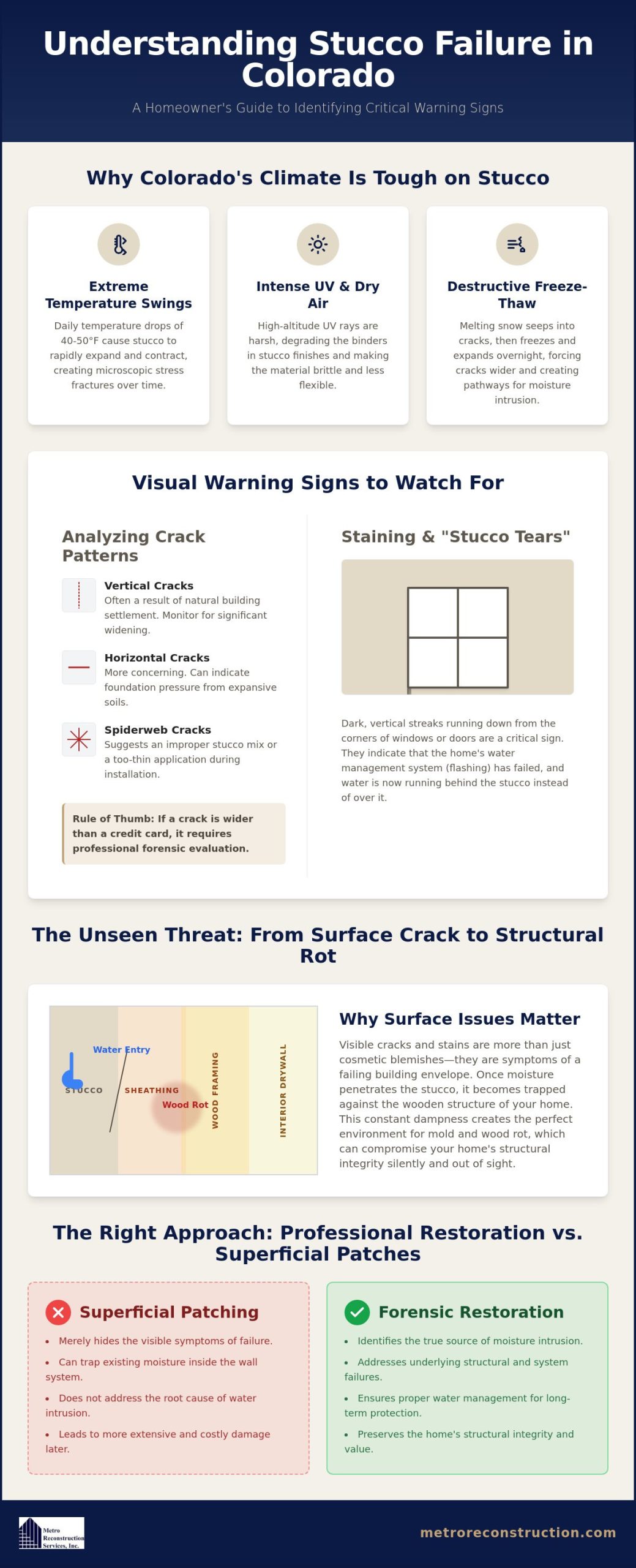
Stucco failure isn’t merely a surface issue; it represents a fundamental breakdown of your home’s exterior cladding system. When this protective layer fails, it allows moisture to penetrate the building envelope, which can lead to significant internal damage. In Colorado, this process is often accelerated by our unique environmental stressors. Our state experiences extreme temperature swings, known as diurnal shifts, where the thermometer can drop 40 or 50 degrees in a single afternoon. These rapid changes cause building materials to expand and contract at different rates, placing immense tension on the stucco shell.
This constant movement creates microscopic stress fractures that compromise the system’s integrity. While traditional materials are resilient, they aren’t immune to the relentless pressure of the high plains and mountains. If you’re concerned about the longevity of your property, exploring our professional restoration services can help identify these issues before they escalate.
The Impact of Low Humidity and Intense Sun
Colorado’s thin atmosphere and low humidity present a specific challenge for exterior finishes. At our high altitude, UV rays are significantly more intense than at sea level. These rays aggressively degrade the binders used in the Exterior Insulation and Finish System (EIFS), leading to a breakdown of the protective topcoat. Over several decades, the dry air can make the stucco brittle, stripping away its ability to flex with the home. You’ll often notice that south-facing walls, which endure the most direct solar exposure, are where the first signs of stucco failure Colorado homeowners experience tend to appear. UV bleaching and surface chalking are reliable indicators that the outer system is losing its protective capabilities.
Freeze-Thaw Cycles Along the Front Range
The most destructive force for Colorado stucco is the freeze-thaw cycle. With over 300 days of annual sunshine, we experience a daily rhythm of melting snow and ice followed by nightly freezing. When snow accumulates on ledges or near the foundation, it melts during the day and seeps into those microscopic cracks mentioned earlier. As the sun sets and temperatures plummet, that water turns to ice. Because water expands when it freezes, it exerts powerful hydraulic pressure from within the wall. This cycle repeats nearly every day throughout the winter, gradually prying hairline cracks into wide gaps. This expansion doesn’t just damage the surface; it creates pathways for bulk water to reach the sensitive wood framing underneath.
If you suspect your home is suffering from these environmental stressors, it’s vital to seek a professional evaluation. You can reach our team at 303.543.9549 or visit our contact page to discuss your property’s needs.
Visible Warning Signs of Stucco Damage
Visual inspections are a vital part of proactive property maintenance. While some minor hairline cracks are expected as a building settles, other indicators suggest a breakdown of the building’s complete outer system. Recognizing the specific signs of stucco failure Colorado properties face allows for early intervention, protecting the underlying wood framing from expensive rot. Catching these issues early is the most effective way to preserve your investment and avoid the high costs of structural repair.
Analyzing Crack Patterns
The orientation and size of a crack often reveal the underlying structural origin. Vertical cracks frequently result from the natural settling of the home, but horizontal cracks can be more concerning. In many parts of the Front Range, expansive soils place immense pressure on foundations. If you notice cracks wider than a credit card or significant displacement, specialized foundation repair services may be necessary to stabilize the structure before addressing the cladding. Conversely, spiderweb cracking, which resembles a shattered windshield, usually points to a thin application or an improper material mix during the initial installation.
Staining and “Stucco Tears”
Dark, vertical streaks originating from the corners of windows, doors, or light fixtures are often called “stucco tears.” These stains aren’t just surface dirt; they are a forensic indicator that water is bypassing the flashing and running behind the stucco. This staining is often the tip of the iceberg. By the time discoloration appears on the exterior, moisture has likely already begun to saturate the internal wall assembly. We strongly advise against simply painting over these marks. Covering the stain without identifying the water source traps moisture inside, which accelerates wood rot and mold growth.
You should also look for bulging or “soft” spots in the wall. If the stucco feels spongy or appears to be pulling away from the house, it has likely delaminated from the substrate. This happens when the bond between the layers fails, often due to prolonged water exposure. Additionally, keep an eye out for efflorescence. This white, powdery residue occurs when water evaporates and leaves mineral deposits on the surface. While it can be cleaned, its presence confirms that water is moving through the material, which is a clear signal that your stucco restoration needs professional attention.
If you’ve observed these changes on your home, a forensic evaluation can provide the peace of mind you need. Our team is available at 303.543.9549 to help you understand the health of your exterior system and develop a plan for long-term protection.
The Hidden Danger: Moisture Intrusion and Wood Rot
While surface cracks are concerning, the most significant threats often remain invisible until they compromise the home’s skeleton. Stucco is naturally porous. It’s designed to absorb a certain amount of moisture, but it relies entirely on a functional drainage plane to move that water away from the structure. When this internal system fails, moisture becomes trapped against the organic materials of your home. This leads to a slow, destructive process where the very bones of the building begin to fail. Identifying these hidden signs of stucco failure Colorado homeowners often miss is critical for property preservation.
How Water Gets Trapped
The weather-resistive barrier (WRB) acts as a secondary line of defense behind the stucco. If this barrier is torn, degraded, or improperly installed, water eventually saturates the plywood sheathing and structural studs. This is a common issue with certain older synthetic systems that lack a dedicated drainage gap for moisture to escape. Delamination is the separation of stucco from its substrate. This separation creates pockets where water can pool, leading to rapid decay. When the stucco no longer grips the wall, the resulting gap allows even more water to enter, creating a self-reinforcing cycle of structural damage.
Signs of Interior Damage
You don’t always have to look outside to find evidence of a failing exterior. Moisture often migrates inward, manifesting as peeling paint or bubbling wallpaper on the interior side of exterior walls. You might also notice warps in baseboards or window trim, which suggest the wood underneath is swelling from saturation. These internal symptoms often indicate a need for comprehensive exterior home repair to stop the cycle of damage. If the trim feels soft to the touch or shows dark staining, the rot has likely already progressed into the structural studs.
Beyond structural concerns, trapped moisture creates an ideal environment for black mold. This presents a serious health hazard that often goes unnoticed until a musty odor permeates the living space. If you smell dampness but can’t find a plumbing leak, the source is likely hidden within your wall assembly. Structural wood rot is a forensic reality that requires more than a simple patch; it requires a partner who understands the hidden mechanics of a structure. If you suspect your home’s outer system is failing, contact us at 303.543.9549 or visit our contact page for a thorough evaluation.
Common Causes of Failure in Colorado Homes
Understanding why your exterior is struggling requires looking past the surface. While we’ve discussed visible cracks, these are often symptoms of mechanical failures in the building’s water management system. Identifying the specific signs of stucco failure Colorado properties experience often involves tracing damage back to its structural origin. When we approach a project, we look at the house as a complete outer system where every component must work in harmony to shed water effectively. If one part fails, the entire assembly is at risk.
Flashing and Sealant Failures
Improper flashing remains the leading cause of localized damage around windows and doors. Flashing is designed to direct water away from vulnerable gaps, but when it’s missing or incorrectly installed, water “wicks” into the edges of the stucco system. Many homeowners mistakenly believe that caulk is a permanent structural seal. In reality, caulk is a maintenance item that degrades over time due to our intense UV exposure. Once the sealant fails, moisture finds a direct path to the wooden substrate. Professional stucco and masonry repairs often begin with correcting these flashing defects to ensure the home is truly watertight. Kick-out flashing is another critical component; without these roof-to-wall diverters, water pours directly into stucco chimneys and walls, causing rapid saturation and failure.
Environmental Impacts: Hail and Wildlife
Protecting your home requires a holistic approach that accounts for all regional threats. As part of a whole-home protection plan, we recommend evaluating your property’s overall resilience, including fire mitigation services to harden the structure against wildfires. If you’ve noticed holes, staining, or suspect hail damage, it’s time for a professional assessment. You can reach our experts at 303.543.9549 or schedule a forensic evaluation to secure your home’s future.
Professional Restoration vs. Superficial Patches
When you discover the visible signs of stucco failure Colorado weather creates, the temptation to choose a quick, low-cost fix is understandable. Many “patch and paint” companies offer surface-level repairs that look excellent on the day they’re finished but fail to address the underlying moisture trapped within the wall assembly. If the source of the water intrusion remains, the new patch will eventually bubble, crack, or delaminate just like the original material. We believe in a different approach that prioritizes the long-term health of your home over a temporary cosmetic mask. True restoration requires a deep understanding of how your property’s complete outer system is failing at a mechanical level.
The Forensic Diagnostic Process
Our methodology is rooted in technical precision and fundamental diagnostics. We utilize specialized tools, such as moisture probing and thermal imaging, to identify hidden saturation points that haven’t yet manifested as surface stains. This forensic approach allows us to see through the cladding and pinpoint exactly where the weather-resistive barrier has been compromised. Once we identify these areas, we remove the damaged sections to inspect the underlying sheathing and framing for signs of rot or mold. This commitment to initial accuracy is a foundational promise we make to every client. By identifying the underlying structural origins of a problem, Metro Reconstruction Services, Inc. can implement a solution that prevents the issue from ever returning.
We understand that facing complex structural challenges can be stressful for any homeowner. To instill immediate trust and provide financial clarity, we utilize fixed-price reconstruction fees. This ensures that the cost of your project is transparent from the beginning, allowing you to focus on the peace of mind that comes from a permanent fix. We view ourselves not just as a service provider, but as a dedicated partner in property preservation. Our goal is to provide the engineering-led solutions your home deserves, distancing our work from low-quality alternatives that only offer a temporary patch.
Protecting Your Investment
Choosing professional restoration is a proactive step toward protecting your home’s market value and eliminating future liability. A property with a documented, high-quality restoration is far more attractive to future buyers than one with a history of recurring “handyman” repairs. As a family-owned firm with over 40 years of experience, Metro Reconstruction Services, Inc. brings a level of local expertise that is specifically tailored to the demanding environments of the Front Range. We value substance over style, and we’d rather explain the difficult truth of a structural failure than offer a low-quality solution that won’t last.
If you suspect your home is at risk, don’t wait for the damage to migrate further into your living space. You can contact Metro Reconstruction Services, Inc. at 303.543.9549 or visit our contact page to schedule a comprehensive evaluation of your exterior system today.
Securing the Future of Your Colorado Home
Your home’s exterior is its primary defense against a relentless high-altitude environment. We’ve explored how identifying the early signs of stucco failure Colorado properties face is the most effective way to prevent hidden moisture from compromising your structure. Whether it’s correcting faulty flashing or addressing damage from our famous hail storms, proactive maintenance is always more cost-effective than emergency reconstruction. Our family-owned firm in Boulder brings over 40 years of local expertise to every project, ensuring your property receives the meticulous care it deserves.
We don’t believe in temporary patches that only hide the truth of a structural failure. Instead, we utilize a specialized forensic diagnostic approach to uncover the root cause of every issue, providing you with a long-term solution and true peace of mind. Protect your home from the inside out. Schedule a forensic stucco evaluation with Metro Reconstruction Services, Inc. today or call us at 303.543.9549 to discuss your property preservation needs. We look forward to partnering with you to restore the integrity and beauty of your investment.
Frequently Asked Questions
Is a hairline crack in my stucco normal for Colorado?
Minor hairline cracks are often a result of a home’s natural settling, but they can also be early signs of stucco failure Colorado homeowners should monitor closely. In our unique climate, these small openings allow snowmelt to enter the wall system, where it expands during nightly freezes and widens the gap. If a crack grows wider than a credit card or appears near window corners, it typically indicates a more serious mechanical issue within the drainage plane.
How much does stucco restoration typically cost in the Denver area?
Stucco restoration costs are determined by the specific extent of the damage and the total square footage of the affected area. Because our process involves a forensic evaluation to identify hidden moisture and structural rot, we provide custom estimates rather than generic pricing. This ensures you only pay for the specific repairs required to secure your home’s complete outer system while avoiding the costs of unnecessary work.
Can I just paint over stucco cracks to stop water from getting in?
Painting over cracks is a temporary cosmetic fix that often traps moisture inside the wall assembly rather than stopping the leak. This trapped water leads to rapid wood rot and mold growth because the moisture can’t escape through the new, non-breathable layer of paint. A proper solution involves identifying why the crack formed and ensuring the internal weather barrier is still intact before applying any new finish.
What is the difference between traditional stucco and EIFS?
Traditional stucco is a cement-based plaster applied over a metal lath, while EIFS is a multi-layered synthetic system that includes an integrated insulation board. EIFS is typically softer to the touch and offers better energy efficiency, but it requires a specialized drainage gap to prevent moisture from becoming trapped against the sheathing. Both systems are effective in Colorado if they are installed with a functional water management system.
How do I know if my stucco has woodpecker damage or hail damage?
Woodpecker damage typically appears as deep, circular holes that penetrate the foam layer of EIFS, while hail damage manifests as smaller “star cracks” or indentations in the finish coat. Both are significant signs of stucco failure Colorado homes face after our frequent storms and require immediate attention. These entry points allow bulk water to bypass your home’s secondary weather barrier, leading to hidden structural decay.
Does insurance cover stucco failure or moisture damage?
Insurance coverage for stucco issues typically depends on whether the damage resulted from a sudden, accidental event like a hail storm. Most standard policies cover storm-related impacts but exclude long-term moisture intrusion caused by gradual wear or poor original installation. We recommend documenting any visible storm damage immediately and consulting with a professional to help clarify the origin of the failure for your provider; for additional resources on managing restoration after a loss, check out National Property Loss Co.
How long should a professional stucco restoration last?
A high-quality restoration can last for several decades if the underlying drainage plane is correctly installed and maintained. By addressing flashing defects and using premium materials, we create a building envelope that withstands Colorado’s intense UV rays and freeze-thaw cycles. Regular maintenance, such as inspecting sealants every few years, will further protect your long-term investment and ensure the structure remains watertight.
What happens if I ignore the signs of stucco failure?
Neglecting early indicators leads to progressive structural decay, such as wood rot in the wall studs and sheathing. Over time, trapped moisture creates health hazards like black mold and can eventually compromise the entire integrity of the building envelope. Addressing these issues early is the only way to prevent the necessity of a total system replacement. If you suspect your home is at risk, contact us at 303.543.9549 or visit our contact page for a professional evaluation.