
Curb appeal can influence a home’s resale value: homes with stronger exterior appeal sell for an average of 7% more than homes that look less appealing from the outside. Replacing worn or damaged siding can refresh the façade and help increase home curb appeal with new siding, while also addressing visible signs of exterior wear. The result depends on the home and its condition, but siding is one of the largest visual elements buyers see.
If you want to increase home curb appeal with new siding, start with the exterior features people see together. The right siding can give the façade a more cohesive look, while careful installation helps protect the wall beneath it from moisture. This guide covers how siding affects appearance and resale appeal, how to choose a style and material, and when cleaning or repair may be enough.
Key Takeaways
- Learn when replacing worn siding may strengthen a home’s first impression and support resale value.
- Compare siding profiles to see how their texture and lines can change your home’s appearance.
- Choose a siding color that complements your home’s architecture and fits its surroundings.
- Understand why resale figures for fiber-cement siding vary by region and what that means for homeowners.
- Recognize when exterior wear calls for more than a cosmetic update.
1. Does Replacing Siding Improve Your Home’s Value?
Replacing faded, cracked, or missing siding can refresh a home’s exterior and support resale appeal. The difference is especially noticeable across broad wall areas, where siding frames the windows, front door, and roofline. A clean, consistent finish helps these features look coordinated. It won’t resolve unrelated issues, such as neglected landscaping or a damaged entry.
Resale return depends on the project’s scope, material, and the condition of the wall beneath the siding. One estimate for replacing 1,250 square feet with vinyl or primed and painted fiber-cement siding puts return on investment at 80.2% to 88.4%. That estimate gives context, not a guaranteed result for an individual home. Remodeling Magazine’s Cost vs. Value Report compares renovation spending with resale impact, but local buyer preferences and property condition also shape value.
Before replacing damaged vinyl siding, find out why it failed. A single cracked panel may be an isolated problem, while recurring damage can point to water entry, poor flashing, or movement beneath the cladding. During replacement, inspect the sheathing and weather-resistant barrier. If the substrate is wet or deteriorated, new panels could conceal the cause instead of fixing it. Addressing the underlying issue helps protect the full exterior assembly.
If you plan to sell, repair or replace siding with visible cracks, rot, or missing sections before listing. Paint can refresh compatible surfaces, but it won’t restore a broken panel or resolve trapped moisture. Compare the siding’s condition with other visible features, including windows, the front door, and landscaping, before deciding which improvements will make the strongest first impression.
Permit and homeowners association requirements vary by municipality and association. Before work begins, ask the local building department whether your siding project requires a permit, and review any HOA approval process for materials or exterior changes.
Installation time depends on the home’s size, siding system, weather, and any concealed wall repairs. The suitable season depends on local conditions and the selected material’s installation instructions, which must allow for proper fitting and moisture protection.
Before hiring a siding contractor, review the written scope, material details, and plan for inspecting the substrate. Ask how the work will address flashing, openings, and the weather-resistant barrier. These details show whether the proposal covers the complete wall assembly, not just the visible finish.
Replacing siding can improve curb appeal and support resale value when the existing material is worn or damaged. Match the work to the home’s actual condition: clean sound siding if grime is the issue, and replace failing sections when damage or moisture indicates a deeper problem.
2. Vinyl siding styles, including dutchlap, cedar shake, and half round
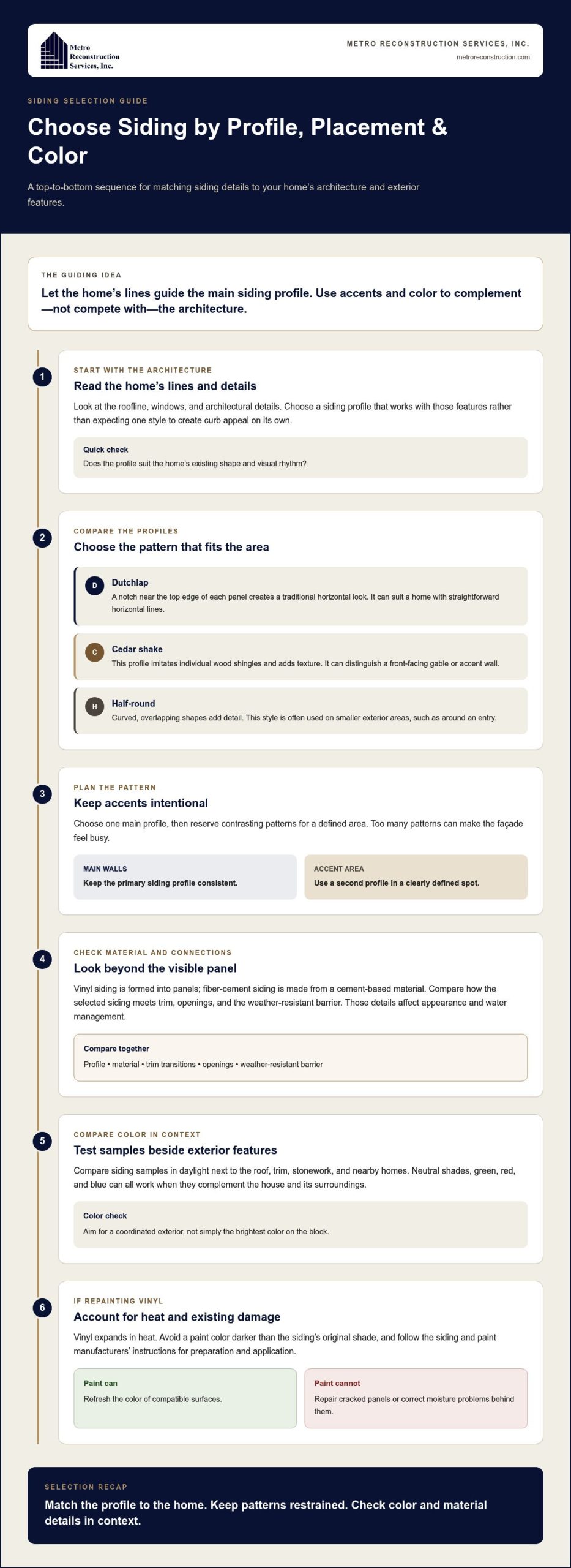
Vinyl siding profiles create different shadow lines, so the pattern shapes a home’s first impression as much as its color. Dutchlap has a notch near the top edge of each panel, creating a traditional horizontal look. Cedar shake profiles imitate individual wood shingles and add texture to gables or accent walls. Half-round siding forms curved, overlapping shapes, often used on smaller exterior areas where detail matters.
Choose a profile that works with your home’s roofline, windows, and architectural details. Dutchlap, for instance, can suit a house with straightforward horizontal lines, while cedar shake can distinguish a front-facing gable. Half-round panels can add contrast around an entry without covering every wall. Too many patterns can make a façade feel busy, so choose a main profile and reserve accents for a defined area.
Vinyl siding replacements can recover up to 85% of their cost through added home value, according to the market estimate in the research findings. That figure is a potential return, not a promise for every property. Buyers respond to the overall condition and appearance, including siding, landscaping, fencing, and lighting. A neat boundary fence and well-lit entry can support the visual effect of new cladding.
Vinyl and fiber-cement siding offer different materials and appearances. Vinyl is formed into panels, while fiber cement is made from a cement-based material. Both can create a finished exterior when properly installed. Compare available profiles and colors with your home’s design, and consider how the siding meets trim, openings, and the weather-resistant barrier. These details affect both appearance and water management.
Painting vinyl siding can refresh its color, but heat affects the material. Avoid a paint color darker than the siding’s original shade, because vinyl expands in heat and a darker surface may absorb more warmth. Follow the siding and paint manufacturers’ instructions for preparation and application. Paint won’t repair cracked panels or correct moisture problems behind them.
For a restrained update, keep the main siding color consistent and use a brighter accent where it complements the entry or trim. Vinyl or aluminum fencing can mark property boundaries and give the yard a cleaner outline. Coordinated exterior lighting can help the home read clearly after dark, while a mismatched fence or too many siding patterns may distract from the architecture.
Compare profile and color samples in daylight beside existing trim and windows. The right combination should suit the home’s lines, rather than relying on one style to create curb appeal on its own.
3. What Color Siding Has the Best Curb Appeal?
No single siding color suits every home. Neutral shades, green, red, and blue can all work when they complement the house and its surroundings. Compare samples with the roof, trim, stonework, and nearby homes. Aim for a coordinated exterior, not simply the brightest color on the block.
Use the home’s architectural style as a starting point. A traditional home may suit muted siding and contrasting trim, while a modern design can support a simpler palette with fewer color changes. For a Craftsman-style home, compare the siding with visible wood details and masonry. On a farmhouse, see how the color works with the roof and porch. These examples can guide you, but the home’s existing materials should lead.
Local climate matters, too. Choose siding suited to your city’s conditions, and review the material’s care requirements and manufacturer guidance. In Colorado communities, exposure to sun, wind, and changing weather can affect how the exterior looks and performs. Compare colors in both daylight and shade, since the same sample can look different across a wall. A fresh color should complement the home without obscuring its architectural details.
If you’re painting existing siding, first confirm that its surface is suitable for paint and follow the siding and paint manufacturers’ preparation instructions. Neutral colors or green, red, and blue are possible choices for vinyl siding, provided the selected paint is appropriate for that material. Coordinate shutters with the home’s design and exterior colors. For nonfunctional shutters, a useful proportion is 25% to 50% of the window’s width, except beside a really wide picture window.
Installing new siding over existing material can conceal damaged panels, wet sheathing, or problems around windows and trim. An added layer can also make it harder to locate moisture entry and inspect the wall beneath. Before covering old cladding, look for soft or deteriorated areas, failed flashing, and gaps around openings. Correcting these conditions first helps the new exterior function as part of the wall assembly.
For a practical selection process, compare samples with the roof and trim, then view them from the street. Consider landscaping, too: flowers near an entry can add color without requiring a bold siding choice. During remodeling, keep the siding palette, shutters, and other exterior finishes consistent. This approach helps you increase home curb appeal with new siding while preserving the home’s architectural character.
4. Average resale value added by fiber-cement siding
A regional estimate for fiber-cement siding replacement reports an average of $14,966 in added home value. Treat this as a benchmark from outside Colorado, not a forecast for a Colorado property. Local resale results depend on the home’s condition, the project scope, buyer priorities, and market conditions when the home is sold. A single estimate cannot account for those differences.
Fiber-cement siding contains cement and is installed as exterior cladding. Replacing worn boards can give a home a more consistent finish, especially when faded or damaged areas are prominent from the street. Buyers also notice the surrounding details, including windows, trim, roof edges, and the front porch. A siding update has the clearest visual effect when these connected features look considered as a whole.
To assess potential resale appeal, start with the home itself. Note damaged panels, visible repairs, and whether the proposed work covers one wall or several elevations. A small replacement area may stand out against older cladding, while a broader scope can create a more consistent appearance. Choose the scope based on the existing condition, not on a resale estimate alone.
Installation quality matters, too. Before new cladding goes on, inspect the wall and weather-resistant barrier for signs of damage. Review connections around windows, doors, and roof edges, where water can reach the wall assembly. If underlying problems remain, new siding may conceal them rather than correct them. Addressing these details supports the exterior’s protective function.
Fiber-cement siding should not be treated as a stand-alone energy-efficiency improvement. Insulation, air leakage, windows, and other parts of the building envelope all affect energy use. If better energy performance is a goal, consider how these components work together instead of assuming cladding alone will change indoor comfort.
Appearance still shapes how buyers experience a home. Coordinate the siding finish with the roof, trim, and visible entry details. A consistent palette, for example, can connect siding with window surrounds and the front porch without making these features compete. Buyers see the elements together as they approach, so their overall condition shapes the impression.
Use the $14,966 figure only as a regional reference, not a local promise. For a Colorado home, weigh its siding condition, planned scope, installation details, and resale goals. That assessment offers a more useful basis for deciding whether replacement fits your priorities than applying a distant average directly to your property.
5. How siding affects curb appeal and home value
Siding affects both the first impression and the condition buyers see during a viewing. Homes with curb appeal sell for an average of 7% more than less visually appealing homes. A separate survey found that 79% of respondents considered curb appeal key to attracting buyers. These figures show why the exterior matters, but siding works alongside the roof, windows, garage door, and entry.
Replacing damaged or outdated siding with new vinyl or fiber-cement siding can add around $14,000 to $18,000 to a home’s value. That estimated range concerns potential resale value, not a guaranteed increase for every property. Buyers also notice whether panels are straight, finishes are consistent, and the visible exterior appears cared for. A well-finished garage wall, for example, can strengthen the overall appearance when it faces the street.
Siding also helps protect the home. Cladding, flashing, and the weather-resistant barrier work together to limit water intrusion, while the wall assembly manages moisture and pressure. If water enters around a window or roof-to-wall transition, new siding alone won’t fix the source. Inspecting these connections before replacement helps distinguish a surface issue from damage within the wall.
For a practical review, walk around the home and note each visible concern. Record cracked panels, loose edges, fading, and gaps around openings. Then compare those findings with the condition of the trim, gutters, and garage door. This inventory helps prioritize repairs that affect both appearance and protection, and prevents a new finish from drawing attention to neglected details elsewhere.
Consider the buyer’s view from the sidewalk. Consistent siding can give your home a more unified appearance, while mismatched repairs may interrupt the façade. If the front elevation looks sound but a side wall is damaged, identify the cause and extent before choosing the scope of work. The result should reflect the building’s condition, not hide it.
To improve your home’s exterior, base the decision on evidence: visible deterioration, moisture signs, and the condition of connected components. New siding may strengthen curb appeal when worn cladding is the main issue; damaged sheathing or failed flashing calls for correction beneath the finish. For a siding assessment and project discussion, contact Metro Reconstruction Services to consider how the wall assembly will be protected.
Metro Reconstruction Services, Inc.: Stucco Restoration
When your home’s exterior needs stucco restoration rather than a siding update, Metro Reconstruction Services, Inc. can help. Cracks, loose finishes, or damaged masonry can affect the façade and may point to problems beneath the surface. Identifying the cause helps determine whether stucco restoration, stucco replacement, or masonry work is the appropriate next step.
If your home has both stucco and siding, assess them as parts of the same exterior envelope. Water moving through a damaged transition can affect nearby wall areas, so repairs should account for where the surfaces meet. Metro Reconstruction Services, Inc. also provides stucco installation when a new stucco finish is needed.
If stucco or masonry concerns are affecting your home’s exterior, contact Metro Reconstruction Services, Inc. to discuss your project.
Plan the Exterior Around the Home You Want to Protect
A siding decision is also an opportunity to consider how the exterior materials meet and work together. Before planning a change, note where cladding meets stucco, masonry, windows, and roof edges. These transitions affect the finished appearance and how water moves away from the wall. A clear scope addresses visible condition and underlying performance together.
For projects involving stucco or masonry, Metro Reconstruction Services, Inc. offers Stucco Restoration, Masonry Work, and stucco installation. The right work depends on the material and its condition, so identify which parts of the exterior need attention. A considered plan can help you increase home curb appeal with new siding while keeping the home’s wider exterior system in view.
When you’re ready to discuss the next step, contact Metro Reconstruction Services, Inc. or call 303.543.9549. A thoughtful exterior plan starts with understanding the home in front of you, and you can move forward with clarity.
Frequently Asked Questions
Does Curb Appeal Increase Property Value?
Strong curb appeal can attract buyers’ attention and shape expectations before a showing. Assess your own exterior from the sidewalk: does the entry, garage, and visible finish look maintained together? Check for peeling paint, damaged trim, or clutter that distracts from the home. These observations can help you prioritize practical improvements before listing or planning exterior work.
Does Replacing Siding Improve Your Home’s Value?
Replacing siding can improve a home’s presentation when the existing material is visibly worn or damaged. Before deciding on replacement, determine whether the issue is cosmetic or includes loose panels, recurring damage, or signs of water entry. These conditions can affect what work is needed beneath the finish. A clear assessment helps you choose a scope that fits the home’s condition instead of treating every exterior concern as cosmetic.
Is the Cost Worth the Investment?
Siding replacement may be worthwhile when deterioration affects protection as well as appearance. Consider how long you plan to stay, whether damage is spreading, and whether the exterior needs broader repairs. If the material is sound but dirty, cleaning may be a reasonable first step. If damage recurs or moisture is present, identify the cause before deciding. The right choice depends on the home’s condition and your priorities.
What Color Siding Has the Best Curb Appeal?
No single siding color works best for every home. Compare samples with fixed features such as the roof, masonry, and window trim, then view them outdoors in different light. A muted shade can let a distinctive entry or stone detail stand out, while contrasting trim can define the home’s lines. Consider nearby houses, too, so your palette suits the street without copying another property.
What Is the 2025 Trend for Siding?
A year-specific trend shouldn’t outweigh the home’s architecture and exterior conditions. For a 2025 project, choose a profile and palette that work with the roofline, windows, and existing materials. For example, a simpler color scheme can keep a modern façade visually clear, while traditional detailing may suit an older home. Check how the selected material should be maintained, so the design remains practical after installation.
What Type of Siding Adds the Most Value?
No siding material adds the most value on every property. Vinyl and fiber-cement siding have both appeared in resale estimates, but results depend on region, condition, and project scope. Compare their available appearances and care requirements, then consider how each material suits the house. In Colorado, account for local weather exposure and the details where cladding meets windows, trim, and roof edges.
What siding materials are best for curb appeal, durability, and maintenance?
The right material balances appearance, upkeep, and the demands of the home’s setting. Compare fiber cement, vinyl, and wood by reviewing their finish options and manufacturers’ care instructions. Then consider the wall assembly: flashing and the weather-resistant barrier help manage water behind exterior cladding. The visible finish matters, but proper installation and sound connections also affect how the exterior performs over time.
How much does new siding cost per square foot and for a typical home?
A useful project scope starts with measuring the exterior walls and noting openings, corners, and transitions. Record visible damage and any areas where water may have reached the wall beneath the siding. These details help define the work, since straightforward replacement and a project involving concealed repairs are different scopes. The property’s dimensions and selected material also shape the project plan.