
The best home improvements for resale value in Boulder aren’t always the biggest ones. A major renovation can be the wrong move if it removes a useful feature or leaves more important repairs unfinished. If you can’t update everything before listing, start with the home’s condition, function, and visible wear.
It makes sense to want a clear reason before committing to a project. This guide explains which updates may support resale, how to weigh improvements against your home’s needs, and where a limited budget can go further. Preserving useful spaces and addressing exterior or structural concerns may matter more than adding high-end finishes. Make deliberate choices for your Boulder home rather than taking on work simply because it sounds like an upgrade.
Key Takeaways
- Prioritize targeted kitchen and bathroom updates over major remodels when the existing layout and finishes still work.
- If your budget is tight, focus on visible upkeep and curb appeal rather than trying to renovate every room before listing.
- Consider how storage, garage function, and the condition of exterior materials fit the needs of Boulder buyers.
- Weigh energy upgrades by looking at the home’s existing performance and how improvements may affect utility use.
- Think carefully before removing useful space or features; some renovations can make a home less appealing to buyers.
1. Kitchen, primary bathroom, closet, and bedroom improvements
Kitchen and bathroom remodels don’t add a fixed amount to Boulder home values. Their resale effect depends on the home’s condition, the work completed, and how well the finished rooms suit the property. A targeted update can address a visible drawback, while an extensive remodel may add features buyers don’t need. Assess how the room works before choosing finishes.
In a kitchen, start with the parts buyers use every day. Repair sticking drawers, replace broken cabinet hardware, and improve lighting over work surfaces. If appliances are mismatched, a coordinated set can make the room feel more consistent. Keep a practical layout when it works; moving plumbing or removing usable cabinets can cause disruption without solving a clear problem.
A primary bathroom should be clean, functional, and free of obvious defects. Replace a worn vanity faucet, repair loose tile, and renew deteriorated caulk. Check that ventilation works, since lingering moisture can damage finishes over time. If a stain returns after repainting, address its source before installing new materials. Cosmetic work won’t fix a leak or damaged flooring beneath the surface.
Closets and bedrooms benefit from straightforward improvements that make their function clear. Clear excess items from closet shelves, repair a door that won’t close, and make sure bedroom windows and doors operate properly. In a smaller bedroom, preserve walking space rather than filling the room with built-ins. Buyers should be able to picture how furniture and storage will fit.
Use this sequence to keep the work focused:
- Separate functional problems from worn or dated finishes.
- Address leaks, poor ventilation, and loose surfaces before cosmetic updates.
- Preserve useful storage and layouts that already serve the room well.
- Select fixtures and appliances that fit the home’s scale and existing style.
More than a quarter of U.S. sellers made bathroom improvements before selling. That national pattern shows bathrooms often get attention during sale preparation, but it doesn’t mean every Boulder home needs a full remodel. A clean, working shower and intact finishes may be more useful than luxury fittings that don’t suit the house.
For kitchens, primary bathrooms, closets, and bedrooms, prioritize visible defects and practical use. Buyers can readily notice a broken cabinet door or a closet that won’t open. Fix those specific issues first, then decide whether broader changes would improve the home’s function. A measured update keeps the focus on what each room needs.
2. What if I can’t afford home improvements before listing?
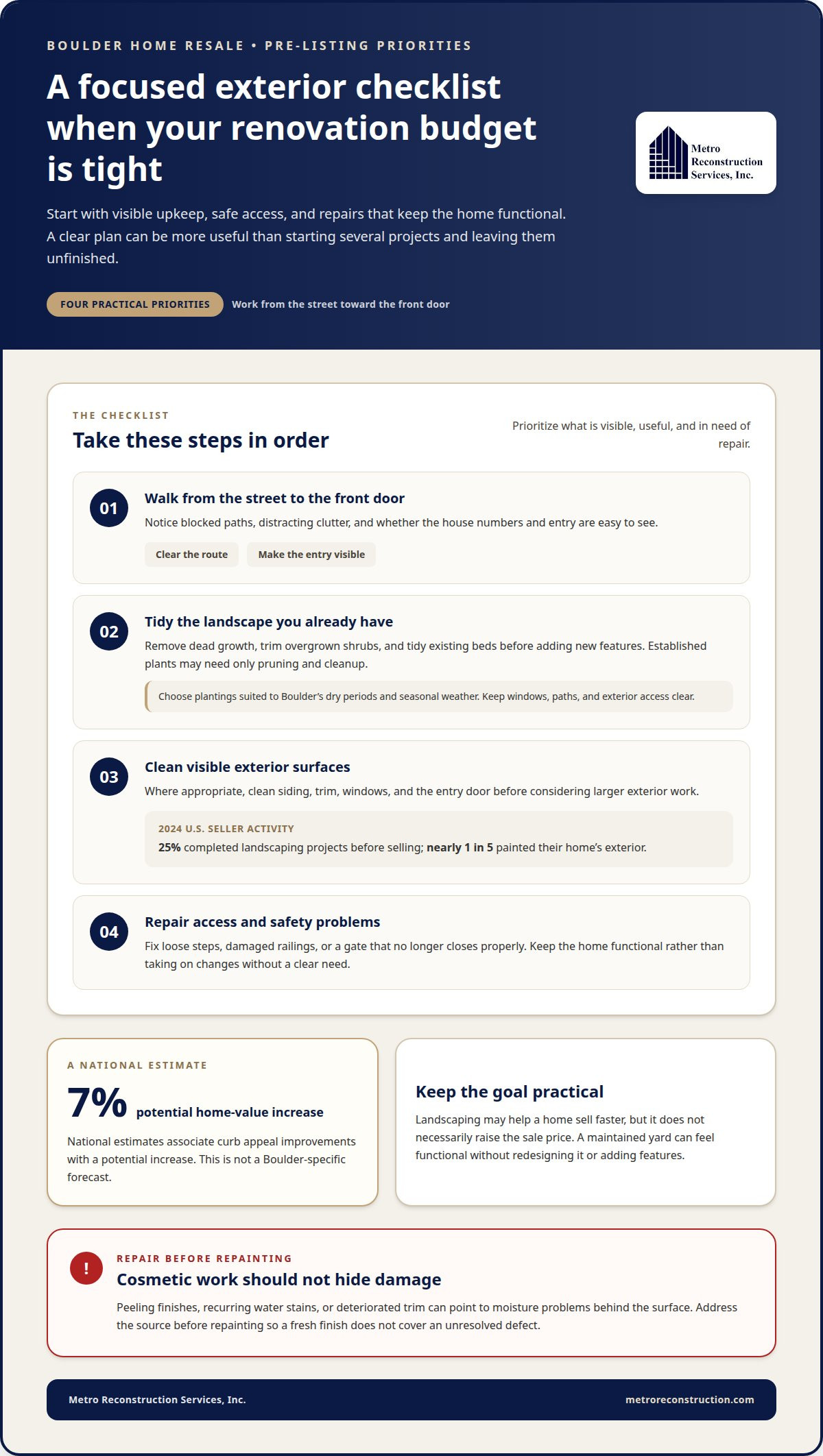
If a full renovation isn’t possible, focus on visible upkeep and a clear entrance. For Boulder buyers, tidy landscaping, clean exterior surfaces, and working gates can improve first impressions without changing the home’s layout. For homeowners considering updates to driveway gates or exterior railings, exploring designs from ironwork specialists like ironguys.com can offer practical inspiration for durable curb appeal. A focused plan is more useful than starting several projects and leaving them unfinished.
Basic landscaping may help a home sell faster, although it doesn’t necessarily raise the sale price. National estimates associate curb appeal improvements with a potential 7% increase in home value, but that figure isn’t a Boulder-specific forecast. Keep the goal practical: make the front path easy to follow, remove dead growth, and ensure house numbers and the entry are visible.
In 2024, 25% of U.S. sellers completed landscaping projects before selling, and nearly one in five painted their home’s exterior. These examples point to manageable ways to improve presentation, not a requirement to redesign a yard or repaint every surface. Trim overgrown shrubs, clear leaves from walkways, and clean the entry door before considering larger exterior work.
Use this order when your budget is tight:
- Walk from the street to the front door and note blocked paths or distracting clutter.
- Remove dead plants and tidy existing beds before adding new features.
- Clean visible siding, trim, windows, and the entry where appropriate.
- Repair loose steps, damaged railings, or a gate that no longer closes properly.
Choose landscaping that suits Boulder’s dry periods and seasonal weather. Healthy, established plants may need only pruning and cleanup. New plantings should fit the site without blocking windows, paths, or exterior access. A simple, maintained yard feels functional; crowded beds or overgrown plants can obscure the home.
What permits and building codes apply to home improvements in Boulder, Colorado? Boulder permit review depends on the project’s scope and the property. Distinguish surface upkeep from work that changes a building’s structure or systems, and account for applicable code review before beginning regulated work.
What Boulder rules apply to solar panels, historic homes, ADUs, and exterior changes? Treat solar panels, historic properties, accessory dwelling units, and exterior alterations as distinct project types. The property and proposed work determine which review applies, so don’t assume approval for one change covers another.
Don’t use cosmetic work to hide damage. Peeling finishes, recurring water stains, or deteriorated trim can point to moisture problems behind the surface. Address the source before repainting to avoid covering an unresolved defect with a fresh finish. If you can make only a few improvements, prioritize clean presentation, safe access, and repairs that keep the home functional.
3. Renovation features prioritized for Boulder resale
Choosing the best home improvements for resale value in Boulder starts with the home’s condition, function, and likely buyer expectations. A garage door, worn flooring, or damaged exterior finish can affect how a property presents. The right priority depends on the specific defect and how nearby homes compare. Focus on work that resolves a visible limitation rather than adding features just because they’re popular.
Which home improvements deliver the strongest resale benefit in Boulder, Colorado? Address problems that make rooms harder to use or raise maintenance concerns, then consider targeted updates to frequently used spaces. A front entry that operates properly or a garage that remains useful can support the home’s appeal. Extensive luxury changes may matter less when they don’t fit the property or its setting.
There is no single Boulder-area estimate that applies to every renovation. The result depends on project scope, the home’s existing condition, and how buyers compare similar properties. A new feature may matter less than resolving an issue that affects daily use. Evaluate each proposed change against the property’s specific needs, not a general expectation of resale performance.
Boulder and Denver resale decisions also depend on project timing and the home’s readiness for listing. Work that uncovers moisture damage or other hidden defects can change what needs attention first. An inspection may reveal that a surface problem extends beneath the finish. Establish the scope before beginning so repairs and visible updates can be sequenced clearly.
How do Boulder buyers value finished basements, added bedrooms, and home offices? A finished basement can provide flexible bonus space, while buyers may give more weight to the home’s above-grade rooms. An added bedroom or office is useful when it suits the existing layout and household needs. Consider natural light, access, storage, and whether the converted space remains practical.
Neighborhood, home age, and property type shape how buyers judge renovations. In an older Boulder home, repairing worn systems or damaged finishes may be more relevant than adding premium features. Where nearby homes have updated interiors, dated rooms may stand out. Match improvements to the home’s character and the expectations set by comparable properties.
Selling as-is may suit a homeowner who prefers not to undertake extensive work before listing. Targeted repairs can still be worthwhile when a defect affects safety, function, or buyer confidence. To identify the best home improvements for resale value in Boulder, separate necessary work from optional changes, then choose a scope you can complete properly. Keep the home usable and avoid leaving active projects unfinished.
4. How do I decide which home improvement projects are worth it?
Start with the home’s performance, not a list of upgrades. If rooms feel drafty, utility use is high, or condensation appears around windows, investigate the cause before choosing a project. Air leaks, weak insulation, and aging equipment affect comfort in different ways, so correcting the actual source matters more than adding a feature that merely looks efficient.
For windows, compare condition, operation, and insulation performance. A window that sticks, has damaged seals, or lets in drafts may need replacement; a sound window may need adjustment or maintenance instead. A lower U-Factor indicates better insulating performance, but the entire opening matters. Poor installation or gaps around the frame can let air and moisture through, reducing the benefit of new windows.
Replacing windows can support comfort and energy efficiency, but it isn’t an automatic resale upgrade. First consider whether the existing units are damaged, difficult to operate, or contributing to drafts. Then weigh window condition against insulation, air sealing, and heating equipment. Addressing connected parts of the building envelope can matter more than replacing one component on its own.
A deck isn’t an energy-efficiency measure, so assess it for safety, condition, and use. Loose boards, unstable railings, or deteriorated connections can make an outdoor area less functional. Repairing those defects may be a better priority than building a larger deck. Buyers can see and use the space, while heating and cooling performance depends on other systems.
Use a simple project screen before committing to work:
- Identify the specific problem, such as a drafty bedroom or a damaged deck board.
- Determine whether the cause involves windows, insulation, air leakage, or equipment.
- Address safety and moisture concerns before cosmetic upgrades like flooring or lighting.
- Compare the project’s likely benefit with other needs, including garage function and visible repairs.
Energy-efficient improvements can include insulation, air sealing, efficient appliances, or a smart thermostat. Match each measure to the home: insulation cannot fix a leaking window, and a new appliance won’t solve poor air sealing. Replacing older bulbs with efficient options can reduce electricity use, but it won’t make up for a draft or poorly insulated wall.
National resale estimates provide a broad reference, not a property-specific result. When preparing to resell in Boulder, consider how an upgrade improves daily comfort, reduces wasted energy, and fits the home’s condition. Keep records of completed work and product information so buyers can understand what changed. A focused sequence usually starts with diagnosis, addresses the source, and finishes with visible upgrades.
5. Improvements that may decrease resale value
An improvement can weaken buyer appeal if it removes a feature people expect or makes the home less practical. In Boulder, converting a garage into living space may be a poor fit because buyers often value garages for parking and storage. Before changing the room, consider whether the added space serves a stronger everyday purpose than the functions it replaces.
Highly personal renovations can also narrow the group of buyers who can picture themselves in a home. A bold finish, unusual room layout, or built-in designed for one hobby may not suit future owners. For example, turning a bedroom into a specialized hobby room reduces the home’s flexibility. Keep permanent changes aligned with common uses such as sleeping, working, storage, and shared living.
Scale matters, too. A large remodel may not make the home more useful if its layout already works, especially when visible maintenance issues remain. Buyers may notice damaged flooring, a leaking fixture, or a sticking door first. Fixing those defects can help the home feel cared for without extensive changes to rooms that already function well.
Work that conceals a defect instead of correcting it can raise concerns during an inspection. Painting over a recurring stain, for example, won’t resolve the moisture source. New flooring won’t fix a soft or damaged subfloor. Identify the cause before covering the problem; otherwise, the new finish may hide damage while leaving the underlying issue unresolved.
Use these questions to assess a proposed change:
- Will it remove useful parking, storage, or a flexible room?
- Could the altered layout make everyday use less convenient?
- Does the work address the source of damage, rather than just its appearance?
- Will the design suit the home’s existing character and a range of future owners?
Buyers assess a property as a whole, including its condition, function, and how rooms connect. A highly customized feature may appeal to a narrow group, while an adaptable space can serve several purposes. That doesn’t mean every renovation should be neutral; permanent choices should support the home’s practical use.
Before making a major alteration, compare the new use with the feature it replaces. Keeping a garage preserves parking and storage; retaining a bedroom keeps sleeping space available. Choose changes that solve a real limitation rather than simply changing the home. This keeps renovations aligned with how buyers may use the property.
If an exterior change or repair is part of your resale plans, Metro Reconstruction Services can help with the project.
Metro Reconstruction Services
Metro Reconstruction Services can help when resale planning reveals exterior deterioration that affects a home’s condition or presentation. Stucco cracks, damaged masonry, or failing exterior finishes may signal more than cosmetic wear, especially if moisture has reached materials behind the surface. Identifying the source before choosing repairs helps keep improvements focused on the home’s actual needs.
For Boulder homeowners, Metro Reconstruction Services offers stucco restoration, masonry work, stucco installation, and stucco replacement. These services fit when an exterior finish is deteriorating, damaged, or no longer performing as intended. They don’t replace kitchen updates or other interior projects, so consider them when exterior condition is among your resale priorities.
If exterior work is on your project list, contact Metro Reconstruction Services to discuss your home and next steps.
Make your next decision with confidence
Before committing to another project, define what you want it to accomplish: correct a problem, improve daily function, or prepare the home for sale. Keep the scope tied to that purpose. The best home improvements for resale value in Boulder respond to your property’s condition and make sense for its likely next owner, not simply because they’re visible or extensive.
If an exterior concern is part of that decision, Metro Reconstruction Services can help you consider the work involved and how it fits your plans. A measured next step can clarify whether to address the issue now or focus on other priorities.
Contact Metro Reconstruction Services to discuss your home improvement plans. A clear starting point can help you move forward with greater confidence.
Frequently Asked Questions
What if I can’t afford home improvements before listing?
You can prepare to sell without taking on a full renovation. Focus on making the home safe, clean, and usable, and avoid starting projects you can’t finish before listing. Keep a written record of completed maintenance and any known unresolved issues. If a repair affects basic function, weigh it before cosmetic work. A clear, consistent presentation helps buyers understand the home without implying that every room has been upgraded.
How do I decide which home improvement projects are worth it?
Choose projects by comparing the problem they solve with the disruption they create. A useful upgrade corrects a functional limitation, prevents damage from worsening, or makes a frequently used space easier to use. Consider how the work affects connected parts of the home: replacing an exterior finish, for example, should account for moisture management behind it. Set priorities in writing and avoid projects whose main benefit depends on personal taste.
For a homeowner debating whether to renovate or sell as-is in 2026, what advice would you give them?
In 2026, base the decision on the home’s condition, your timeline, and the work you can complete without disrupting a sale. Separate urgent repairs from optional improvements, then consider whether unfinished work or construction activity would complicate showings. Selling as-is may suit a home that needs extensive work; targeted preparation may make sense when a specific defect undermines function. Avoid assuming that a renovation will return its full value at resale.
Do energy-efficient upgrades like heat pumps, insulation, and solar panels boost Boulder resale value?
Energy improvements can strengthen a home’s appeal when they address a real performance need, but their resale effect depends on the property and installation quality. For a heat pump, consider how it fits the existing heating system. For insulation, first identify where heat is escaping. Solar suitability depends on the roof and site conditions. Keep records of installed equipment and work so buyers can understand what changed.
Which exterior improvements and landscaping projects have the best resale returns in Boulder?
Prioritize exterior work that protects the home and addresses visible deterioration. A damaged finish, loose masonry, or failed seal can raise concerns about water entry, while a decorative change may not address the underlying issue. Maintain clear access to entries and avoid landscaping that conceals walls or drainage paths. The most useful project improves presentation without interfering with the home’s exterior performance.
Which renovation projects are least likely to recoup their costs when selling a Boulder home?
Highly personalized remodels and changes that remove useful functions can be difficult to recover at resale. A garage conversion, for example, trades parking and storage for living space, which may not match buyer priorities. Oversized luxury finishes can also exceed what the home’s layout or nearby properties support. Before altering a room, consider whether the change preserves flexibility for future owners and suits the home’s existing character.
How can Boulder homeowners estimate renovation costs and resale value before starting a project?
Start with a written scope that identifies the work, materials, affected areas, and related repairs. For older homes, allow the assessment to account for concealed conditions that may change the work once finishes are opened. To evaluate resale value, compare the project’s purpose with the home’s condition and features buyers are likely to use. Keep expected sale proceeds separate from the project estimate; neither is guaranteed.
What are the latest Boulder-area cost-versus-value estimates for common home renovations?
The average renovation-and-resale ROI in the Denver/Boulder region was about 27% in 2023, compared with 36% at the 2021 peak. Available common-project figures are U.S. estimates, not Boulder-specific: a garage door replacement returned about 194%, a midrange minor kitchen remodel 113%, and a midrange bathroom remodel roughly 74%.