
A sinking foundation can often be lifted, but the right approach depends on why it moved and how much the structure has shifted. Foundation solutions in Longmont begin with understanding the movement, not covering the cracks.
It’s understandable to worry when floors slope, cracks appear, or doors start sticking. These signs can point to foundation movement, though soil and water conditions matter too. Expansive clay soil can swell when wet and shrink as it dries, putting changing pressure on the foundation.
This article explains how professionals assess whether a foundation can be raised, how soil movement and drainage contribute to the problem, and which warning signs deserve attention. You’ll also learn why evaluating the foundation alongside the surrounding building system helps guide a durable repair instead of a surface-level fix.
Key Takeaways
- A sinking foundation can sometimes be lifted, but the right approach depends on the cause and extent of movement.
- Expansive clay soil can swell when wet and shrink as it dries, placing changing pressure on a foundation.
- Grading, drainage, and water management around the home can affect soil conditions and foundation stability.
- Cracks, sloping floors, and sticking doors or windows can signal movement and warrant a professional assessment.
- Stucco and masonry concerns are part of the home’s exterior condition and may need attention alongside a broader evaluation.
Foundation movement and warning signs
In Longmont, foundation movement can begin below ground as changing soil conditions affect support. Recognizing the pattern helps distinguish possible structural concerns from isolated surface cracks.
Clay Soil and Foundation Movement
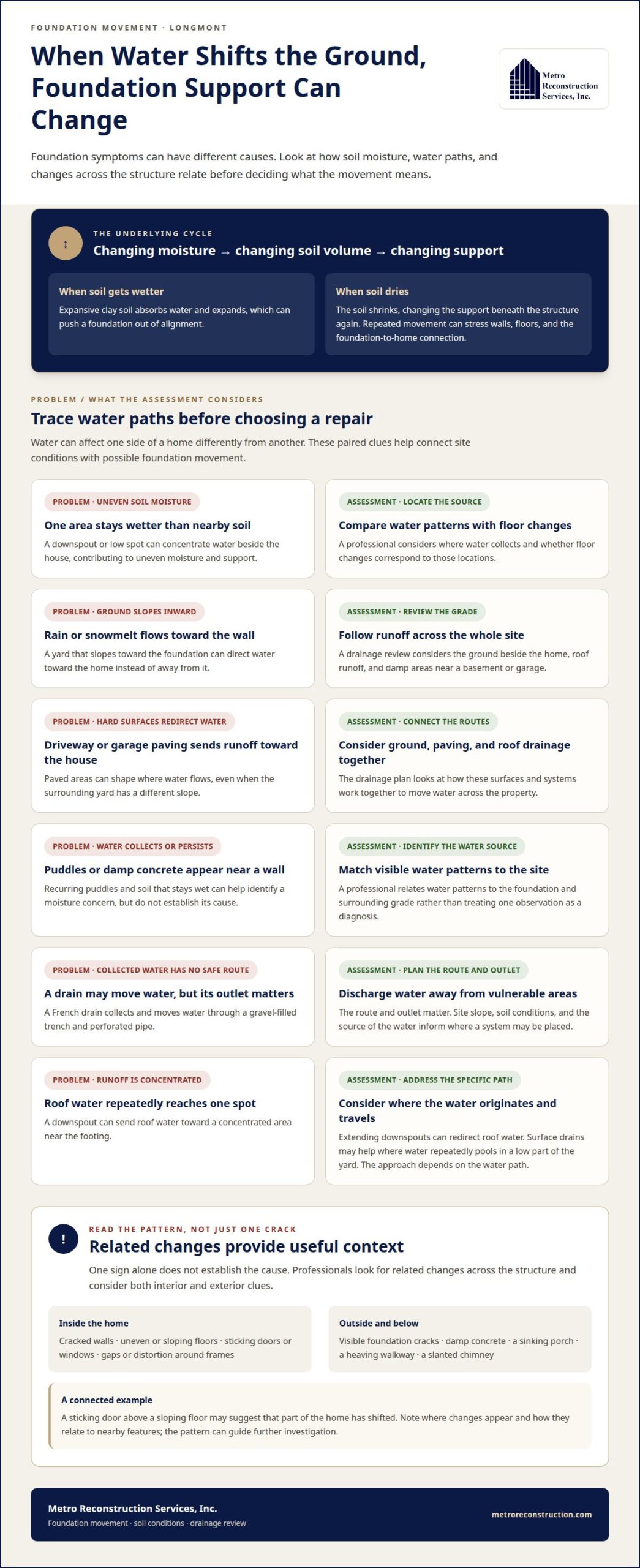
Expansive clay soil absorbs and holds water, then expands as it gets wetter. That expansion can push a Longmont foundation out of alignment. When the soil dries, it shrinks, changing the support beneath the structure again. This repeated movement can stress walls, floors, and the connection between the foundation and the rest of the home.
Notice where damage appears and whether it forms a pattern. For example, a crack near a corner may occur alongside a sloping floor or a sticking door nearby. Soil and water conditions around a basement or crawl space can vary from one side of a building to another, so movement may initially affect only part of the structure.
Signs of Foundation Movement
Cracked walls, uneven floors, sticking doors or windows, and visible foundation cracks can indicate movement in Longmont homes. Other clues include sloping floors, heaving walkways, slanted chimneys, and gaps or distortion around door and window frames. One sign alone doesn’t establish the cause. Professionals look for related changes across the structure.
Consider how the signs relate. A sticking door above a sloping floor, for example, may suggest that part of the home has shifted. A crack that crosses a wall and changes direction near a window can also point to stress around the opening. These details help describe the pattern during a foundation assessment.
Exterior clues matter too. Damp concrete, a twisting beam, or a sinking porch may reflect conditions affecting the surrounding structure. A heaving walkway beside a foundation can indicate uneven ground movement, while a slanted chimney offers a visible reference against the roofline. Consider the entire building, not only its most obvious crack.
In Longmont and nearby communities such as Boulder, Longmont, Niwot, and Golden, note where changes appear and how they relate to nearby features. For example, record whether a wall crack appears alongside a sticking window in the same room. That context helps professionals assess the basement, crawl space, and visible foundation. A connected pattern can guide investigation better than a single symptom.
Foundation solutions in Longmont depend on identifying the source and extent of movement before choosing a repair method. Soil expansion, drying, and uneven support can produce similar symptoms but require different analysis. A sound assessment connects exterior signs with interior changes to determine whether the concern is localized or affects the structure as a whole.
Soil movement and drainage concerns
Water management affects how consistently soil supports a Longmont foundation. A drainage review considers the ground beside the home, roof runoff, and damp areas near a basement or garage. These conditions may help explain why one side settles differently from another. Effective foundation solutions in Longmont account for both soil behavior and the routes water takes across the property.
Expansive clay soil changes volume as its moisture changes. Water from a downspout or a low area beside the house can keep one section wetter than the surrounding soil. Uneven moisture can lead to uneven support beneath the foundation. During an assessment, a professional considers where water collects and whether floor changes correspond to those locations.
Grading is the slope of the ground around a building. If the yard slopes toward the foundation, rain or snowmelt may flow toward the wall instead of away from it. The same issue can occur beside a driveway or garage when paving directs runoff toward the house. A drainage plan considers how the ground, hard surfaces, and roof drainage work together.
A French drain is a buried system that collects and moves water through a gravel-filled trench and perforated pipe. Its route and outlet matter: collected water needs to discharge away from the foundation, not beside another vulnerable area. Before recommending an installation location, a professional assesses the site slope, soil conditions, and source of the water.
Other drainage approaches may address roof runoff, surface water, or moisture beside basement walls. For example, extending downspouts can redirect roof water away from a concentrated spot near the footing. A surface drain may help where water repeatedly pools in a low part of the yard. The right system depends on where water originates and how it moves across the property.
Homeowners may notice drainage concerns after seeing damp concrete, recurring puddles, or soil that stays wet near a wall. These observations can help connect moisture with changes elsewhere, such as a sticking door or uneven floor, but they don’t establish the cause. A professional assessment relates visible water patterns to the foundation and surrounding grade.
Even with less than average rainfall per year in Longmont, localized runoff can still affect a home. A short storm may send roof water toward a low area beside the foundation, while snowmelt can follow a driveway’s slope. Effective water management addresses these specific paths rather than assuming regional rainfall explains the problem. Foundation solutions in Longmont should consider drainage and soil movement together before selecting a repair method.
Property owners often recall historical weather events when evaluating property conditions. One Longmont customer associated a suspected water intrusion event with the 2013 floods. That account illustrates why homeowners may consider past flooding when describing moisture concerns, while an inspection still needs to assess current water patterns, soil conditions, and the foundation itself. Metro Reconstruction Services, Inc. helps evaluate these factors to ensure long-term stability.
Assessing existing foundation condition
A foundation inspection connects visible damage with movement, moisture, and support conditions. In Colorado, an assessment should consider the foundation and the surfaces around it, such as a driveway that directs water toward a wall.
An inspection typically begins with the visible structure. A professional examines foundation walls, floor transitions, door and window openings, and areas where finishes have separated. For example, a crack near a basement window may be more significant if nearby framing is also distorted. The location, direction, and pattern of damage provide useful diagnostic context.
Interior and exterior observations are compared rather than treated separately. A sloping floor above a cracked foundation wall may indicate related movement. Outside, an inspection may consider damp concrete, grading, downspout discharge, and paving beside the home. If the driveway slopes toward the foundation, runoff may contribute to moisture on that side. These details help distinguish a structural concern from a surface defect.
Moisture checks can reveal conditions a visual review may miss. A professional may use a moisture meter to assess damp materials near basement walls or floor edges. The findings can help determine whether water intrusion, condensation, or another source needs further investigation. Basement waterproofing addresses moisture entry, but it doesn’t by itself correct foundation movement.
Structural observations also include how parts of the building connect. Inspectors may look for gaps between walls and ceilings, cracked masonry, and changes around attached porches or chimneys. A twisting beam in a crawl space may signal a support concern, while uneven floor transitions can help locate concentrated movement. Each finding needs to be considered in the context of the whole structure.
The age and construction history of a home also shape an inspection. A 100-year-old Longmont home may have different materials and past alterations than a newer house. That history can affect how cracks and repairs are interpreted. An inspection should distinguish older, stable conditions from changes that suggest current movement or moisture exposure.
A useful assessment clearly describes observed conditions and their likely relationships. It should identify what was inspected, where moisture or structural concerns appear, and what further evaluation may be needed. That record helps guide foundation decisions without treating every crack as proof of failure. Accuracy matters before choosing a repair plan.
Property owners considering foundation adjustments in Longmont, Colorado, should assess the existing foundation and consider underlying soil movement or drainage problems. Keep these points together when describing the condition: note what you observe in the foundation and whether soil movement or drainage is also under consideration. Neither issue should be assumed to explain the condition, but neither should be left out of the assessment. A decision about adjusting the foundation can then account for the existing structure and underlying concerns, rather than relying on visible damage alone.
Signs of foundation failure
Delaying foundation repair in Longmont can allow ongoing movement to put added stress on walls, floors, and attached structures. As cracks widen or a foundation continues to sink, damage may spread beyond the original area and complicate structural repairs.
Cracks are more informative when you consider their location and shape together. A stair-step crack through exterior masonry, for example, follows mortar joints and may reflect movement in the wall or its support. A horizontal crack in a basement wall can indicate pressure against the wall. Neither pattern identifies the cause on its own, but each helps direct a structural assessment.
Changes around openings can reveal stress across a wall. A window that has gone out of square may bind, develop uneven gaps, or resist closing. A door may rub at the top or latch unevenly after nearby framing shifts. If several openings on the same side show similar changes, consider that shared pattern alongside visible foundation movement.
Floors and roof features offer other clues. A sloping floor may reflect uneven support below, while a slanted chimney can indicate that part of the structure has shifted. A porch that sinks or pulls away from the house may have moved independently or along with the foundation. Comparing these changes with nearby walls helps clarify the extent of movement.
Exterior paving can also show ground movement. A heaving walkway or driveway may rise or separate near the house as soil changes beneath it. Damp concrete near a foundation adds a moisture concern, especially when accompanied by cracking or shifting. These observations don’t prove a single cause, but their locations can help explain where movement or water may be affecting support.
Watch for changes over time, not just a single mark. A lengthening crack, a door that becomes harder to close, and a widening gap at an exterior joint form a more useful pattern than one isolated symptom. A professional assessment can compare these locations and determine whether they point to one area or movement across the structure.
Structural failure can affect connected parts of a home. Continued foundation movement may stress basement walls, framing, masonry, and exterior finishes, while shifting openings can affect windows and doors. Covering a crack without addressing its source leaves the underlying movement unexamined. A durable repair plan starts by relating visible damage to soil support and moisture conditions.
For a Longmont property, sinking areas, recurring cracks, and changes in several openings together warrant prompt evaluation. The goal is to identify the structural cause before choosing a repair. That distinction helps separate surface damage from movement that may require foundation work and keeps the assessment focused on the whole home.
Metro Reconstruction Services
Metro Reconstruction Services, Inc. helps Longmont property owners address exterior damage associated with structural concerns. Its services include stucco restoration, masonry work, stucco installation, and stucco replacement. These services can repair affected exterior materials, while the cause of foundation movement remains a separate consideration.
Foundation movement can stress stucco and masonry, causing cracks, gaps, or separation at joints. These visible changes matter, but repairing the finish alone won’t lift or stabilize a sinking foundation. The order matters: first understand the movement and moisture conditions, then determine whether exterior restoration is appropriate.
For example, a crack in stucco near a window may reflect movement in the wall, damage to the finish, or both. Masonry cracks can also appear where structural stress transfers through a wall. Metro Reconstruction Services, Inc.’s stucco restoration and masonry work can address damaged exterior materials. The appropriate scope depends on the observed condition and its relationship to the building.
Stucco installation or replacement may be appropriate when the exterior finish is extensively damaged or needs renewal. Consider these options as part of the full building envelope, including nearby windows, roof-to-wall transitions, and moisture barriers. If water continues to enter behind a finish, replacing only the visible surface may leave the underlying moisture pathway unresolved.
A useful project discussion starts with clear observations. Describe where cracks appear, whether they have changed, and which other areas show damage. Photos of the affected wall, nearby masonry, and interior symptoms can help show the pattern. Dampness, a sticking window, or a sloping floor adds context, but none alone establishes the foundation’s condition.
Metro Reconstruction Services, Inc.’s exterior services are relevant when stucco or masonry damage needs assessment or repair as part of the property’s broader condition. They aren’t a substitute for foundation lifting or stabilization. Keeping that distinction clear helps avoid treating a finish repair as a structural fix, while still addressing exterior damage that may affect weather protection and appearance.
Long-term results depend on matching each repair to its cause. A finish can be restored after movement is addressed, while ongoing moisture intrusion calls for attention to how water passes through the exterior system. A careful project scope connects visible damage with adjacent materials instead of isolating a single crack or patch.
If your Longmont home shows foundation movement alongside damaged stucco or masonry, contact Metro Reconstruction Services, Inc. to discuss the exterior concerns. You can also call 303.543.9549.
Frequently Asked Questions
Can you lift a sinking foundation?
Yes, lifting is possible in some cases, depending on the foundation’s design and the extent of settlement. The repair plan may address a limited section or require support beneath a larger area. A professional determines how the load transfers through the structure and whether lifting could affect connected elements, such as stairs, utility lines, or an attached garage. These details help define the work before repairs begin.
How do I hire a reliable foundation repair company?
Choose a contractor who explains the proposed work in writing and ties each repair to a specific finding. The scope should identify the areas involved, the repair method, and how the work relates to attached structures. Ask how changes will be documented during the project and what conditions could alter the scope. Clear answers make it easier to understand what the repair addresses and what remains outside its scope.
Is it normal for a block foundation to crack?
Cracks can occur in block foundations, but their position and condition help determine their significance. A crack following mortar joints may differ from one that cuts through a block or shows visible displacement. Look for loose mortar, water staining, or blocks that no longer sit flush. These details help an inspector assess whether the crack is limited to a joint or is part of a broader wall concern.
What are common signs of foundation problems in Longmont homes?
Beyond obvious wall or floor changes, look for new separation where an addition meets the original house, or gaps appearing at interior trim and built-ins. A cabinet pulling away from a wall can provide a useful location-specific clue. Note which rooms are affected and whether the change is new. This context helps an inspector compare areas built at different times and assess how the structure behaves.
What causes foundation settlement and cracking in Longmont and Boulder County?
Besides changing soil moisture, settlement can be related to how the ground was prepared before construction or to localized loss of support. For example, a buried water line leak can soften soil near part of a home. The timing of a crack, nearby plumbing history, and the location of past additions can help narrow down possible causes. An evaluation considers these site-specific details rather than relying on the county alone.
How can I find licensed and insured foundation contractors in Longmont?
Ask a contractor for current license and insurance documents identifying the business doing the work. Licensing rules can vary by jurisdiction and project type, so confirm local requirements with the relevant building department. Make sure the written proposal names the same business shown on the documents. This practical cross-check helps clarify who is responsible for the project and which documentation applies.
How do Longmont soil conditions, expansive clay soil, and drainage affect foundation repairs?
Soil and drainage conditions can affect which repair approach is suitable and whether water management must be addressed alongside structural work. A proposal should explain how its method accounts for the soil supporting the specific foundation, rather than treating every Longmont property alike. For example, stabilizing a footing without addressing a known water source may leave an important site condition unresolved. The repair scope should connect both concerns.