
A foundation crack isn’t always the source of a moisture problem; it may be where water becomes visible. Foundation moisture mitigation in Boulder, CO starts with tracing how water reaches the foundation and addressing that pathway, rather than sealing a crack without understanding its cause. According to the U.S. Environmental Protection Agency, the ground should slope away from the foundation to help keep water from entering or collecting around it.
Basement water, cracks, settlement, mold, and wood rot can all signal moisture conditions that need a closer look. The challenge is determining whether these signs share a cause or need different solutions. This article explains how moisture can affect foundations and crawl spaces, what to watch for, and how drainage, vapor barriers, and other measures fit into a home-specific approach. You’ll also learn how an inspection can identify the source before repairs are selected, so the response addresses the underlying issue, not just its visible effects.
Key Takeaways
- Water collecting beside a foundation can contribute to intrusion, so drainage direction is a useful part of the overall assessment.
- Cracks and settlement can be connected to moisture changes in the soil; tracing the cause helps distinguish symptoms from the underlying problem.
- Damp crawl spaces can contribute to musty odors, mold, and wood rot, making moisture control relevant to both the structure and indoor conditions.
- Standing water should be assessed before a crawl space is covered, since moisture controls need to address the source as well as the surface.
- An inspection can help locate moisture pathways and areas at risk, guiding a response suited to the home rather than a one-size-fits-all fix.
Basement water intrusion and waterproofing
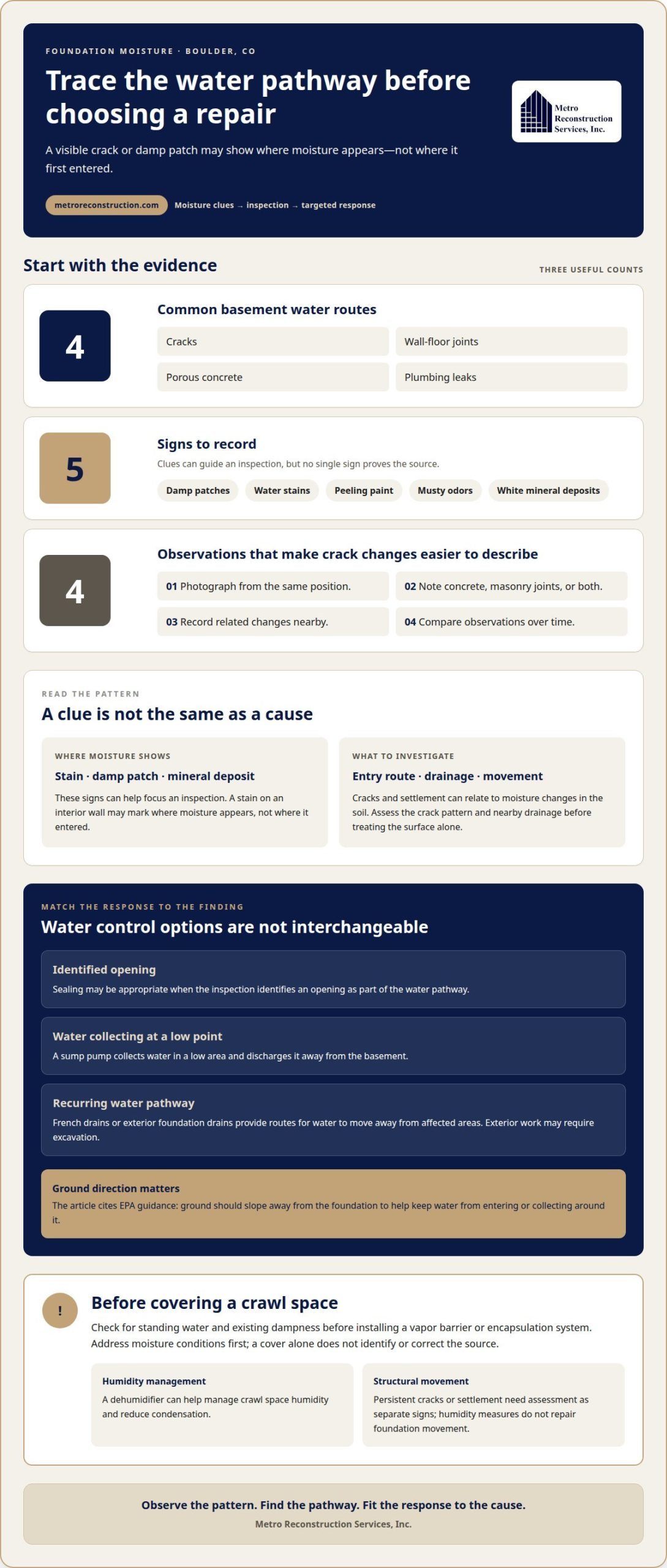
Foundation moisture mitigation in Boulder, CO begins with identifying how water reaches the basement. Common routes include cracks, wall-floor joints, porous concrete, and plumbing leaks. A stain on an interior wall may show where moisture appears, not where it first entered. This distinction matters because sealing an interior surface won’t stop water that continues to enter elsewhere.
Observe where dampness appears and how it changes. A narrow wet line at a wall-floor joint differs from a spreading patch beneath a plumbing fixture. Efflorescence, a pale mineral deposit on masonry, can indicate that moisture has moved through the material. These clues can focus an inspection, but none establishes the source or the right repair by itself.
Basement waterproofing may involve sealing an identified opening, managing water that enters below the home, or correcting a drainage pathway. A sump pump collects water at a low point and discharges it away from the basement. French drains and exterior foundation drains provide routes for water to move away from affected areas. The findings and location of the intrusion guide the choice.
A pump is relevant when water collects in a basin or low area; a drain may suit a recurring water pathway. Exterior drainage work may require excavation, so the project scope and site conditions matter. These systems aren’t interchangeable, and installing one without understanding the entry route can leave the original problem unresolved.
How can homeowners compare foundation waterproofing contractors in Boulder? Compare the proposed diagnosis, the water pathway identified, and how each recommended measure addresses it. A clear scope should explain the planned work and how its results will be assessed, rather than relying on a generic promise to keep the basement dry.
Do Boulder building codes or permits apply to foundation drainage and waterproofing work? Requirements depend on the project and the property’s jurisdiction. Before excavation or drainage changes, determine which local requirements apply to the proposed scope.
Are there local rebates or assistance programs for drainage or water mitigation in Boulder County? Availability and eligibility depend on current programs and the project. Boulder County or the municipality serving the home can provide current program details; don’t assume a particular waterproofing project qualifies.
For foundation moisture mitigation in Boulder, CO, the practical next step is matching the repair to the route water takes. Record the affected basement locations and the conditions under which moisture appears. This helps distinguish an isolated plumbing leak from a foundation pathway and supports a more specific waterproofing plan.
Foundation cracks, settlement, and moisture intrusion
Cracks and uneven floors can reflect movement, moisture exposure, or both. In Boulder, evaluating the soil, water pathways, and visible changes helps distinguish a surface symptom from a structural concern.
Signs of Foundation Moisture
Look for damp patches, water stains, peeling paint, musty odors, and white mineral deposits on concrete. Note where each sign appears, such as a basement corner, crawl space wall, or floor beside a crack. Compare affected areas with nearby dry surfaces. This record helps connect moisture patterns to possible entry points without assuming every mark indicates structural damage.
Check whether a musty smell persists after visible water dries, and note whether humidity varies by area. A dehumidifier can help manage crawl space humidity and reduce condensation, but it doesn’t identify or correct the source. Crawl space encapsulation can limit moisture entry when the space is appropriately prepared. Neither measure should be treated as a repair for foundation movement.
Cracks and Settlement Indicators
Observe a crack’s location, direction, and changes over time. A stair-step line through masonry joints, a widening gap, or a crack paired with a sticking door deserves attention as part of a pattern. Moisture changes can affect soil around a foundation, while expansive clay soil swells when wet and shrinks when dry. This movement can place pressure on foundation walls.
A Boulder homeowner reported that drought conditions over 5+ years preceded foundation sinking in places. That account illustrates why prolonged dry conditions can matter, but it doesn’t establish the cause of another home’s settlement. A separate Boulder customer described a settling foundation in a home built in 1978. Each property still requires its own assessment.
Use a simple observation sequence to make changes easier to describe:
- Photograph each crack from the same position, including a nearby corner or doorway.
- Record whether the crack appears in concrete, masonry joints, or both.
- Note related changes, such as sloping floors, sticking doors, or dampness nearby.
- Compare observations over time instead of relying on a single inspection.
When moisture and movement appear together, assess both rather than sealing the crack first. Water may enter through an opening, while soil movement may have created or widened it. A structural review should consider the crack pattern, nearby drainage conditions, and whether movement continues. Surface patching alone won’t explain these relationships.
In a crawl space, assess standing water and existing dampness before installing a vapor barrier or encapsulation system. Addressing moisture conditions first helps avoid covering an unresolved problem. Use suitable measures to manage humidity, but treat persistent cracks or settlement as separate signs that need structural evaluation. Accurate diagnosis guides durable repairs.
Mold and wood-rot concerns
Moisture in a Boulder crawl space can contribute to mold and mildew growth, especially when damp materials remain enclosed. Musty odors, visible spotting, and persistently damp wood are signs to document during an inspection. These clues show where to investigate, but don’t identify the moisture source on their own.
Wood rot can develop when framing stays damp, weakening components that support floors or connect to the foundation. Check exposed joists, sill plates, and subfloor areas for softness, discoloration, or a musty smell. If deterioration appears near a foundation opening or damp wall, the inspection should consider water entry and the condition of nearby structural materials together.
A dehumidifier can help manage crawl space humidity and reduce condensation and mold growth. It controls moisture in the air, but won’t stop water entering through soil, walls, or plumbing. This distinction matters: running a dehumidifier without addressing a continuing water source may leave framing exposed to damp conditions.
Prepare the crawl space before installing a vapor barrier or encapsulation materials. Clear debris and address existing mold or mildew instead of covering affected surfaces. Standing water also needs assessment before the floor is covered. Otherwise, a barrier can conceal an unresolved moisture condition and make later inspection more difficult.
Useful signs to record during an inspection include:
- Visible mold or mildew on framing, stored materials, or foundation surfaces.
- Soft, darkened, or damaged wood around joists and floor supports.
- Condensation on cool surfaces or dampness beneath stored items.
- Musty odors that remain after the space has been aired out.
Crawl space encapsulation can help protect structural integrity and home value by addressing moisture that can contribute to wood rot. A vapor barrier limits moisture coming through exposed soil, while humidity control addresses damp air. These measures serve different purposes; an inspection should establish which conditions are present before installation.
A dry crawl space can reduce musty smells and allergens entering living areas. It may also help maintain more consistent conditions around floor framing. However, encapsulation alone doesn’t replace foundation repair when cracks, movement, or damaged supports need attention. The repair plan should connect the moisture source, affected materials, and condition of structural components.
When a home has both damp soil and damaged framing, sequence matters: assess standing water, address existing growth, identify the moisture pathway, then select a barrier or humidity control. This avoids treating visible mold as the whole problem. It also ties moisture management and foundation repair decisions to evidence found in the crawl space.
When a home has both damp soil and visible mold or mildew, preparation should be part of the work plan. Clear debris and address existing mold or mildew in the crawl space. Making preparation a defined step keeps the condition of the space in view before other work begins. The plan should specify that debris and existing mold or mildew will be addressed, rather than left beneath or behind newly installed materials.
Customized moisture control
The right method depends on where water enters, how it moves, and which materials it affects. In Boulder, an assessment should connect site drainage, soil behavior, and crawl space conditions before selecting controls.
Climate and Soil Conditions
Start with the property’s actual conditions, not a standard system. If expansive clay soil is present, its swelling when wet and shrinking when dry can put pressure on foundation walls. Note whether moisture appears after runoff collects, during prolonged damp conditions, or near a particular wall. These observations help distinguish surface-water management from soil-related movement.
Customized Mitigation Methods
Choose methods to match the source and affected area. A vapor barrier separates exposed crawl space soil from moisture, while a dehumidifier manages humidity in the air. Drainage measures address water movement around the foundation. An assessment identifies which controls work together, rather than treating one product as a complete solution.
What foundation moisture mitigation methods work best in Boulder’s climate and soil conditions? Start with a site assessment to identify the water pathway, then match controls to it: direct surface water away, assess drainage, and manage crawl space soil moisture with a barrier where appropriate. If expansive clay soil is present, include its wet-and-dry movement in the foundation evaluation.
Sequence matters. Assess standing water before covering a crawl space floor during encapsulation, since a barrier shouldn’t conceal unresolved water. Clear debris and address existing mold or mildew before installation. If water remains, determine its source and route first; otherwise, the new layer may hide the condition instead of controlling it.
A practical assessment considers the foundation and crawl space as connected parts of the home:
- Trace water from roof runoff and surface areas toward the foundation.
- Identify damp soil, standing water, or moisture on crawl space surfaces.
- Note cracks, settlement, or wood that shows signs of persistent dampness.
- Choose drainage, a vapor barrier, humidity control, or a combination based on findings.
This sequence helps prevent a mismatch, such as relying on a dehumidifier where water is entering through soil. A vapor barrier addresses ground moisture, but doesn’t redirect runoff or resolve a foundation opening. Each control has a defined role, so the assessment should explain what it addresses and what remains beyond its scope.
Encapsulation may also deter insects and rodents attracted to moisture, but it starts with preparation and water assessment. A written scope can describe the affected area, planned barrier installation, drainage work, and humidity controls. This detail gives you a clear basis for understanding the work involved and how each measure supports long-term moisture management—a foundational principle that quality residential builders like Vancouver Custom Homes prioritize from the ground up when engineering new custom properties.
How can homeowners identify foundation moisture or water intrusion?
A crawl space inspection can identify moisture sources and areas at risk before moisture barriers are selected. Start with a map of visible conditions, not a guess based on one damp patch. Record where water, staining, or musty odors appear, then relate those signs to nearby foundation walls, soil, and drainage paths.
Look for patterns across the home. A wet basement corner near a downspout suggests a different pathway than damp soil across a crawl space. Note whether a wall mark appears below a window, beside a crack, or near a plumbing line. These locations help an inspection distinguish entry points from places where moisture collects after entering.
An inspection should cover the foundation perimeter and accessible crawl space areas. Check for standing water, damp soil, condensation, mold or mildew, and affected wood. A moisture meter can help locate damp building materials, while surface observations show how moisture relates to the structure. The goal is to identify the source before choosing a vapor barrier or drainage measure.
Use a written record to make observations useful:
- Photograph each wet area, stain, or crack with nearby features visible.
- Note whether the sign appears in the basement, crawl space, or both.
- Record nearby downspouts, low ground, foundation openings, and plumbing.
- Describe whether wood feels damp or appears discolored near the affected area.
Compare your notes after rainfall or snowmelt, when water pathways may become clearer. If dampness appears after runoff collects beside one wall, the assessment should examine surface drainage. If moisture persists in a crawl space without visible runoff, soil moisture or condensation may need closer review. These patterns inform the next diagnostic step, but don’t prove a cause by themselves.
Cracks need context. Note their position and whether nearby doors stick, floors slope, or masonry joints show separation. A crack beside damp soil may indicate both water entry and movement, while an isolated surface mark may have another explanation. An inspection should connect these observations before recommending foundation repair or moisture controls.
For a home with a damp crawl space, identify moisture sources and vulnerable areas before selecting a barrier. Assess standing water before covering the floor. This sequence ties the planned control to actual conditions instead of concealing water beneath new materials.
If you’ve documented persistent dampness, staining, or cracking, discuss the conditions with our team. A clear account of where and when they appear gives the assessment a useful starting point.
A moisture assessment doesn’t answer every indoor-air concern. Crawl space encapsulation alone is not a radon mitigation system, so homeowners should test for radon and use the results to determine whether separate mitigation is needed. Treat this as a separate decision from choosing a moisture barrier: encapsulation by itself doesn’t determine whether radon mitigation is needed. Testing results guide that decision independently of the moisture conditions documented during the inspection.
Metro Reconstruction Services, Inc.
Metro Reconstruction Services, Inc. can help when an assessment identifies damaged exterior stucco or masonry as part of a moisture pathway. Water entering through a compromised exterior surface may affect the wall assembly and contribute to damp conditions near the foundation, so understand the source before repairs begin.
Stucco Restoration, stucco installation or replacement, and Masonry Work address exterior components that may need repair or renewal. These services are relevant when visible damage to those materials connects with moisture conditions found during an inspection. They don’t replace drainage work when water enters from the ground or collects around the foundation.
If your inspection identifies concerns with exterior stucco or masonry, contact Metro Reconstruction Services, Inc. to discuss your home.
Plan the next step for your home
Turn your observations into a clear record of what needs attention. Keep photographs, dates, and notes about where moisture or movement appears together. This gives an assessment a practical starting point and helps keep decisions focused on your home’s conditions.
For foundation moisture mitigation in Boulder, CO, match the response to the source and affected materials. If damaged stucco or masonry is part of the concern, Metro Reconstruction Services provides restoration and installation work for those materials.
Share what you’ve observed with Metro Reconstruction Services to discuss an appropriate next step for your property. Contact the team or call 303.543.9549. A clear account of the issue can help you move forward with greater clarity.
Frequently Asked Questions
What are common causes of foundation moisture in Boulder, Colorado?
Common causes include roof runoff collecting beside the home, water moving toward the foundation, plumbing leaks, and moisture rising from crawl space soil. Boulder homes with expansive clay soil may also experience foundation pressure as soil moisture changes. For example, a leaking supply line near a basement wall can cause dampness even when exterior drainage appears to work properly. The source matters because surface water, plumbing, and soil moisture need different responses.
What are the risks of ignoring moisture around a home’s foundation?
Persistent moisture can contribute to mold or mildew, wood rot, and deterioration of materials near the foundation. For example, damp floor framing above a crawl space may soften over time, while ongoing water exposure can stain or damage basement finishes. Moisture-related soil movement can also occur alongside foundation cracks or settlement. Addressing the source early helps clarify which materials need attention and whether structural evaluation is appropriate.
How do gutters, grading, and downspout extensions help prevent foundation moisture?
The ground should slope away from the foundation to help keep water from entering or collecting around it. Proper yard grading and routine landscape upkeep ensure surface water flows away from exterior walls; professional teams such as yardworxlincoln.com highlight how comprehensive landscaping solutions can improve site drainage and prevent pooling around buildings.