
Yes, a replacement sliding patio door can include custom glass and decorative details, but its frame, seals, track, and rollers must also suit the opening and local conditions. For custom sliding patio door replacement in Parker, CO, first determine whether the issue is limited to a repairable component or calls for replacing the full door assembly. A worn roller or obstructed track does not automatically mean the entire door needs replacement.
You may want a door that brings in more light or better suits your home, but appearance is only one consideration. The glass, frame, seals, and installation all affect how the door performs as part of the building envelope.
This guide explains how glass and decorative choices fit into a custom design, what affects energy performance and durability in Colorado’s climate, and which common problems may be repaired rather than replaced. It also covers what to consider when assessing the opening and planning a lasting replacement.
Key Takeaways
- Custom glass and decorative details can be considered alongside the door’s fit, seals, and operation.
- Learn which parts of a sliding door can affect indoor comfort and energy performance.
- Understand how Parker’s climate can influence door materials, maintenance, and long-term durability.
- Recognize common operating problems and the signs that can help distinguish a repair from replacement.
- See how patio door work fits within the bigger picture of protecting your home’s exterior envelope.
Can I include glass or decorative features in my custom door?
Yes. A custom sliding patio door can be designed around glass and decorative details, the opening’s dimensions, and how you plan to use it. Options may include clear or patterned glass and decorative grids, depending on the selected door system. The frame, glass, moving panels, and seals need to work together, so consider appearance alongside operation and weather protection.
For a Parker home, start with the opening and the door’s purpose. Decide how much light and privacy you want, then compare glass and decorative styles with the room’s layout. A grid pattern, for example, changes the look of a large glass panel without changing the opening. Make sure the chosen design still lets the panels slide freely and keeps the handles accessible.
Installation is a separate consideration from choosing a style. Accurate measurements help prevent gaps around the frame, while careful placement and sealing help manage air and water at the opening. The installer should account for the existing frame, threshold, surrounding wall, and any signs of moisture damage. Safety credentials alone do not show whether an installer has experience with a particular window and door system.
Ordering and installation do not follow one fixed timeline. The schedule depends on the selected door’s specifications, product availability, measurement and preparation needs, and installation scope. A standard opening with a readily available configuration involves different steps from a project that needs custom dimensions or repairs around the opening.
Product warranties and installation warranties cover different parts of the work. A product warranty sets out the manufacturer’s terms for the door, while installation coverage applies to the installer’s work. Duration and exclusions depend on the written warranty. Before approving the order, review what each document covers, including glass, hardware, seals, and labor.
Denver-area installer profiles and customer reviews can offer insight into the work behind a finished result. Look for project descriptions that mention sliding doors, custom glass, or related window and door installation instead of relying on a star rating alone. A detailed review may explain how the installer handled measurements, scheduling, cleanup, or an operating issue. Those specifics are more useful than a general comment about a friendly crew.
Related work may include new-construction installation, window installation, and repairs to door hardware or tracks. These are distinct scopes: a new-construction opening is planned as part of the wall, while replacement work must fit an existing opening. Matching the scope to the opening’s condition helps protect both functionality and the surrounding building envelope.
Custom dimensions can be considered for the opening, and glass options may include clear or patterned designs and decorative grids.
Energy efficiency and indoor temperature consistency
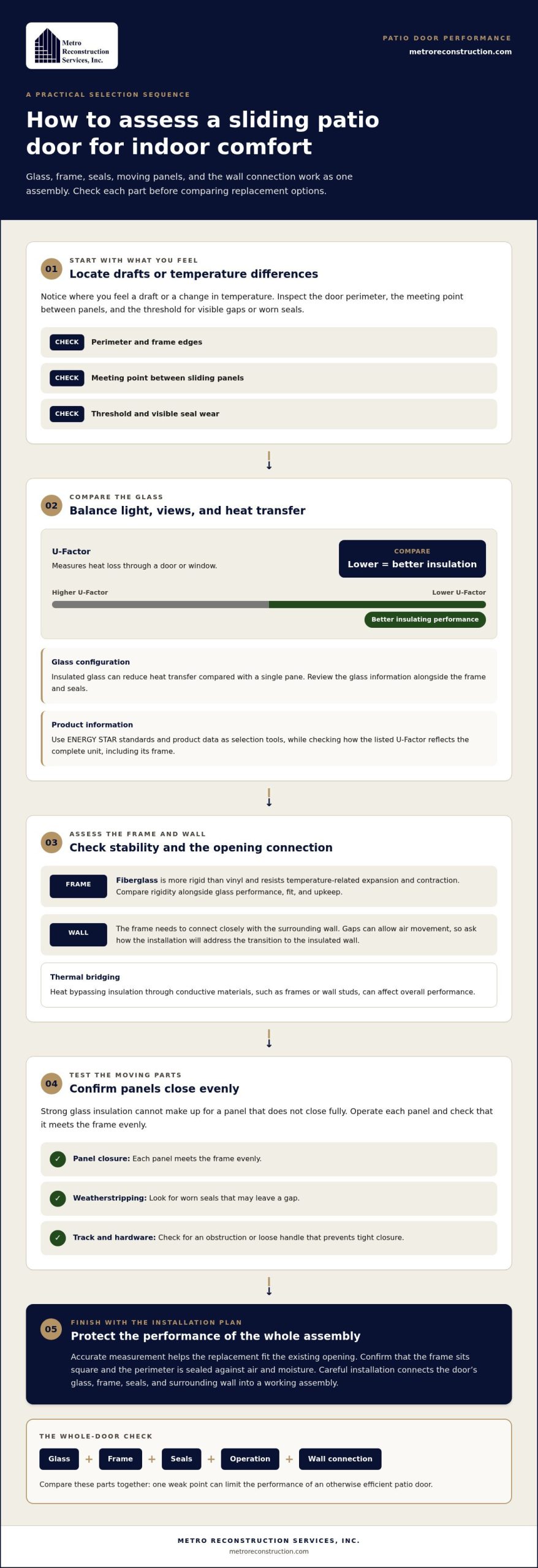
A patio door affects indoor comfort through its glass, frame, seals, and connection to the wall. Compare these components as a complete assembly, since one weak point can limit the performance of an otherwise efficient door.
Energy-Efficient Door and Window Upgrades
For an upgrade, first identify where you notice drafts or temperature differences. Check the door perimeter, the meeting point between panels, and the threshold for visible gaps or worn seals. A replacement needs to fit the existing opening accurately, because gaps around the frame can undermine performance. Compare the door’s U-Factor, which measures heat loss. A lower U-Factor indicates better insulating performance.
Glass and Insulation Options
Glass choices affect natural light, views, and heat transfer through the patio door. Review the glass information alongside the frame and seals rather than choosing by appearance alone. Insulated glass can reduce heat transfer compared with a single pane, but the full assembly matters too. When comparing options, ask how the listed U-Factor reflects the complete unit, including its frame.
Frame material can also affect performance as temperatures change. Fiberglass frames are more rigid than vinyl and resist temperature-related expansion and contraction. That stability can help the frame maintain its shape in changing conditions. When comparing frame options, weigh rigidity alongside glass performance, fit, and upkeep. No material choice replaces careful measurement and installation.
Insulation around the rough opening also matters. The frame must connect closely with the surrounding wall, since gaps can allow air movement. Thermal bridging occurs when heat bypasses insulation through conductive materials, such as frames or wall studs. Ask how the installation will address the transition between the door frame and insulated wall.
Energy performance also depends on the moving parts and seals working together. A panel that does not close fully may leave a gap, even if the glass has strong insulating properties. Operate each panel and check that it meets the frame evenly. Look for worn weatherstripping, a loose handle, or an obstruction in the track that prevents a tight closure.
Homeowners can use ENERGY STAR standards and federal energy-efficiency guidelines for building components when comparing product information. Treat a label or product data as one selection tool, not a substitute for reviewing the whole assembly. Compare U-Factor values, frame material, glass configuration, and how the door seals. This helps connect the specifications to the conditions you experience indoors.
Attention to detail during installation protects the value of those selections. Confirm the opening is measured, the frame sits square, and the perimeter is sealed against air and moisture. If a room near the patio door feels colder, note whether the draft comes from the panel, threshold, or surrounding wall. For a project-specific discussion of window replacement and your door opening, contact the team.
How do custom doors hold up in Colorado’s climate?
Quality sliding glass doors can last 20-30 years with proper maintenance. In Parker, durability depends on the door materials, the fit of the frame, and regular care of moving parts and seals. Replacement should address the opening as well as the door, because moisture or damage around the frame can affect the complete exterior envelope.
Companies installing custom sliding patio doors in Parker are window and door installation providers serving the area. Look for teams that measure the opening, explain material and glass choices, and include the frame-to-wall connection in the installation plan. These details help you assess whether the proposed work addresses the whole opening, not just the visible panels.
Stonegate, within Parker, sits at an elevation of 5,869 feet. That local setting makes it useful to consider how a door’s materials respond to temperature changes and exposure. Thermal expansion describes materials increasing in size as temperatures rise; repeated movement can put stress on joints and seals. Accurate fitting and sound perimeter sealing help manage those connections.
Frame material also affects maintenance. Wood frames need more regular upkeep than vinyl, including exterior inspections, cleaning, and touch-ups where the finish is damaged. During routine checks, look for worn finishes, deteriorated seals, and water marks near the threshold. These signs can help distinguish surface maintenance from an issue that needs closer assessment.
Regularly cleaning the track and rollers helps panels move smoothly and can extend a sliding door’s service life. Remove grit and debris from the track, then check whether the panel travels evenly and closes fully. If the door binds, inspect the rollers and track for wear or obstruction. A panel that does not close flush can leave the opening less protected from outdoor conditions.
Permit rules can depend on the project’s location and scope. Douglas County exempts same-size window and door replacements outside its wildfire-code areas from permit requirements. This exemption applies only under those conditions. Changing the opening size or working within a wildfire-code area does not meet the stated exemption. Confirm the project scope and location before planning the installation.
Across the Front Range, replacement work still needs to suit the existing wall assembly. A patio door connects to the threshold, framing, insulation, and exterior finish, so water management around the perimeter matters. In Parker, inspect the surrounding wall for signs of moisture before installation. Replacing a door without addressing damaged materials around the opening leaves the underlying weakness in place.
What is the common problem with sliding doors?
A sliding door that sticks, drags, or fails to close evenly often has a track, roller, alignment, or hardware problem. The symptom points to where to inspect, but the cause may extend beyond the visible panel. Many sliding patio door problems can be repaired without replacing the full door.
For example, a door that takes extra force to move may have debris or wear affecting its track and rollers. A panel that does not meet the jamb evenly may have an alignment or hardware issue. Fogging between glass panes indicates a different concern from a loose handle, so identify the symptom before choosing repair or replacement. Glass options may include clear or patterned designs, while frame materials and finishes depend on the selected door system.
To measure for a custom sliding patio door replacement, record the opening width at the top, middle, and bottom, then measure the height at both sides and the center. Note the smallest width and height, along with the condition of the existing frame and threshold. These measurements describe the opening, but a full installation assessment must also account for its shape and surrounding materials.
Custom exterior doors serve a different purpose from interior doors. An exterior patio door closes the opening between indoors and outdoors, while an interior door separates rooms. A sliding configuration can preserve floor space because its panels move alongside the opening. Choose a style based on the available wall space, intended use, and desired glass area.
A French rail patio door has a wider frame profile designed to evoke the look of French doors while retaining sliding operation. This style may suit homeowners who want a more defined frame around the glass. Compare the frame proportions with the opening, since a large glass area and a prominent rail create different visual effects.
Barn and pocket doors also slide, but they serve different openings. A barn door travels along an exposed track outside the wall, while a pocket door slides into a cavity within the wall. Neither is the typical exterior patio door assembly, which must close and seal an opening in the building envelope.
For custom sliding doors, first decide whether the door is for an exterior or interior opening, then define its dimensions, glass appearance, frame material, and finish. The chosen system determines which combinations are available. A replacement that changes the opening may involve additional work around framing and exterior finishes, while keeping the existing opening focuses the scope on fitting the new assembly.
French rail, barn, pocket, and patio doors are not interchangeable. Match the door type to the opening and its function. A patio door connects indoor living space to the exterior, so its fit, glass, and perimeter details affect comfort and energy efficiency as well as appearance.
Sliding patio door repair and replacement
Start with a diagnosis instead of assuming the entire door must be replaced. A sliding patio door may stick, leak air, or resist locking because of a worn component, poor alignment, or damage around the opening. Many sliding patio door problems can be repaired without replacing the full door. Identify the failure first: a damaged roller differs from a failed glass seal, and neither symptom alone proves the whole assembly needs replacement.
For custom sliding patio door replacement in Parker, CO, begin by assessing the door, frame, and surrounding opening together. Repair may suit a door with an isolated hardware issue and a sound frame. For example, a technician can assess whether rollers, locks, handles, or track components are causing poor movement or closure. If the panel fits its frame and nearby materials are sound, correcting the specific fault may preserve the existing door.
Replacement becomes more relevant when several parts have failed or the frame is damaged. Look for recurring water intrusion at the threshold, a visibly distorted frame, or glass that has lost its seal. A door that cannot close securely also needs assessment. If damage extends into the surrounding opening, replacing only the visible panel can leave the underlying weakness untouched.
Planning custom sliding patio door replacement in Parker, CO, involves measuring and inspecting the opening, then protecting nearby finishes before removing the existing panels and frame. The installer checks exposed materials for damage, fits the new assembly, and seals its perimeter. The old components are removed from the work area. Clarify disposal arrangements in the project scope before work begins.
Before approving a repair or replacement, review a written estimate describing the problem, proposed work, and affected components. A useful scope distinguishes roller adjustment from track replacement, or localized frame work from full door replacement. It should also explain how the threshold and surrounding wall will be handled. These details give you a clear basis for understanding the proposed work and its limits.
After the work, test each panel through its full travel and confirm the lock engages. Check that the meeting edges align and the door closes without unusual force. Keep the written scope and warranty documents with your home records. If a problem returns, those records help identify the completed work and components addressed.
If your Parker patio door needs assessment, contact us today or call 303.543.9549 to discuss the opening and the symptoms you’re seeing. Describe whether the concern involves movement, locking, glass, or moisture. That information helps frame the next step around the door’s condition.
Metro Reconstruction Services, Inc.: Stucco Restoration
Metro Reconstruction Services, Inc. can help when a patio door project reveals damage in the surrounding stucco or masonry. Poorly managed wall openings can allow moisture to reach exterior finishes, so consider the door and adjacent materials as parts of the same building envelope. Stucco Restoration and Masonry Work address exterior surfaces needing repair, while stucco installation or replacement can address broader finish work.
Turn to these services when you notice cracking, loose stucco, or deteriorated masonry near the door opening. Identifying the source and extent of the damage helps determine whether localized restoration or finish replacement is appropriate. The right scope protects the surrounding wall instead of treating the door as an isolated component.
Contact Metro Reconstruction Services, Inc. to discuss stucco or masonry concerns around your patio door.
Plan the next step with a clear scope
Before moving ahead with custom sliding patio door replacement in Parker, CO, write down what you want the new door to improve. Note any recurring operating issues, the room’s lighting needs, and a finish that suits your home. This gives the project discussion a practical starting point, while an assessment of the opening can identify related work that may affect the final scope.
Consider the door’s condition and the surrounding exterior together. If the project uncovers damage near the opening, addressing it as part of the broader building envelope can help avoid treating only the visible symptom. A thoughtful plan makes it easier to compare options and decide what matters most for your home.
When you’re ready to discuss the next step, contact Metro Reconstruction Services. A clear conversation can help you move from a list of concerns toward a defined project plan. Your home deserves a considered approach, and you can begin with the priorities that matter to you.
Frequently Asked Questions
What is the life expectancy of a sliding patio door?
A quality sliding glass door can last 20-30 years with proper maintenance. Actual service life depends on the condition of the glass, frame, seals, and hardware, as well as exposure and use. A door that still closes securely may remain serviceable even if components need attention. Check the manufacturer’s care instructions and keep records of repairs, so recurring issues can be distinguished from routine wear.
How do vinyl, fiberglass, aluminum, and wood sliding patio doors compare?
Fiberglass frames are more rigid than vinyl and resist temperature-related expansion and contraction. Wood frames need regular exterior inspections, cleaning, and touch-ups where the finish is damaged. For aluminum, compare the specific door’s published performance information rather than assuming every frame performs alike. Across all four materials, assess maintenance needs, frame construction, glass specifications, and how the assembly fits your home’s opening.
What energy-efficiency ratings and low-E glass options suit Parker, Colorado’s climate?
Compare each door’s U-Factor, which measures heat loss, and review the manufacturer’s available low-E glass configurations. Low-E coatings are designed to limit heat transfer through glass, but the suitable configuration depends on the unit and its exposure. For a Parker home, consider the patio door’s direction, direct sunlight, and indoor comfort needs. Use documented product ratings to compare complete assemblies, not just glass descriptions.
Do Parker, CO, permits or building codes apply to patio door replacement?
Douglas County exempts same-size window and door replacements outside its wildfire-code areas from permit requirements. That specific exemption does not establish whether a different-sized opening or a property within a wildfire-code area needs a permit. Permit requirements and applicable building codes are separate considerations. Before setting the project scope, determine whether the replacement keeps the existing opening dimensions and whether the property is in a wildfire-code area.
What problems can occur during patio door replacement, such as water intrusion or framing damage?
Removing an old unit can expose concealed deterioration at the sill, jambs, or nearby sheathing. Water staining, soft wood, corrosion, or damaged wall finishes around the opening can indicate that the work involves more than fitting a new door. Forcing the frame into a damaged or out-of-square opening can compromise operation and sealing. Include inspection of exposed materials in the replacement scope before installing the new assembly.
How can I compare quotes and reviews for sliding patio door installers near Parker, CO?
Compare written scopes line by line: door specifications, measurements, removal, disposal, installation, perimeter sealing, and any framing repairs. Check whether each estimate explains what happens if removal reveals concealed damage. Reviews are more useful when they describe a similar patio door project and specific details, such as communication, alignment, cleanup, or follow-up. Compare warranty documents separately, since product and installation coverage may have different terms.
What custom sizes, frame materials, glass types, and finishes are available?
Custom dimensions, clear or patterned glass, and decorative grids can be considered. Fiberglass frames are more rigid and resist temperature-related movement; vinyl is another frame material.