
Filling over failing chimney mortar can hide damage without repairing it. For brick chimney repair in Longmont, repointing is appropriate when the bricks remain sound and deterioration is limited to the mortar joints. Loose, cracked, or displaced bricks may require more extensive masonry work. A durable repair addresses the cause, not just the visible signs.
It’s understandable to look for a straightforward fix when mortar begins to crumble, but a surface patch may not hold if moisture is still entering the chimney. In Longmont’s freeze-thaw conditions, trapped water can widen existing cracks as it freezes. According to the U.S. Geological Survey, water swells by roughly 9 percent as it turns to ice.
This article explains how to tell deteriorated mortar from more serious brick damage, why an inspection can reveal problems that aren’t obvious from the ground, and what information helps move an estimate and repair schedule forward. You’ll also learn what a durable repair involves, so you can understand the recommended scope before work begins.
Key Takeaways
- Learn how to distinguish mortar deterioration that may call for repointing from brick damage that needs broader masonry work.
- Recognize why cracks, crumbling joints, and spalling can point to moisture entry or movement that a surface patch won’t address.
- Understand how an inspection helps identify the repair scope and uncover damage that isn’t visible from the ground.
- See what photos and project details can help clarify an estimate and support repair scheduling.
- Compare localized repairs with rebuilding or replacement to understand how the extent of damage shapes the approach.
How do I know if my chimney needs repointing or a more extensive masonry repair?
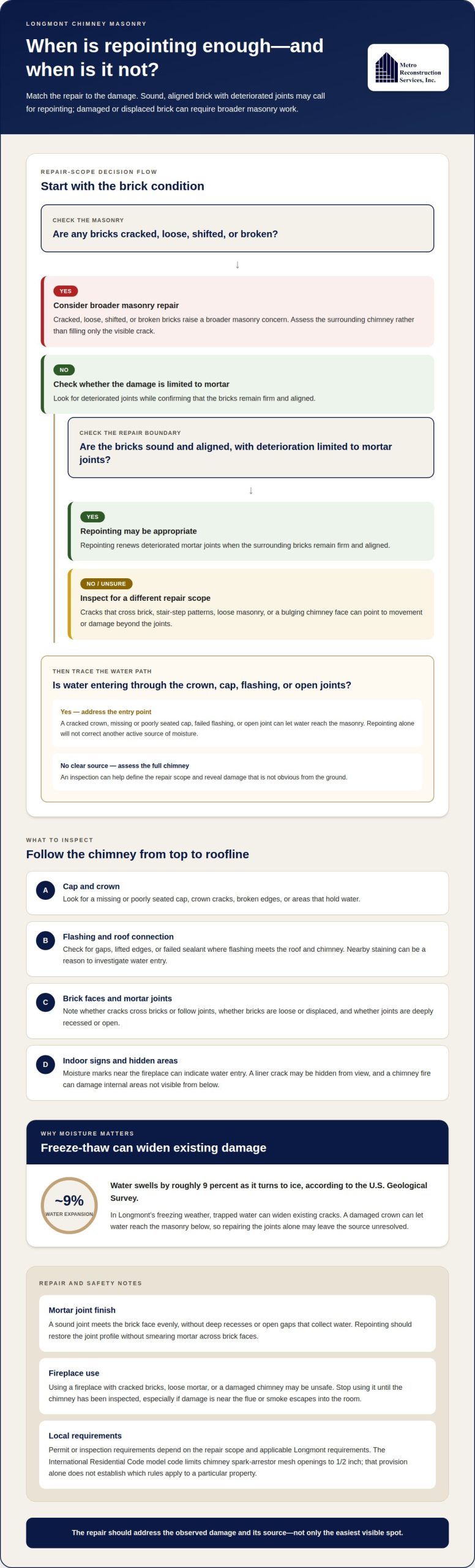
Repointing renews deteriorated mortar joints when the surrounding bricks remain firm and aligned. More extensive masonry repair may be needed when bricks crack, loosen, shift, or break apart. Mortar loss across several joints may be localized, while a bulging chimney face can suggest movement beyond the joints. The repair should match the damage, not simply cover its visible surface.
During an inspection, assess the entire chimney, not just one damaged spot. Check the mortar, brick faces, crown, cap, flashing, and roof connection. Crumbling joints, stair-step cracks, and loose bricks can each point to a different repair scope. Indoor moisture marks or staining near the fireplace are also reasons to investigate water entry. These observations help define brick chimney repair in Longmont.
Water can worsen existing crown damage during Longmont’s freezing weather. According to the U.S. Geological Survey, water swells by roughly 9 percent as it turns to ice, potentially widening cracks in a chimney crown. A damaged crown can let water reach the masonry below. Repointing the joints alone won’t correct a cracked crown or another active source of moisture.
Examine the chimney cap and flashing as separate parts of the water-control system. A missing or poorly seated cap can expose the flue to rain and debris. Flashing seals the roof-to-chimney transition; gaps, lifted edges, or failed sealant can direct water behind the masonry. If staining appears below this junction, trace the water path before repairs begin.
Mortar joint shape affects how water sheds from brickwork. A sound joint meets the brick face evenly, without deep recesses or open gaps that collect water. A recessed joint, for example, can hold moisture against brick edges. Repointing should restore the joint profile without smearing mortar across brick faces, which can trap moisture and obscure damage.
For a framed chimney chase, inspect the chase cover for rust, open seams, a poor fit, or water collecting around its edges. Water entering there can damage the chase and cause indoor staining, even when exterior brickwork looks intact. Waterproofing masonry may limit water absorption, but it cannot replace failed flashing, a cracked crown, or defective joints. Identify and correct the entry point first.
A focused inspection can trace water from top to bottom: check the cap and crown, examine flashing, then assess brick faces and mortar joints. Note whether cracks cross bricks or follow joints, and whether bricks appear loose or displaced. These details help distinguish repointing from broader masonry repair. Brick chimney repair in Longmont should address both visible damage and its source.
How to Contact a Chimney Masonry Repair Specialist in Longmont
Cracks, loose bricks, and deteriorated mortar can indicate different repair needs. Their pattern and location help distinguish surface wear from movement or damage inside the chimney.
Permit or inspection requirements depend on the repair scope and applicable Longmont requirements. Don’t assume a repair is exempt from local review just because it looks small.
Building and fire-safety requirements can affect chimney work in Longmont. The International Residential Code model code limits chimney spark-arrestor mesh openings to 1/2 inch, but that model-code provision alone doesn’t establish which rules apply to a particular property.
Using a fireplace with cracked bricks, loose mortar, or a damaged chimney may be unsafe. Stop using it until the chimney has been inspected, especially if you see damage near the flue or notice smoke escaping into the room.
Masonry Cracks and Deterioration
Check whether cracks run through individual bricks, follow mortar joints, or form a stair-step pattern. Missing mortar between otherwise stable bricks can indicate joint deterioration; a cracked or displaced brick raises a broader masonry concern. Also note whether the chimney face looks uneven or bulged. These signs can indicate movement, so filling visible cracks without assessing the surrounding masonry may leave the cause unresolved.
Crown Cracks and Rebuilding
The crown is the sloped top surface that sheds water away from the chimney structure. Cracks, broken edges, or areas that hold water can let moisture reach the masonry below. Rebuilding may be appropriate when the crown has deteriorated beyond localized repair, but the scope should include its edges and connection to the flue. Patching an active crack won’t correct water entry.
A chimney inspection should also consider the liner and the mortar supporting the brickwork. Liner cracks can be hidden from view, while weakened mortar may allow bricks to loosen. A chimney fire can damage internal areas that aren’t visible from below. If a fireplace insert is present, the inspection should still assess the chimney and liner rather than assume the visible appliance means the masonry is sound.
For a clear assessment, document each crack’s location and whether nearby bricks have shifted. Then inspect the chimney from the crown down to the roofline, noting open joints, damaged bricks, and signs of water entry. This sequence helps distinguish localized mortar work from repairs involving the crown, liner, or unstable masonry. The repair plan should address the observed damage and its source, not just the easiest visible spot.
Getting a repair estimate and scheduling service
A useful estimate starts with a clear description of the chimney and its visible damage. Photos can help a masonry professional understand the likely repair area and scope before an onsite assessment. Include views of the full chimney, close-ups of damaged joints or bricks, and the roofline connection. Note any interior staining, falling mortar, or changes you’ve observed.
For a Longmont home, identify the property’s location and access conditions. The local ZIP codes include 80501, 80503, and 80504. Mention whether the chimney is on a steep roof, behind a fence, or difficult to reach. These details help plan an inspection and determine what information is needed to assess the work.
Chimney repair specialists and chimney sweeps address related but distinct concerns. A chimney sweep focuses on cleaning and evaluating the flue, while masonry repair addresses damaged bricks, mortar, and other masonry components. If a sweep identifies cracked masonry or weakened joints, share those findings and any inspection notes. A structural repair estimate should describe the visible damage, proposed work, and whether further inspection is needed.
To prepare for scheduling, gather the information that explains the problem:
- Send clear exterior photos from several angles, including the crown and roofline.
- Describe when you noticed the damage and whether it has changed.
- Include relevant chimney sweep or inspection findings.
- Note access limits, such as roof pitch or nearby obstructions.
Winter conditions can affect access and the timing of exterior masonry work. Share your preferred scheduling window early, especially if damage is allowing water into the home. The repair plan may depend on the affected area, the surrounding brickwork, and safe access to the chimney. Photos can guide the initial conversation but cannot show every concealed condition.
For urgent concerns, such as a visibly shifting chimney or bricks falling near an entryway, keep people clear of the affected area and describe the hazard when arranging an assessment. Emergency chimney services vary in scope; a request for urgent attention does not establish that immediate scheduling is available. Clearly distinguish a safety concern from routine deterioration so the situation can be assessed appropriately.
Longmont chimney service areas can include homes across 80501, 80503, and 80504. Share the ZIP code, photos, and inspection details together to make the first discussion specific. Once the damage and access needs are understood, the next step is arranging an assessment and reviewing a repair scope that addresses the observed masonry condition.
Masonry repairs, rebuilds, and replacements
The right scope depends on how much masonry has deteriorated and whether the damage affects stability. In Longmont, a localized repair may address limited damage, while widespread deterioration can require rebuilding or replacement.
Chimney and Fireplace Masonry Repairs
Assess chimney brickwork from the roofline down to its base. At the fireplace, examine the masonry surround and visible firebox, noting loose units, open joints, or sections that no longer sit evenly. These areas face different conditions, so an isolated fireplace repair may not address deterioration higher in the chimney. An inspection should consider both visible surfaces and potentially hidden damage.
Localized repairs can suit a small area of failed mortar or a limited number of damaged bricks, provided the surrounding masonry remains stable. A partial rebuild may be more appropriate when deterioration spans a larger section or bricks have shifted. If damage extends through the chimney structure, replacement may be considered. The repair scope should reflect the extent and location of the failure.
Exterior Chimney Repair
Exterior work addresses masonry exposed to the weather, including the chimney face and sections above the roof. Look for displaced bricks, open joints, and stains that cross more than one surface. A repair assessment should connect those signs to nearby roof and wall details, because water entering at one junction can affect masonry farther below.
Chimney masonry service areas include Longmont and nearby Niwot. For homes in this area, access and the location of the damaged section shape the inspection plan. A chimney above a steep roof, for example, may require a different access approach than masonry beside a ground-level fireplace. Clear photos can help identify the affected face before an onsite assessment.
Staining and moss deserve attention because they can indicate surfaces that stay damp. A green patch near a shaded joint, for example, calls for examining the mortar and nearby drainage path, not simply scrubbing the surface. Staining can remain after the source of moisture changes, so its pattern and location matter. Cleaning alone won’t restore loose bricks or deteriorated joints.
For masonry repairs, rebuilds, and replacements, the decision depends on the condition of the connected brickwork. Stable masonry around a limited defect supports a focused repair. Widespread crumbling, repeated movement, or damage across several faces may point toward rebuilding. If the structure cannot be retained in sound condition, replacement becomes a separate consideration. Each approach should account for adjoining fireplace or chimney masonry.
Before work proceeds, define which area is included, how far the visible damage extends, and whether adjoining masonry needs attention. This scope matters in Longmont homes where a chimney and fireplace share connected brickwork. A repair limited to the obvious defect may leave adjacent deterioration untouched; assessing the full affected section helps match the approach to the actual condition.
Brick spalling and mortar tuckpointing
Brick spalling occurs when the brick face flakes, chips, or breaks away, leaving rough edges and exposed inner material. In Colorado, moisture entering porous masonry can freeze and expand, stressing brick and mortar through repeated cold-weather cycles. A chipped corner on one brick differs from damage across a broad chimney face. The extent and depth help determine whether tuckpointing is enough or damaged bricks also need replacement.
Check whether the brick surface is shedding thin flakes or breaking into deeper pieces. Then note whether nearby mortar joints are recessed, cracked, or missing. Spalling beside open joints can signal water entering through more than one path. Replacing mortar alone won’t restore a brick that has lost its face, while replacing bricks without addressing water entry can leave the cause in place.
Tuckpointing renews deteriorated mortar joints. The work involves removing failed material, preparing the joint, and packing in new mortar suited to the existing masonry. Repointing guidance calls for removing deteriorated mortar to a minimum depth of 3/4 inch before packing new material. The joint should be filled and finished consistently, without covering brick faces or leaving gaps where water can collect.
Mortar selection matters because the new material must work with the surrounding brick and existing joints. Mortar that is too hard can place added stress on softer historic brick; a poor color or profile match can also make the repair look uneven. An older chimney with soft brick, for example, needs careful assessment before harder mortar is introduced. The masonry condition, not appearance alone, should guide the repair approach.
Weather affects when fresh mortar can be installed. Repointing guidance says work should stop if temperatures are expected to drop within 24 hours, since unsuitable conditions can interfere with curing. A single chimney face with moderate joint deterioration typically takes a half to a full day to repoint. Larger areas, spalled bricks, and difficult access change the work scope, so that example should not be treated as a schedule for every chimney.
Before work begins, map each damaged area: mark spalled bricks, open joints, and any surrounding movement. Then distinguish bricks needing replacement from joints suitable for repointing. If spalling continues after earlier repairs, assess nearby water entry and the condition of the repaired mortar. This sequence connects the repair method to the observed damage and helps avoid treating a recurring symptom as an isolated surface defect.
For a Longmont chimney, a sound repair addresses both the damaged masonry and the conditions that keep it wet. Repointing can renew failed joints, while spalled or fractured bricks may need replacement. The scope should identify which sections receive each treatment and how the finished joints meet the existing brickwork. Clear documentation makes the repair plan easier to understand and evaluate.
Metro Reconstruction Services
Metro Reconstruction Services, Inc. can help assess chimney masonry damage and determine whether the repair scope fits the brickwork’s condition. Its Masonry Work addresses masonry repair needs, while an evaluation can distinguish deteriorated mortar from damaged or unstable brick. This matters when a surface patch could leave moisture entry or underlying deterioration unresolved.
If you notice crumbling joints, spalled brick, or shifting masonry, share the affected location and any inspection findings. Clear photos of the chimney and damaged areas can help explain the problem. The next step is to discuss the condition and appropriate repair approach.
Contact Metro Reconstruction Services, Inc. to discuss your chimney masonry concerns, or call 303.543.9549.
Protect the Chimney With a Clear Repair Plan
A sound decision starts with treating the chimney as part of the home’s exterior system. For brick chimney repair in Longmont, connect visible damage with the moisture path and surrounding materials so the selected work addresses more than appearance. Metro Reconstruction Services, Inc. offers Masonry Work, Stucco Restoration, and stucco installation, supporting repairs that may involve connected exterior surfaces.
Before moving ahead, decide what you need clarified: the repair area, the cause of deterioration, or how the chimney connects with adjacent exterior materials. A focused conversation can turn those concerns into a practical next step for your property.
Contact Metro Reconstruction Services, Inc. to discuss your chimney and exterior repair needs. With a clear scope, you can move forward with greater confidence in protecting your home.
Frequently Asked Questions
Can you just fill over the old mortar?
No. New mortar applied over loose or deteriorated material may not bond well, leaving the weak layer underneath and the joint vulnerable to further separation. Remove damaged mortar to sound material before refilling the joint. If a joint still sheds grit when disturbed, for example, covering it may conceal ongoing deterioration rather than correct it. The repair should address the joint’s condition.
Can you just skim new mortar over the old joints instead of cutting them out?
A thin skim coat is not a durable substitute for removing failed mortar. It adds a surface layer without providing sound depth for the repair to hold, and it can obscure cracks or gaps in the original joint. If a joint is recessed or crumbling behind its face, for example, spreading mortar across the opening leaves the weak material in place. Proper preparation is essential to a lasting repair.
How do I start a repair?
Start by documenting the chimney’s location, visible damage, and any changes you’ve noticed, such as fresh debris after rain. Photos from the ground and close-ups of affected areas help describe the concern. Include earlier inspection notes if available. For the next step, contact Metro Reconstruction Services, Inc. or call 303.543.9549 to discuss the masonry issue and arrange a repair assessment.
How long does a chimney repointing job take from start to finish?
Most chimney repointing jobs span one to two sessions, depending on the scope. The schedule depends on how much mortar needs removal, whether damaged bricks also need attention, and how accessible the chimney is. Weather can affect the work sequence, too. A repair involving a limited area, for example, differs from work across multiple chimney faces or with additional masonry repairs.
What are common signs a brick chimney in Longmont needs repair?
Look for mortar falling from joints, brick faces that flake, or sections that appear displaced. Indoor clues can include new staining near the fireplace or debris collecting after rain or wind. A change in one area may warrant attention even if the rest of the chimney looks sound. Record where the signs appear and whether they worsen after wet or freezing weather.
What should a Longmont chimney repair assessment include?
For a Longmont chimney, an assessment should identify the affected sections, whether brick replacement is needed, and whether damage extends to connected masonry. Isolated joint deterioration calls for a different repair plan than loose bricks across multiple faces. Before deciding how to proceed, ask for the proposed work to be described by location and task.
What should a repointing and mortar repair scope describe?
Repointing and mortar repair should be described according to the actual joint conditions, not a generic label. A written scope can identify which chimney faces need attention, where deteriorated mortar will be removed, and whether adjoining brickwork is included. Sound bricks on one face, for example, present a different repair situation from spalled units. Review the listed work areas and method to understand what the project involves.
Which Longmont contractors specialize in brick chimney repair, and how are they rated?
Metro Reconstruction Services, Inc. offers Masonry Work for property repairs. A general rating cannot show whether a specific chimney assessment has identified the full extent of damage or its underlying cause. For your project, focus on whether the repair scope clearly identifies affected areas and explains why the work is appropriate. That information is more useful for understanding the proposed masonry repair.