
What if the greatest risk to your home expansion isn’t the budget or the timeline, but the invisible point where the new foundation meets the old? In Boulder County, where expansive soils and heavy snow loads of 30 pounds per square foot are the norm, this transition is more than a carpentry challenge; it’s a structural liability. You likely feel a justified sense of anxiety regarding potential foundation shifts, moisture intrusion at the seams, or the aesthetic failure of mismatched stucco. These aren’t just surface-level concerns, as they represent fundamental threats to your property’s long-term value and safety.
Selecting the right addition contractor requires moving beyond simple renovation goals toward a forensic, engineering-led philosophy. You deserve a partner who understands that a successful expansion is a precise integration into the building’s complete outer system. In this article, you’ll learn how to navigate the complex technical requirements of modern Boulder building codes, including the 2026 rebuild fees for projects exceeding 500 square feet. We will provide a clear roadmap for achieving a seamless, original look while ensuring the structural peace of mind that comes from a diagnostic approach to stucco, masonry, and window systems.
Key Takeaways
- Understand why a home expansion must be treated as a complex structural modification rather than a simple room addition to prevent long-term issues like thermal bridging and foundation settling.
- Learn how Boulder County’s expansive soils dictate specific engineering requirements for new foundation footings to ensure they remain stable alongside your existing structure.
- Discover the technical process for achieving a seamless exterior through forensic stucco restoration and masonry matching that preserves the integrity of the building’s complete outer system.
- Identify the critical role of an addition contractor who utilizes a diagnostic approach to integrate high-performance windows and specialized building materials into your current home.
- Gain a clear understanding of the forensic planning process, from soil analysis to structural audits, required to protect your investment and ensure a successful build.
Beyond Square Footage: The Structural Reality of Home Additions
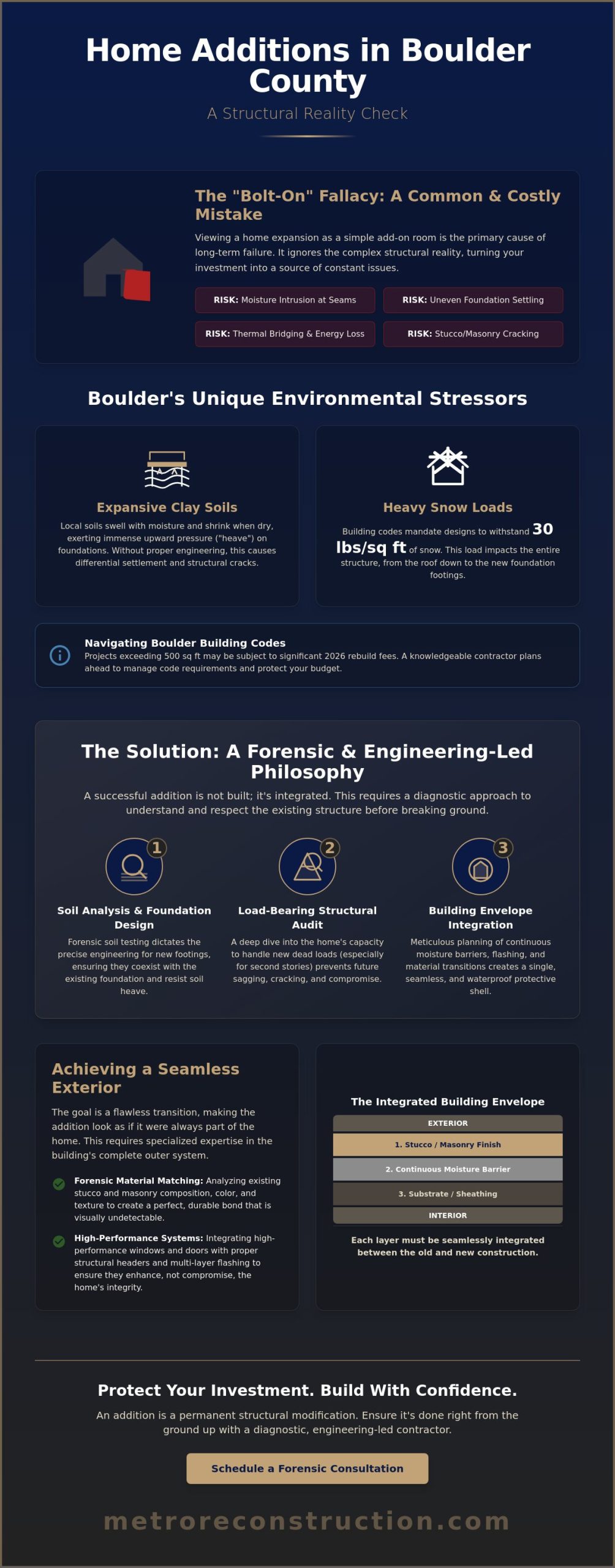
Viewing an expansion as a simple “bolt-on” room is a common misconception that often leads to significant structural complications. A professional addition contractor understands that every square foot added is a fundamental modification of the existing structure’s equilibrium. When you introduce new masses to a building, you alter the load distribution and the behavior of the building’s complete outer system. This requires a forensic perspective to identify the structural origins of potential issues before the first shovel hits the ground. Precision during this phase isn’t just a preference; it’s a requirement for long-term stability.
Improper integration often results in moisture intrusion at the transition points, uneven settling between the old and new foundations, or thermal bridging that compromises your home’s energy efficiency. These aren’t just minor inconveniences. They’re indicators of a system in distress. While many home improvement projects focus purely on aesthetics, high-stakes additions in Boulder County require a deep understanding of how environmental stressors interact with building materials. A diagnostic approach ensures that we address the underlying mechanics of the structure rather than offering superficial fixes that fail over time.
The Building Envelope Transition
The intersection where new walls meet existing ones is the most vulnerable point in any expansion. This seam is the primary failure point for water penetration and air leakage if not handled with technical precision. We emphasize the necessity of continuous moisture barriers and integrated flashing systems that bridge the gap between old and new surfaces. By utilizing forensic diagnostics, we assess the condition of the current substrate to ensure that new stucco installation or masonry work bonds correctly and maintains the home’s protective shell. We don’t settle for “close enough” when the integrity of your investment is on the line.
Load-Bearing Analysis for Vertical Additions
Vertical expansions present a unique set of challenges that go beyond simple framing. Adding a second story requires a comprehensive deep dive into the existing foundation’s capacity to handle new dead loads. We analyze the relationship between these new weights and the original structural members to prevent future sagging or wall cracking. Structural mitigation, such as reinforcing existing footings or ensuring proper window installation for structural headers, ensures the addition remains stable. Your addition contractor must prioritize this analytical depth to guarantee that the new level doesn’t compromise the integrity of the floors below. Reliability is the result of meticulous engineering and a commitment to accuracy.
Foundation and Soil Dynamics in Colorado Additions
Boulder’s landscape is visually stunning but geologically demanding, presenting unique challenges that require an engineering-led perspective. The presence of expansive soils in Colorado remains the most significant factor in foundation design for any home expansion. These soils, which often contain high concentrations of Bentonite clay, swell when moisture is present and shrink during dry periods. This cyclic movement exerts immense upward pressure, often referred to as “heave,” which can easily compromise a new build if the addition contractor fails to account for these specific subterranean mechanics. Precision in the ground is the only way to ensure stability above it.
A forensic approach to soil testing is a non-negotiable requirement for successful projects across the Front Range. When you attach a new foundation to an existing basement or crawl space, you’re creating a hybrid system that must reach a state of equilibrium. If the new structure reacts differently to soil moisture changes than the original home, differential settlement occurs. This manifests as structural cracks at the transition points of your masonry or stucco. We prioritize identifying the structural origins of these potential failures by analyzing the interaction between new loads and the existing soil profile before construction begins.
Managing Expansive Soils in the Front Range
Bentonite clay acts like a subterranean sponge, expanding significantly in volume when saturated. For homeowners in Boulder County, this means standard spread footings are frequently insufficient for long-term reliability. We often utilize engineered pier systems that bypass the active soil zone to reach stable, non-expansive strata. Ensuring your existing structure is sound through professional foundation repair services is a critical prerequisite before introducing the additional weight of an expansion. This proactive maintenance protects your investment from the destructive forces of soil movement.
Foundation Stabilization for New Loads
Tying a new foundation into an existing one requires more than just pouring concrete against an old wall. It involves specialized structural mitigation techniques, including the use of epoxy-anchored rebar dowels, to ensure the two structures function as a single unit. Proper drainage and moisture control around the new perimeter are equally vital to maintain consistent soil conditions. If you’re concerned about how your property’s specific geology might impact your expansion plans, a thorough forensic diagnostic evaluation can provide the technical clarity required for a successful build. We believe in explaining the difficult truths of soil dynamics rather than offering a temporary, low-quality patch.
Seamless Exterior Integration: Stucco, Masonry, and Windows
While the structural integrity of the foundation provides the necessary baseline for safety, the exterior finish determines the long-term weatherproofing and aesthetic value of your property. Achieving a truly seamless transition between an existing home and a new expansion is one of the most difficult technical challenges for an addition contractor. In high-end Boulder County residences, a “close enough” match for stucco or masonry is unacceptable. It creates a visual scar that signals a lack of precision; it also often hides underlying vulnerabilities in the building’s complete outer system. We treat the exterior skin as a functional shield, ensuring that every transition point maintains the same level of protection as the original structure.
A successful integration requires a forensic understanding of how building materials age in our specific regional environment. Boulder’s intense UV radiation and temperature fluctuations cause materials to expand and contract at different rates, which can lead to hairline fractures if the transition is too rigid. By viewing the exterior as an integrated system, we ensure that new masonry work and stucco installation don’t just look original but also perform with the same durability as the rest of the home. Precision is the difference between a temporary expansion and a permanent restoration of value.
Integrating New Stucco with Existing Finishes
Matching aged stucco involves more than just selecting a similar paint color. It requires a forensic process of texture replication and substrate analysis to account for years of weathering and UV exposure. Utilizing specialized stucco restoration techniques allows us to blend new surfaces into the old with invisible seams. We pay particular attention to the placement of expansion joints between the two structures. These joints are essential for managing the natural movement discussed in our foundation analysis, preventing the stress cracks that often plague poorly executed additions.
High-Performance Window Systems for Additions
Windows are the most critical components of the thermal envelope and often the most complex to integrate structurally. When selecting new windows, we prioritize units that match your home’s architectural profile while meeting the 2026 energy efficiency standards mandated by the City of Boulder’s updated codes. Professional window installation service near me is vital for ensuring airtight seals that prevent thermal bridging at the transition point. Your addition contractor must also carefully calculate the structural load of new fenestration. Large window banks require specialized headers to distribute weight correctly, ensuring that the new natural light doesn’t come at the cost of structural sagging over time.
The Forensic Planning Process: Budgeting and Scope
Planning an expansion in Boulder County is a rigorous technical challenge that demands a forensic approach to budgeting and scope. A qualified addition contractor starts by conducting a comprehensive audit of the existing building’s complete outer system. This diagnostic phase identifies the structural origins of potential complications, such as foundation stress or inadequate load-bearing capacity. By prioritizing initial accuracy, we eliminate the “scope creep” that typically plagues projects where the contractor only looks at surface-level details. Precision at this stage is the only way to protect your investment.
Compliance with local regulations is equally critical for a successful build. For projects in the City of Boulder, additions exceeding 500 square feet now incur a fee of approximately $11 per additional square foot as of January 31, 2026. Additionally, unincorporated Boulder County projects fall under the 2021 International Codes, while City projects transition to the 2024 ICC suite on August 1, 2025. These regulations, combined with permit fees that can exceed $10,000 for complex projects, require a partner who understands the relationship between technical code compliance and long-term project viability. We believe in providing a clear understanding of these technical requirements before the first shovel hits the ground.
Identifying Hidden Structural Origins
A pre-construction audit prevents expensive mid-project discoveries that can derail a budget. We evaluate the existing electrical and HVAC capacity to ensure the new space doesn’t overtax your current systems. This forensic look at the building’s complete outer system ensures that new window installation or stucco replacement integrates perfectly with existing substrate. We treat initial accuracy as a foundational promise, ensuring that every component, from masonry work to structural headers, is accounted for in the original plan. It’s about substance over style.
Fixed-Price vs. Variable Reconstruction Fees
The transparency of a fixed-price model is essential for large-scale renovations. This approach includes all labor, materials, engineering, and project management, providing you with a definitive cost structure. While some may be tempted by the “lowest bid,” these estimates often lead to the highest final cost due to unforeseen change orders and technical oversights. Our fixed-price reconstruction project fee reflects a commitment to thoroughness and long-term value. If you’re ready to move forward with a partner who values integrity and precision, you can request a forensic structural audit to begin your project with confidence. We’d rather explain the difficult truth of a structural requirement than offer a temporary, low-quality patch.
Selecting an Addition Contractor for Complex Structural Projects
Selecting the right addition contractor is a decision that impacts the structural longevity of your home for decades. While a “volume builder” typically prioritizes speed and standardized floor plans, a reconstruction specialist approaches your project as a forensic integration. In the demanding climate of the Front Range, 40+ years of experience isn’t just a milestone; it’s a repository of knowledge regarding how local environmental stressors affect a building’s complete outer system. This depth of expertise allows for the identification of underlying structural origins that a less experienced eye might overlook. Precision is the natural byproduct of this seasoned perspective.
Evaluating a potential partner requires looking beyond the surface of a portfolio. You should specifically examine their history with stucco and masonry repairs and complex structural work. A specialist who understands restoration will bring that same meticulous care to your new expansion. This ensures the addition doesn’t just look original but functions as a durable, cohesive part of the property. Reliability is built into the process from the initial diagnostic phase through the final installation of high-performance windows and finishes.
The Wise Craftsman vs. The High-Pressure Marketer
Technical precision should always outweigh a flashy sales pitch. A “Wise Craftsman” persona is characterized by transparency; they’ll explain the difficult truths of a structural requirement rather than promising a cheap, low-quality patch. This grounded approach is essential in Colorado, where rugged environmental factors like high UV intensity and significant snow loads demand sophisticated building systems. You need a local expert who is both rugged in their field knowledge and polished in their professional delivery. We believe in substance over style, focusing on the hidden mechanics that ensure a build lasts a lifetime.
Long-Term Value and Property Preservation
A forensic build protects your investment by addressing the exterior home repair needs of the entire structure, not just the new square footage. This holistic view prevents the addition from becoming a liability. When hiring your Boulder County addition contractor, utilize this final checklist to ensure a successful partnership:
- Does the contractor prioritize a forensic structural audit before providing a fee?
- Can they demonstrate a deep understanding of expansive soil mitigation?
- Do they specialize in the specific materials of your home, such as stucco or masonry?
- Is their communication logical and steady, mirroring a high-quality project flow?
Choosing a dedicated partner in property preservation ensures your home expansion is a source of peace of mind rather than future anxiety. By focusing on initial accuracy and long-term value, you can expand your living space without compromising the integrity of your original investment.
Securing the Future of Your Home Expansion
Expanding your home in Boulder County is a significant investment that requires a commitment to technical precision and structural integrity. You now understand that a successful project depends on a forensic analysis of soil dynamics and the seamless integration of your building’s complete outer system. By prioritizing foundation stabilization and high-performance window installation, you ensure that your new space remains a durable asset rather than a structural liability.
Selecting an experienced addition contractor who values substance over style is the most critical step in this process. Since 1982, our family-owned and operated team has provided the Front Range with specialized expertise in moisture mitigation and complex structural stabilization. We bring over 40 years of regional knowledge to every project, ensuring that your expansion is built on a foundation of reliability and quiet confidence.
If you’re ready to move forward with a partner dedicated to property preservation, consult with our forensic experts on your Boulder addition project today. We look forward to helping you achieve a seamless, original look that protects your home for decades to come.
Frequently Asked Questions
Do I need a structural engineer for a home addition in Boulder?
Yes, any home expansion in Boulder County requires a structural engineer to ensure the design can withstand regional environmental stressors, including the standard 30 pounds per square foot snow load. This engineering oversight is a prerequisite for obtaining permits under the 2021 or 2024 International Codes. It allows your addition contractor to confirm that the existing structural members can safely support the new weight distribution without compromising the home’s integrity.
How does Colorado’s expansive soil affect my addition’s foundation?
Colorado’s expansive soils contain Bentonite clay that swells when wet and shrinks when dry, exerting immense pressure on foundation walls. This geological movement requires a forensic approach to foundation design, often involving engineered piers that bypass the active soil layer. If the foundation isn’t properly stabilized, the new structure will settle at a different rate than the original home, leading to significant structural cracks and moisture intrusion.
Can you perfectly match new stucco to my existing 20-year-old stucco?
We achieve a seamless match for aged surfaces through forensic color matching and texture replication that accounts for decades of UV exposure and weathering. While many providers offer a generic “close enough” finish, we focus on the building’s complete outer system to ensure the transition is invisible. Proper placement of expansion joints is also critical, as it allows the two structures to move independently without damaging the new stucco installation.
What is a fixed-price reconstruction project fee?
A fixed-price reconstruction project fee is an all-inclusive agreement that covers labor, materials, engineering, and project management to provide total budget transparency. This model relies on initial diagnostic accuracy to eliminate the “scope creep” and unexpected change orders that often occur with variable bids. It ensures that every technical requirement, from masonry work to specialized building systems, is fully accounted for before construction begins.
How long does a typical home addition project take in Boulder County?
The timeline for a home addition varies based on complexity, but the permitting process in Boulder typically adds 3 to 6 weeks to the project schedule. Total construction time reflects the meticulous nature of structural integration and the requirements of the 2024 ICC suite of codes. We maintain a steady, logical rhythm to ensure that every phase, from soil analysis to the final window installation, meets our standards for precision.
Will adding a second story require reinforcing my current foundation?
Adding a second story almost always necessitates reinforcing the existing foundation to handle the significant increase in dead loads. We perform a forensic audit of the current structural members to determine their capacity for supporting the new level. If the original footings are insufficient, we implement structural mitigation techniques to prevent the lower floors from sagging or experiencing wall failure over time.
How do you prevent water leaks where the new roof meets the old one?
Preventing leaks at the roof transition requires the use of integrated flashing systems and continuous moisture barriers that bridge the two structures. We treat this intersection as a vital component of the complete outer system, ensuring that all water is directed away from the transition point. This forensic attention to detail prevents moisture intrusion and protects the long-term value of both the new space and the original home.
Are home additions in Boulder subject to specific energy efficiency codes?
Yes, home additions must comply with the 2024 City of Boulder Energy Conservation Code (CoBECC) and local amendments that prioritize sustainability and energy performance. These codes require specific insulation ratings and high-performance window systems to reduce thermal bridging. A qualified addition contractor must understand these technical requirements to ensure the project meets the city’s rigorous standards for ignition-resistant and energy-efficient construction.