
What if siding that looks worn is also allowing moisture to reach the structure beneath it? In Colorado, changing temperatures, strong sun, and wind-driven weather can put repeated stress on exterior materials. It’s understandable to wonder whether fading or cracking is only a surface issue, or one of the signs you need siding replacement. The answer depends on what’s happening behind the panels as well as what you can see.
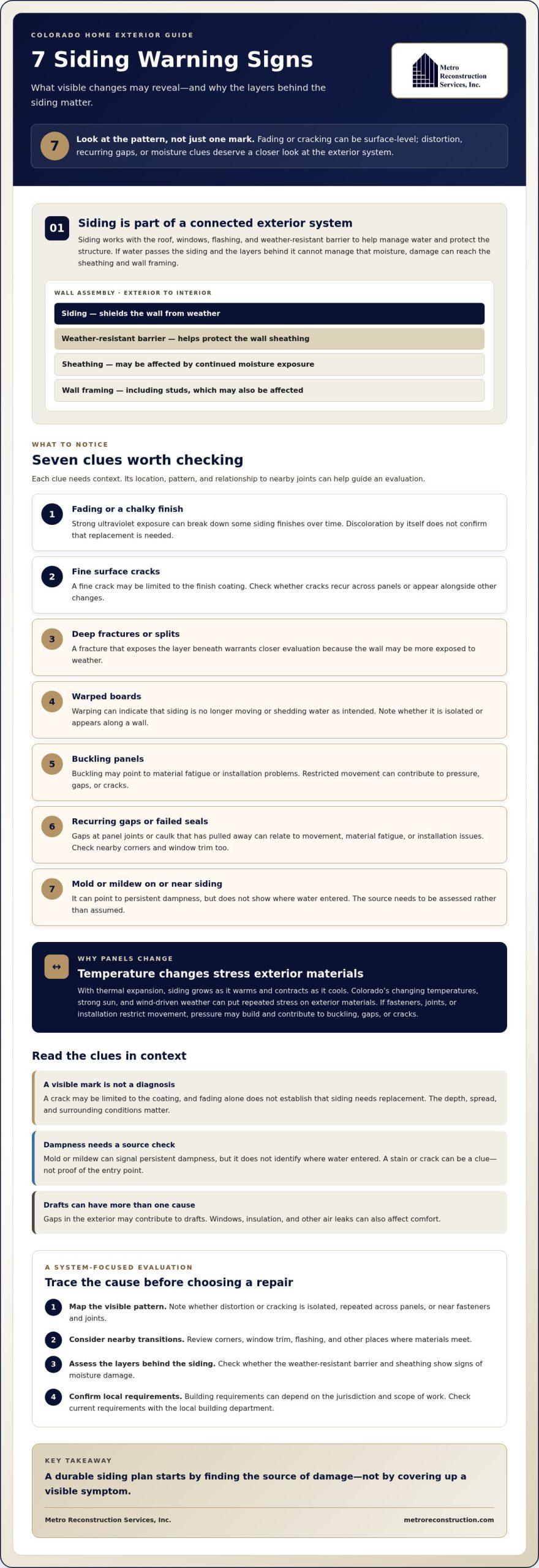
Your home’s siding works with the weather-resistant barrier, windows, roof, and other parts of the building envelope to help manage water and indoor temperatures. When that system fails, trapped moisture can damage sheathing, while gaps and deteriorated materials may contribute to drafts. This guide explains seven warning signs, from visible warping to evidence of hidden moisture, and practical ways to assess them. You’ll learn why an evaluation should look for the source of damage before deciding whether replacement is needed, so the solution addresses the exterior system rather than covering up a symptom.
Key Takeaways
- Siding works with the roof, windows, and other parts of your home’s exterior system to protect the structure from weather.
- Warping, buckling, cracking, and recurring gaps can be signs of material fatigue, movement, or installation problems.
- Mold or mildew on or near siding can point to persistent dampness, but does not identify where water entered.
- Gaps in the exterior may contribute to drafts, though windows, insulation, and air leaks can also affect comfort.
- A careful evaluation can help uncover hidden damage and guide a siding plan that addresses the source of the problem.
The Building Envelope: Why Siding Failure Threatens Structural Integrity
Your home’s building envelope is its complete outer system: the roof, siding, windows, foundation, and the connections between them. These parts work together to limit water entry and protect the structure. Siding is an important defense against Colorado’s sun, wind, temperature swings, and precipitation, but it cannot perform alone. If water gets behind it and the layers beneath cannot manage that moisture, damage can reach the sheathing and wall framing. Because roof integrity directly affects how water is directed toward walls and transitions, property owners seeking roofing refurbishment or repair can discover NanoTech Exteriors to explore related overhead envelope care.
Siding materials and installation methods vary, but their purpose is consistent: to shield the wall from weather while allowing the assembly to manage moisture and movement. The overview of Siding (construction) describes siding’s role as an exterior covering. For your home, the key question is how that covering works with the layers behind it, not just how it looks from the street.
The Role of the Weather-Resistant Barrier
Behind siding, a weather-resistant barrier, often building paper or house wrap, helps protect the wall sheathing from water that passes the exterior. It is not a substitute for properly installed siding, flashing, and sealed transitions. If the barrier is damaged or water is directed behind it, moisture can reach the sheathing. Continued exposure may then affect the wood framing, including studs. A visible panel may be only the first clue. Considering exterior services in relation to the wall assembly can help connect signs of damage with the condition of the structure, rather than treating the surface alone.
Protecting Your Home in the Front Range and Mountain Communities
In communities such as Parker and Boulder, building requirements can depend on the local jurisdiction and the scope of work. Don’t assume one detail applies everywhere. Confirm current requirements with the local building department, and make sure an evaluation considers how the siding, weather-resistant barrier, flashing, and wall openings manage water as a connected system.
A cosmetic patch may cover a stain or crack without correcting the source, such as a failed transition or water draining toward the wall. That’s why the signs you need siding replacement should be assessed alongside the condition of the layers behind the cladding. Metro Reconstruction Services, Inc. provides siding replacement and stucco restoration. An evaluation should identify the likely cause before determining what work the exterior system needs. A solution based on the source of the problem is more useful than one that addresses only its visible symptom.
If you’re concerned about your home’s siding or moisture protection, contact Metro Reconstruction Services, Inc. or call 303.543.9549 to discuss siding replacement and exterior restoration.
Visible Signs You Need Siding Replacement: Material Fatigue and Thermal Expansion
Colorado’s temperature changes put repeated stress on exterior materials. With thermal expansion, siding grows as it warms and contracts as it cools. If panels lack room to move, or fasteners and joints restrict that movement, pressure can build and lead to buckling, gaps, or cracks. These changes may be more than cosmetic. They can point to material fatigue or installation problems that leave the wall more exposed to weather.
Cracking, Warping, and Buckling
A fine surface crack in a finish may be limited to the coating. A deep fracture, a split that exposes the layer beneath, or repeated cracking across multiple panels deserves closer evaluation. Warped or buckled boards can indicate that siding is no longer moving or shedding water as intended. Check whether the distortion is isolated or appears along a wall, near fasteners, or at panel joints. The pattern can help identify whether the cause is local damage, restricted movement, or broader material fatigue.
Rapid temperature changes can also create thermal shock, or quick heating and cooling that stresses aging or brittle materials. As panels expand and contract, tight fasteners and inflexible joints may resist movement. That strain can open seams or damage edges. Caulking at corners, window trim, and other transitions can also pull away or crack as adjoining materials move. Check failed seals alongside visible siding damage. Replacing caulk alone may not address the underlying movement or damage.
Fading and UV Degradation
Strong ultraviolet exposure can break down the bonds in some siding finishes over time, leading to fading or a chalky surface. Discoloration alone doesn’t confirm that replacement is necessary. Widespread fading combined with brittle panels, cracking, or exposed material may indicate that the protective finish has weakened. Compare sun-exposed walls with more shaded areas, and note whether the surface change appears alongside physical damage.
Painting can refresh appearance, but it won’t correct warped panels, failed joints, or materials that have deteriorated. A new coating may conceal warning signs without restoring the siding’s ability to handle movement and weather. The useful question isn’t only whether the surface can be repainted. It’s whether the siding can still perform as intended.
If you’re seeing several of these signs, consider an evaluation that looks beyond the finish to the source of the movement or damage. Contact Metro Reconstruction Services, Inc. to discuss siding replacement, or call 303.543.9549.
Moisture Intrusion and the Failure of Moisture Mitigation Systems
Moisture damage can remain concealed until it affects interior finishes or the wall framing. Watch for recurring stains, bubbling wallpaper, peeling paint, or drywall that feels soft, especially on walls below roof-to-wall connections or near windows. Mold, mildew, or fungal growth can also signal persistent dampness, but these clues alone don’t establish where water entered. The location and pattern help guide a closer inspection.
Water can reach the wall through more than one route, and symptoms may appear some distance from the entry point. An evaluation should trace likely paths and examine the materials and transitions involved, rather than assuming the nearest siding panel is the source.
The Danger of Trapped Moisture
A careful assessment considers where moisture is detected, how long materials may have been exposed, and whether affected areas can dry. Moisture meters can help identify damp materials. Further inspection may be needed to determine whether sheathing or framing has deteriorated. Addressing a moisture source can limit continued exposure, though the extent of any damage must be established before repair decisions are made. On homes that combine siding with stucco, the junction between finishes deserves attention because each material’s edge is part of the water-management path.
Identifying Flashing and Seal Failures
At roof-to-wall intersections, kick-out flashing directs runoff away from the wall and toward the gutter. If it’s missing, damaged, or directing water behind the cladding, repeated wetting can affect the wall below. Cracked caulking around trim and other transitions can also allow water past the siding’s outer layer. Examine these details together. Replacing sealant alone won’t correct a flashing problem or damage that has already reached the wall assembly.
The signs you need siding replacement should be weighed against the condition of the moisture-management details and materials behind the exterior. Metro Reconstruction Services, Inc. provides siding replacement and stucco restoration. If you’ve noticed recurring interior or exterior signs of moisture, contact Metro Reconstruction Services, Inc. or call 303.543.9549 to discuss an evaluation.
Assessing Energy Inefficiency and the Impact of Thermal Shock
A change in heating or cooling use can be a clue that your home’s exterior system isn’t performing as it should, though siding isn’t the only possible cause. Air leaks, insulation gaps, windows, and heating equipment can all affect indoor comfort and energy use. If a bill rises unexpectedly, compare it with drafts, uneven room temperatures, and visible siding damage before concluding that the cladding is responsible.
Thermal bridging occurs when heat moves through materials that conduct it more readily than the surrounding insulation, such as wall studs. Gaps in siding or at joints can let outdoor air reach the layers behind the cladding, reducing the wall’s ability to limit heat loss. Rapid temperature changes can also cause thermal shock: repeated expansion and contraction that stresses siding, fasteners, and seals. Over time, movement may open gaps and weaken the exterior’s protection.
Rising Utility Costs as a Diagnostic Clue
Look for a pattern rather than relying on one bill. If energy use rises alongside persistent drafts or temperature swings near exterior walls, inspect the full building envelope, including siding, windows, and their connections. Siding contributes to a wall assembly’s performance, but it doesn’t work as insulation by itself. Energy Star standards apply to particular products and components, not to siding as a whole. A window’s U-Factor measures heat transfer through that window. It isn’t a rating for the entire home. Window installation and replacement services may be relevant if windows are also part of the problem.
Drafts and Internal Temperature Fluctuations
On a cold day, slowly move your hand near exterior wall surfaces, corners, and the edges of windows to notice areas that feel distinctly colder or drafty. These observations can help you identify where to investigate, but they don’t confirm the cause. Cold spots may result from thermal bridging, missing or compressed insulation, air leakage, or a combination of issues. Older siding may have worn joints or details that no longer control air and moisture effectively, but age alone doesn’t establish that replacement is needed.
The signs you need siding replacement are more persuasive when visible damage, open joints, and indoor comfort changes point to the same part of the exterior. A careful evaluation can distinguish siding failure from problems elsewhere in the building envelope. If you’re noticing drafts or temperature fluctuations along with damaged siding, contact Metro Reconstruction Services, Inc. to discuss siding replacement or call 303.543.9549.
The Forensic Diagnostic Phase: Implementing a Permanent Siding Solution
Visible damage is only part of the evidence. The forensic diagnostic phase is an investigation before repairs begin, aimed at finding the likely source and extent of a problem. An evaluation may examine panel joints, window and door edges, roof-to-wall transitions, and the condition of materials behind the siding when accessible. Moisture meters or thermal imaging may help locate concealed trouble. The goal is to connect visible symptoms to their source, so replacement addresses the wall system rather than covering up a failure.
Identifying the cause matters. Replacing siding without determining how water entered or where the wall is damaged can leave the original problem unresolved. A lasting plan considers the siding, weather-resistant barrier, flashing, and other connections as parts of your home’s complete exterior system.
Choosing Siding for Colorado Conditions
Metro Reconstruction Services, Inc. offers siding replacement and James Hardie siding. Material selection should account for the home’s exposure, moisture-management needs, and applicable local requirements. Ask how the proposed siding system and installation details will manage water and accommodate movement. No siding material can make an exterior system perform well if its installation and water-management details are inadequate. Additionally, if your exterior renovations extend to surrounding outdoor living spaces, you can learn more about WoodMart to explore durable wood-fiber composite materials designed for garden and terrace applications.
Temperature changes cause building materials to expand and contract. Rather than assuming a particular product is immune to thermal shock, evaluate whether the chosen siding system and its installation details can accommodate movement while protecting joints and transitions. Siding and windows are different components, too. Windows should be assessed on their own merits if drafts or comfort issues point to a problem with them.
Code, Craftsmanship, and Your Next Step
Before replacement, verify which International Residential Code (IRC) version and other requirements your local jurisdiction enforces. Requirements can vary by location and project. Metro Reconstruction Services, Inc. is a family-owned Boulder construction firm offering siding services, stucco restoration, masonry work, and moisture mitigation. Careful diagnosis helps shape the work around the actual cause of failure.
If you’re seeing signs you need siding replacement in Denver, Boulder, or nearby Front Range and Mountain communities, contact Metro Reconstruction to discuss your home’s exterior system and next steps. Visit the contact page or call 303.543.9549.
Protect Your Home With an Accurate Siding Plan
Warped panels, cracked seams, recurring moisture clues, and cold spots can all point to trouble, but no single symptom tells the whole story. The signs you need siding replacement matter most when considered alongside the weather-resistant barrier, flashing, and wall structure. A careful evaluation can distinguish surface wear from problems that may threaten the sheathing or framing.
Metro Reconstruction Services, Inc. is a family-owned Boulder firm with more than four decades of construction experience. Its services include siding replacement, stucco restoration, and moisture mitigation. The right solution starts with finding the source of failure, then planning work to protect your home’s complete exterior system.
For a siding evaluation, contact Metro Reconstruction Services, Inc. or call 303.543.9549 to discuss your home’s exterior.
Frequently Asked Questions
What are the first visible signs that I need siding replacement?
Early warning signs include panels that warp, buckle, crack, or pull away at joints, along with widespread fading or peeling finishes. Look for recurring gaps in caulking and signs of moisture, such as staining near siding transitions. One symptom alone doesn’t confirm replacement is needed. The signs you need siding replacement become more concerning when several appear together or when visible damage coincides with interior drafts or water marks.
How does Colorado’s climate specifically affect siding lifespan?
Colorado’s strong sun, wind, precipitation, and rapid temperature changes can stress siding and its connections through repeated heating, cooling, and moisture exposure. The effect depends on the material, installation, maintenance, and the home’s specific exposure, so there’s no single lifespan that applies to every house. These conditions are relevant across Parker, Morrison, Boulder, Longmont, Niwot, Evergreen, Cherry Creek, Cherry Hills Village, Golden, Genesee, Littleton, Broomfield, Denver, Silverthorn, Breckenridge, Vail, and Larkspur.
Can I repair individual siding panels instead of a full replacement?
Sometimes, a limited repair may be appropriate if damage is confined to a small area and the surrounding siding and wall layers remain sound. Before choosing a repair, check whether matching material is available and whether moisture has reached the weather-resistant barrier or sheathing. Widespread warping, recurring damage, or deterioration behind multiple panels may call for a broader replacement plan. A qualified evaluation can help establish the extent and source of failure.
What is thermal expansion and why does it cause my siding to buckle?
Thermal expansion is the increase in a material’s size as its temperature rises; siding contracts as it cools. Repeated temperature shifts can make panels move through these cycles. If installation leaves too little room for movement, or fasteners and joints restrict it, pressure can build and panels may buckle or distort. Damaged joints can then expose the wall to water, so the cause should be checked before simply flattening or covering the siding.
How do I know if there is moisture damage hidden behind my siding?
Clues include persistent musty odors, mold or mildew, recurring exterior stains, bubbling wallpaper, peeling paint, or drywall that feels soft. These signs can indicate moisture, but they don’t reveal exactly where it entered or how far it spread. Water may get past siding at joints, window edges, or roof-to-wall transitions. A professional inspection can examine these areas and use moisture-detection tools to help assess hidden damage before replacement begins.
Is James Hardie siding better than vinyl for high-altitude homes?
There isn’t one answer for every home. Material choice depends on the project, exposure, installation details, and local requirements. Metro Reconstruction offers James Hardie siding, but the suitable option should be determined for your home rather than by a blanket comparison. Ask how the proposed system manages moisture and movement, and confirm which building-code requirements apply to your location and the scope of work.
What is the forensic diagnostic phase in a siding project?
The forensic diagnostic phase is the investigation that identifies the likely source and extent of damage before repairs or replacement start. It may include examining siding joints, flashing, and transitions, as well as using moisture meters or thermal imaging to help locate concealed trouble. The purpose is to distinguish surface wear from problems affecting the layers behind the siding, so the work can address the cause instead of only covering visible symptoms.
How does new siding improve my home’s energy efficiency?
New siding may support energy performance when it’s installed as part of a well-planned exterior system with sound air sealing, insulation, and moisture management. Siding alone doesn’t guarantee lower energy use, since drafts or heat loss may also come from windows, gaps, or insulation issues. If you’re considering replacement, contact Metro Reconstruction to discuss your home’s exterior or call 303.543.9549 about next steps.