
Why do some of Boulder County’s most visually striking stone stucco homes begin to show hairline fractures or hidden moisture staining within just a few seasons of completion? You likely want an exterior that reflects the rugged beauty of the Front Range, yet you’re probably concerned about how these materials will handle our notorious expansive soils and intense UV exposure. It is a valid worry for any homeowner who values long-term structural integrity as much as curb appeal.
In this guide, you’ll discover how to master the technical and aesthetic integration of these materials to create a high-performance exterior envelope that truly lasts. We will provide the confidence you need to choose the right materials while navigating the specific requirements of the 2021 and 2024 ICC codes now in effect across the region. We’re moving beyond surface-level aesthetics to explore the engineering-led solutions and moisture management protocols, including a look at current investment levels like the $10 to $20 per square foot average for stucco replacement. By focusing on the root cause of common failures, we ensure your home is built right the first time.
Key Takeaways
- Identify the critical transition points within the exterior envelope where moisture intrusion most frequently begins in Front Range homes.
- Evaluate the performance trade-offs between natural and manufactured veneers regarding high-altitude UV exposure and structural weight limits.
- Master the aesthetic principles of the “Mountain Contemporary” movement by balancing the textures of a high-performance stone stucco facade.
- Recognize forensic indicators of subsurface damage, such as efflorescence or rust stains, to address the root cause of exterior failure.
- Ensure your renovation or new build aligns with the latest 2024 International Code Council updates and Boulder County’s specific building regulations.
The Evolution of Stone Stucco Exteriors in Boulder County
The architectural landscape of the Front Range has undergone a significant transformation, moving away from the uniform, heavy-stucco designs of previous decades toward what we now call Mountain Contemporary. This design philosophy prioritizes a balance between modern lines and the raw, organic textures of the Colorado environment. Homeowners are increasingly opting for stone stucco exteriors because they provide a sophisticated way to break up large vertical masses while grounding the home into its natural surroundings. Beyond the visual appeal, this mixed-media approach addresses the specific thermal performance needs of our climate. By integrating stone at the base or along structural columns, we create a more resilient exterior that withstands the physical rigors of the landscape while maintaining high-end curb appeal.
Why the Front Range Favors the Stone-Stucco Aesthetic
Choosing materials that mirror the Flatirons and surrounding peaks is more than a design trend; it’s a way to harmonize a structure with its site. We often see homeowners select natural sandstone or granite veneers that echo the local geology, creating a seamless transition from the earth to the built environment. There’s a distinct psychological comfort in “solid” materials like stone, especially in a region prone to severe wind events. This perceived durability, coupled with the multi-dimensional depth of mixed textures, significantly increases property value. While natural stone siding represents a substantial investment, often ranging from $45 to $110 per square foot installed according to 2026 market data, it transforms a standard facade into a complex, high-performance exterior envelope that signals quality and careful planning.
The High-Altitude Challenge: UV and Temperature Fluctuations
Building at elevations above 5,000 feet presents unique stressors that standard construction often overlooks. Boulder’s 300 days of annual sunshine deliver intense UV radiation, which causes inferior stucco finishes to fade or chalk prematurely. When we combine stone with stucco, we must account for the fact that these materials possess different coefficients of thermal expansion. They grow and shrink at different rates during our rapid temperature swings. This physical reality is why the City of Boulder adopted the 2024 International Code Council (ICC) suite effective August 1, 2025, and Boulder County transitioned to the 2021 ICC codes on March 31, 2025. These updated standards emphasize more rigorous moisture management. Without precise detailing at the transition points, thermal movement leads to hairline cracks and moisture intrusion. Protecting your investment requires a forensic understanding of how these components interact under the pressure of the freeze-thaw cycle, ensuring the system is built right the first time.
The Technical Intersection: Managing the Exterior Envelope
The exterior envelope is the integrated system of components designed to protect your home’s structural framing from environmental stressors. It is not merely a collection of siding materials; it is a holistic shield where every layer must function in unison. When we design a stone stucco facade, we are managing the intersection of two distinct materials with different absorption rates and thermal properties. If the transition between these materials is not engineered with precision, the entire system is compromised. A failure in the envelope often manifests as hidden rot long before it becomes visible to the naked eye.
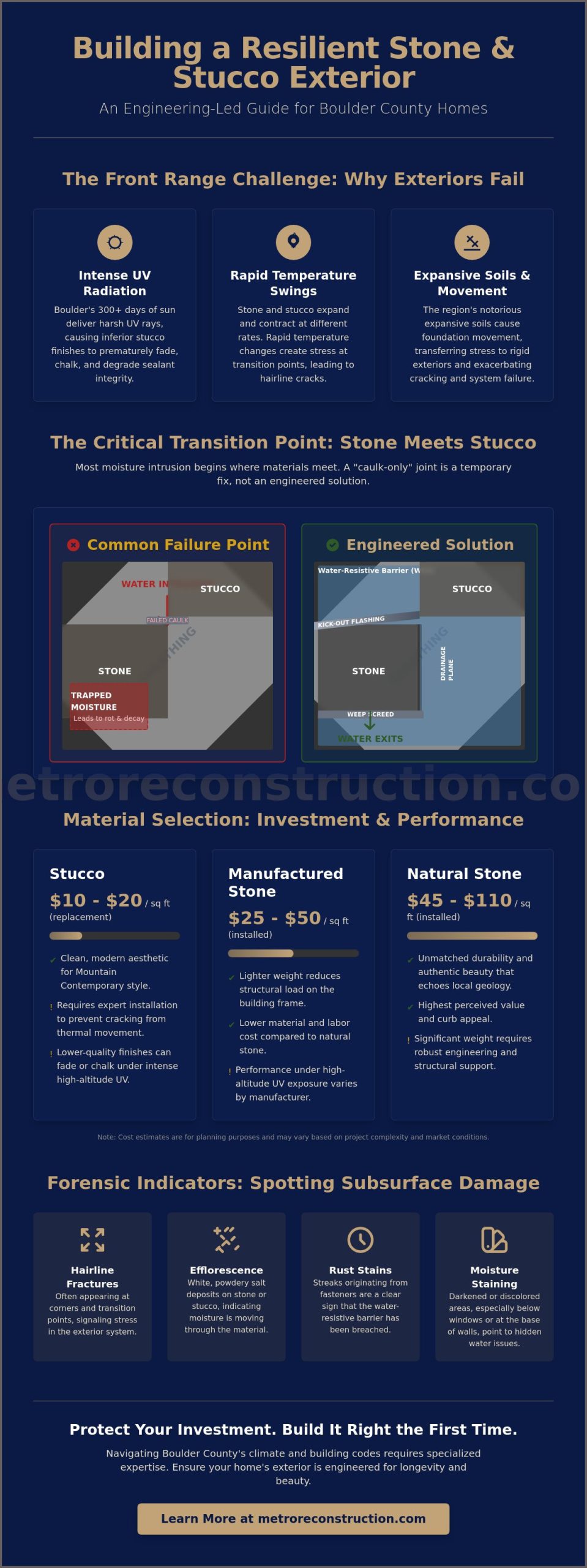
Most moisture intrusion in Boulder homes begins at the transition point where stone meets stucco. Many contractors rely on “caulk-only” solutions to seal this joint, but this approach is fundamentally flawed. Caulk is a maintenance item with a limited lifespan; it eventually shrinks and pulls away due to UV exposure and material movement. Once the seal fails, gravity and wind drive water into the gap. Without a continuous, high-performance water-resistive barrier (WRB) and a dedicated drainage plane behind the stone, that water has no way to escape. It sits against the sheathing, leading to the gradual degradation of the home’s substrate.
Moisture Mitigation at the Transition Point
Effective moisture management requires the installation of weep screeds and kick-out flashing to direct water away from the wall assembly. When stone is applied over a WRB without a proper drainage gap, hydrostatic pressure can actually force liquid water through the barrier and into the wooden framing. Our forensic investigations often reveal significant structural decay in homes where moisture remained trapped for 10 or more years. Following the standards for Historic Stucco Preservation and Repair, we emphasize that the internal drainage system is just as critical as the visible finish.
Addressing Boulder’s Expansive Soils and Structural Movement
Boulder County is known for its clay-heavy, expansive soils which swell and shrink based on moisture content. This subterranean movement causes foundation shifting that inevitably translates to the exterior walls. Because stone and stucco are rigid materials, they cannot absorb this movement without cracking. If you notice vertical or diagonal fractures, a standard patch will not suffice. Any successful stucco restoration must first address the root structural cause and include expansion joints to accommodate future shifting. Understanding the relationship between your home’s foundation and its exterior envelope is the only way to ensure a repair lasts for the long term.
Material Selection: Balancing Aesthetics with Performance
Choosing the right materials for a stone stucco exterior requires more than an eye for design; it demands an understanding of how those materials will age under the punishing Colorado sun. While manufactured stone veneer offers a lower initial investment, typically ranging from $18 to $40 per square foot as of May 2026, its concrete-based composition is susceptible to UV degradation at our 5,000-plus foot elevations. Over a 15 or 20-year period, the pigments in cultured stone often fade, leaving the facade looking washed out and brittle. In contrast, natural stone veneer maintains its color fastness indefinitely. It also provides superior resistance to the large-diameter hail events common in Boulder County, which can easily crack or puncture thinner, manufactured alternatives.
Weight is another critical factor when integrating these materials. Natural stone is significantly heavier than manufactured options, which means installing it over an existing stucco wall requires a forensic evaluation of the home’s structural capacity. We must ensure the framing and substrate can support the additional dead load without bowing or causing the interior drywall to crack. Investing in natural stone represents a higher upfront cost, with prices often exceeding $110 per square foot for premium varieties, but it serves as a permanent solution for the exterior envelope.
Natural Stone Veneer vs. Manufactured Stone
The “Wise Craftsman” approach to masonry involves more than just adhering stones to a wall; it requires managing porosity and absorption rates. Sandstone, while beautiful and local to the Front Range, is highly porous. If not sealed and flashed correctly, it can act like a sponge, holding moisture against the water-resistive barrier. Manufactured stone has its own challenges, as its porous back can trap water if a drainage plane isn’t established. We prefer natural stone for its longevity and its ability to be cleaned without losing its finish, a crucial maintenance advantage in our dusty environment.
Coordinating Stucco Textures with Masonry Profiles
A successful design hinges on the relationship between texture and light. Pairing a smooth, sand-finish stucco with a rugged, deep-relief ledger stone creates a contemporary contrast that defines the “Boulder Modern” look. Conversely, the once-popular “Heavy Lace” or “Spanish Lace” stucco textures often feel dated when paired with modern stone profiles; they create too much visual noise. We recommend selecting stucco pigments that pull from the secondary colors found in the stone’s veining. This creates a cohesive, integrated appearance rather than a disconnected aesthetic. By focusing on these technical and visual details, we ensure your home is built right the first time.
Inspirational Stone Stucco Examples for Mountain and Modern Homes
Integrating a stone stucco facade is an exercise in visual rhythm and structural balance. In the current 2026 design market, we see a distinct move toward monochromatic palettes that emphasize texture over color contrast. The “Boulder Modern” look often employs dark basalt accents paired with neutral, sand-toned stucco. This approach creates a sophisticated, understated exterior that allows the home’s geometry to take center stage. For homeowners seeking a more traditional aesthetic, the Transitional Farmhouse remains a staple. This style utilizes white, smooth-finish stucco with limestone transitions around entryways and columns, providing a clean yet grounded appearance that feels both fresh and permanent.
Using stone to highlight specific architectural features is a strategic way to add depth without overwhelming the design. We often apply stone veneers to heavy structural elements, such as chimneys or the foundational base, while using stucco for the expansive upper wall sections. This distribution of weight is not only visually pleasing but also technically sound, as it places the heaviest materials where the home’s framing is most robust. Whether you prefer the rugged look of a Mountain Lodge or the sleek lines of a modern estate, the success of the project depends on the meticulous execution of the transition joints between these two materials.
The Mountain Contemporary Look: Ledger Stone and Smooth Finishes
The Mountain Contemporary aesthetic relies on ledger stone, characterized by its thin, horizontal profiles, to create clean lines that mimic the stratified rock found in the foothills. When paired with a smooth stucco finish, the result is strikingly modern. However, smooth finishes are notoriously unforgiving. They require a higher level of craftsmanship to avoid “ghosting,” a phenomenon where the outlines of the underlying studs or fasteners become visible through the finish in certain lighting. Achieving a high-performance, blemish-free smooth surface demands a perfectly flat substrate and a precise application of the base coat. It’s a technical challenge we prioritize to ensure the home’s exterior envelope remains pristine for decades.
Traditional Boulder Estates: Fieldstone and Heavy Lace Textures
For estates that aim for a timeless, rugged feel, large-scale fieldstone remains the preferred choice. These irregular stone shapes ground the home, making it feel as though it grew out of the landscape itself. These homes often feature “Heavy Lace” stucco textures, which provide a durable, high-build finish that hides minor substrate imperfections. Over time, these deep textures can collect mountain dust and environmental debris. A professional stucco painting service using high-performance elastomeric coatings can refresh these classic looks while providing an additional layer of moisture protection. If you are planning a facade update for your property, we invite you to consult with our team to ensure your design is built right the first time.
Restoring the Integrity of Your Boulder Stone Stucco Exterior
Visible symptoms of exterior failure often appear minor, yet they frequently signal deep-seated issues within the wall assembly. White, powdery deposits known as efflorescence on your stone veneer or subtle rust stains near stucco transitions indicate that water is actively moving through the substrate. These are not merely cosmetic blemishes; they are forensic markers of a compromised exterior envelope. Hairline cracks in the stucco, while common in our climate, serve as direct conduits for moisture to reach the wooden framing. When these two materials interact improperly, the resulting damage can remain hidden for years until structural rot necessitates an extensive intervention.
A “patch and paint” approach is never a long-term solution for stone stucco systems. Simply covering a crack with elastomeric paint or applying new caulk to a failing stone joint ignores the root cause of the moisture intrusion. Because these materials have different thermal expansion rates, a surface-level fix will inevitably fail as the home shifts and breathes. True restoration requires a forensic understanding of how the original flashing, weep screeds, and water-resistive barriers were integrated. We focus on revitalizing the entire system to meet or exceed the rigorous 2024 International Code Council standards now required in the City of Boulder.
Forensic Assessment of Transition Failures
Our restoration process begins with a comprehensive diagnostic phase. We utilize high-precision moisture meters and thermal imaging to identify pockets of trapped water behind the stone veneer without performing invasive demolition. We pay particular attention to flashing details at windows, rooflines, and the critical horizontal joints where stone meets stucco. By evaluating these transition points, we determine if a localized repair is sufficient or if a more comprehensive masonry and stucco reconstruction is required to protect the home’s structural integrity. This analytical depth ensures we address the actual source of the leak rather than just the visible symptoms.
Metro Reconstruction Services, Inc. Restoration Philosophy
With a 40-year history in Boulder County construction, Metro Reconstruction Services, Inc. has seen the long-term results of both superior and inferior building practices. We operate as a dedicated partner in home preservation, prioritizing engineering-led solutions that stand up to the Front Range environment. Our commitment is to ensure every project is built right the first time, providing you with the peace of mind that comes from a high-performance exterior. We don’t offer cheap, temporary patches; we provide permanent resolutions that safeguard your investment against UV damage and moisture. Schedule a forensic consultation for your Boulder home today to begin the process of restoring your home’s exterior envelope.
Securing the Structural Legacy of Your Boulder Home
Mastering the technical marriage of materials requires a shift in focus from surface-level aesthetics to the underlying health of the exterior envelope. You now understand that a successful stone stucco integration depends on precise moisture management and a proactive approach to the regional geological challenges we’ve discussed. By choosing high-performance materials and engineering-led transition details, you protect the structural integrity of your investment against the rigors of our high-altitude environment.
Since 1982, Metro Reconstruction Services, Inc. has served the Front Range as a family-owned partner in home preservation. With over 40 years of local expertise, we specialize in high-performance moisture management and identifying the root causes of exterior failure. Our forensic approach provides the peace of mind that only comes from deep technical knowledge and a commitment to quality craftsmanship. We invite you to invest in the longevity of your property by partnering with specialists who understand the hidden mechanics of a building.
Protect your home with a forensic exterior evaluation from Metro Reconstruction Services, Inc.
Take the first step toward a more resilient home today; your property deserves the protection of a seasoned expert who prioritizes substance and durability above all else.
Frequently Asked Questions
Is stone stucco more expensive than traditional siding in Colorado?
Yes, a stone stucco combination represents a higher initial investment than traditional vinyl or wood siding. According to 2026 market data, natural stone installation ranges from $45 to $110 per square foot, while stucco averages $10 to $20 per square foot. These materials provide a superior life-cycle value because they offer enhanced thermal performance and fire resistance that cheaper siding options cannot match.
Can I add stone veneer over my existing stucco walls?
You can add stone veneer to existing stucco only if the underlying structure is verified to support the additional dead load. Because natural stone is significantly heavier than stucco, a forensic evaluation of the home’s framing and substrate is required. If the existing stucco is not properly bonded or if the moisture barrier is compromised, adding stone will eventually lead to delamination or trapped water.
How long does a stone-stucco exterior typically last in Boulder?
A properly engineered exterior can last 50 years or more, provided the moisture management system remains intact. Boulder’s intense UV and freeze-thaw cycles often cause failures in poorly installed systems within 10 to 15 years. Longevity is entirely dependent on the integrity of the water-resistive barrier and the drainage plane behind the finish materials, ensuring the system is built right the first time.
What are the most common signs of moisture damage behind stone?
Efflorescence, which appears as white salty deposits, and rust-colored staining at the base of the wall are the most frequent indicators of failure. These signs suggest that moisture is trapped within the exterior envelope and is leaching minerals from the mortar or corroding metal lath. If you notice these markers, a forensic moisture assessment is necessary to prevent structural rot from reaching the home’s framing.
Does stone stucco require regular maintenance in high-altitude climates?
Yes, annual inspections are critical for maintaining a stone stucco facade at elevations above 5,000 feet. You should check for hairline cracks and ensure that weep screeds remain clear of debris to allow for proper drainage. High-altitude dust can also accumulate in textured finishes; this requires periodic gentle cleaning to prevent permanent staining or the growth of organic matter in shaded areas. Following a structured stucco maintenance Boulder CO protocol is the most reliable way to stay ahead of freeze-thaw damage and UV degradation at high elevation.
Is manufactured stone as durable as natural stone for Boulder homes?
Manufactured stone is generally less durable than natural stone in the Front Range due to its concrete-based composition. It is more susceptible to fading from Boulder’s 300 days of annual sunshine and can be damaged by large-diameter hail events. Natural stone remains the superior choice for homeowners who prioritize long-term color fastness and physical resilience against extreme mountain weather.
How do expansive soils affect my stucco and masonry?
Expansive clay soils in Boulder County cause foundation movement that creates significant stress throughout the entire wall assembly. This structural shifting leads to diagonal cracking in rigid materials like stucco and masonry if expansion joints are not correctly placed. Successful restoration must address the root cause of the movement before performing any aesthetic repairs to the exterior finish.
Can I change the color of my stucco if I have stone accents?
You can revitalize the look of your home by applying high-performance elastomeric coatings to the stucco sections while leaving the stone accents untouched. This process allows you to update the color palette to match modern trends, such as the earthy taupes popular in 2026. These specialized coatings also provide an additional layer of moisture protection while remaining breathable for the stucco substrate.