
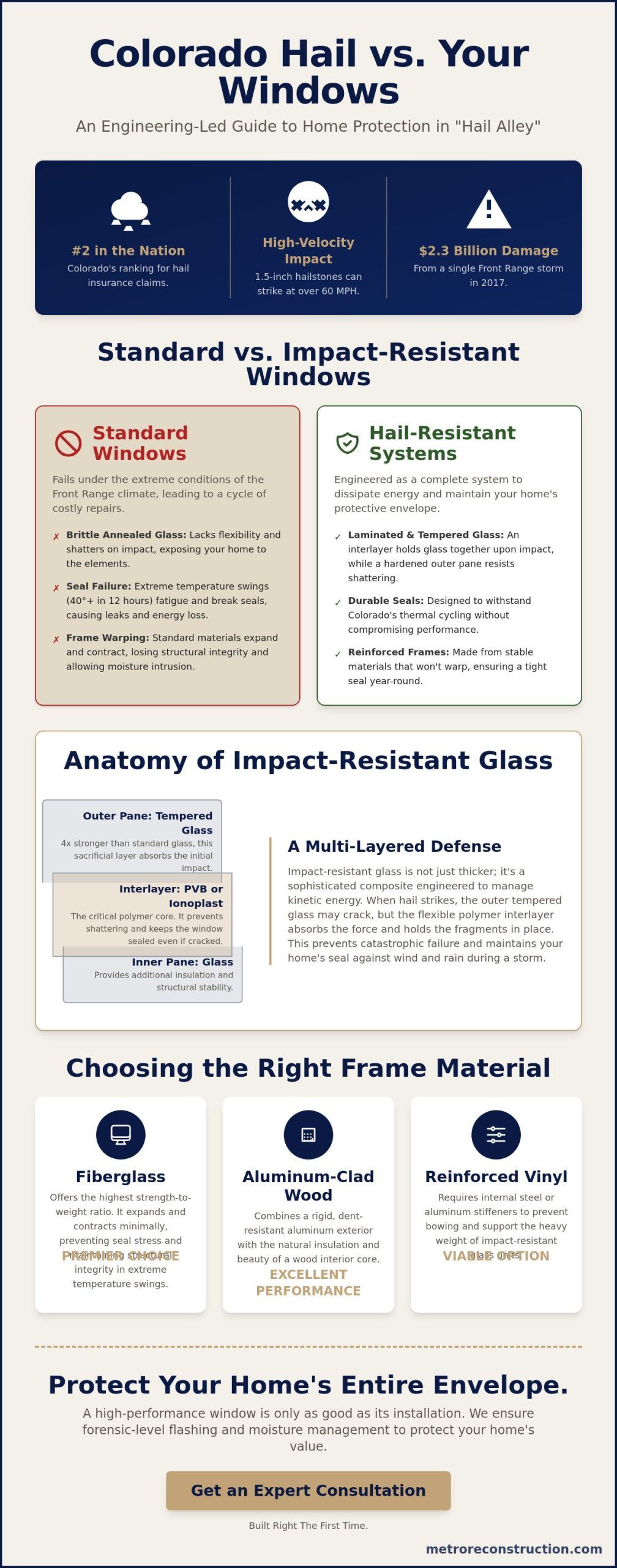
According to the Rocky Mountain Insurance Information Association, Colorado ranks second in the nation for hail insurance claims, with a single 2017 storm resulting in $2.3 billion in damages across the Front Range. If you live in Boulder County, you understand that installing hail resistant windows Longmont homeowners can rely on isn’t just an aesthetic upgrade; it’s a critical component of moisture management for your entire exterior envelope. You likely realize that standard glass is no longer sufficient to protect your property from the intensifying spring storm cycles that define our region.
We’ll help you navigate the technical nuances of impact-resistant technology, from understanding Class 1 through Class 4 ratings to ensuring your installation prevents the leaks that often plague post-storm repairs. You’ll learn how a high-performance window system reduces long-term maintenance costs and preserves your home’s structural integrity. This guide provides the engineering-led insights needed to choose a solution that’s built right the first time, ensuring your home remains a secure sanctuary regardless of the weather outside.
Key Takeaways
- Understand the technical engineering behind laminated glass interlayers, which ensure your home remains sealed and protected even during high-velocity hail impacts.
- Identify why fiberglass and aluminum-clad wood are the premier materials for hail resistant windows Longmont residences require to handle extreme thermal expansion.
- Learn why a high-performance window is only effective when properly integrated into the entire exterior envelope through forensic-level flashing and moisture management.
- Discover how to evaluate local expertise and comprehensive warranties to ensure your home preservation project is built right the first time.
The Reality of Hail in Longmont: Why Standard Windows Fail
Standard annealed glass is the default for many residential builders, but it’s fundamentally brittle. When a 1.5-inch hailstone strikes at 60 miles per hour, this glass shatters because it lacks the flexibility to displace kinetic energy. Longmont sits directly within the “Hail Alley” corridor, a region extending from Wyoming to Texas that sees the highest frequency of large-diameter hail in North America. Homeowners often mistake “weather-resistant” terminology for true impact protection. A weather-resistant window is designed to withstand wind and rain, but it won’t stop a high-velocity projectile. High-performance Laminated glass incorporates a specialized interlayer that maintains the window’s integrity even after a direct impact. Installing hail resistant windows Longmont professionals recommend is the only way to ensure the long-term protection of your home’s exterior envelope.
Longmont’s Geographic Hail Risk
The Front Range topography acts as a catalyst for severe atmospheric instability. As cold mountain air descends and meets the warm plains air, it creates powerful updrafts that keep hailstones suspended until they reach a critical, damaging mass. Between May and August, Boulder County frequently experiences these high-velocity events. The damage isn’t always as obvious as a shattered pane. We often see seal failure and frame warping that occurs when the structural components are pushed beyond their engineering limits. Colorado’s extreme temperature fluctuations, sometimes exceeding 40 degrees in 12 hours, further weaken these systems. This thermal cycling fatigues the window seals, making them more likely to fail during the next major storm.
The Hidden Cost of “Budget” Window Replacements
Opting for “budget” windows creates a cycle of repetitive claims that can eventually lead to insurance non-renewal. We use forensic reconstruction to identify the root cause of window failure, often finding that the initial installation didn’t account for the unique pressures of the Colorado climate. Forensic reconstruction is the analytical process of identifying why a building component failed to perform its intended function. When a window frame loses its structural square, the home’s energy efficiency drops immediately. A compromised seal allows treated air to escape and moisture to enter, leading to potential rot within the wall cavity. Investing in hail resistant windows Longmont residents can rely on protects the home from these invisible threats. It’s a shift from reactive maintenance to proactive preservation of your property’s value.
The Engineering of Impact-Resistant Glass and Frames
Understanding the mechanics of a window’s exterior envelope is critical for Colorado homeowners who want to avoid the cycle of frequent storm repairs. High-performance glass isn’t simply a thicker version of standard panes; it’s a multi-layered system engineered to manage and dissipate kinetic energy. The primary technology involves laminated glass, which utilizes a polyvinyl butyral (PVB) or ionoplast interlayer sandwiched between two layers of glass. This polymer layer acts as a safety net. If an object strikes the window at speeds reaching 100mph, the glass may crack, but the interlayer prevents the pane from shattering or blowing out. This maintains the home’s structural seal during a storm.
The outer pane typically consists of tempered glass, which undergoes a specialized heat-treatment process to become four times stronger than standard annealed glass. This outer layer serves as the initial sacrificial barrier, absorbing the brunt of the impact. When combined with a reinforced frame, the system provides a comprehensive defense. Frame materials must be selected based on their structural rigidity:
- Fiberglass: Offers the highest strength-to-weight ratio and doesn’t warp or expand significantly during Colorado’s 40-degree temperature swings.
- Reinforced Vinyl: Often requires internal steel or aluminum stiffeners to support the extra weight of laminated glass and prevent frame bowing under pressure.
- Aluminum-Clad Wood: Provides a rigid, dent-resistant exterior shell while maintaining the thermal benefits of a wood core.
Design Pressure (DP) ratings are equally vital for hail resistant windows Longmont properties. A DP rating measures how much wind load a window can sustain before it leaks or fails. Given that wind gusts in Boulder County can exceed 90mph during downslope events, choosing a window with a DP rating of 50 or higher ensures the unit won’t buckle when the wind tries to pull it from the wall. This technical precision is what separates a long-term solution from a temporary fix.
Class 4 Impact Ratings Explained
The UL 2218 standard is the benchmark for impact resistance, categorizing materials from Class 1 through Class 4. While Class 1 might survive small debris, Class 4 represents the highest level of residential protection, tested to withstand the impact of a two-inch steel ball dropped from 20 feet. For high-performance architectural glass, manufacturers often use the “large missile” test. This involves firing a nine-pound 2×4 timber at the glass at 50 feet per second. If the glass remains intact within the frame, it earns the rating required for the most volatile weather zones.
Low-E Coatings and High-Altitude UV Protection
At elevations exceeding 5,000 feet, UV radiation is roughly 20% more intense than at sea level. This high-altitude exposure accelerates the degradation of standard window spacers and organic sealants, leading to premature seal failure and fogging. High-performance windows utilize specialized Low-E coatings that reflect solar heat while shielding the window’s internal components from UV damage. This creates a synergy where the window provides both hail resistance and superior thermal performance. Additionally, this dense laminated glass provides superior sound dampening and an extra layer of home security against forced entry. Homeowners should view these upgrades as a way to protect their entire investment from the root causes of building failure.
Comparing Window Materials for the Front Range Climate
Selecting the right frame material is just as critical as the glass itself when installing hail resistant windows Longmont residents can rely on for decades. The Front Range climate is notoriously punishing on building materials. Temperature fluctuations of 40 degrees within a single afternoon are common. This thermal stress tests the structural integrity of the entire exterior envelope. At Metro Reconstruction, we emphasize selecting materials that are built right the first time to avoid the premature failures often seen in budget-grade installations.
Fiberglass vs. Vinyl in Longmont
Fiberglass remains the superior choice for the Longmont area due to its thermal stability. Glass and fiberglass expand and contract at nearly identical rates, approximately 0.3 x 10^-5 inches per inch per degree Fahrenheit. This synergy maintains the integrity of the seals even during rapid cooling from a summer hail storm. In contrast, vinyl expands at a rate seven times higher than glass. This disparity often leads to seal failure or glass popping when the frame warps under impact. While vinyl is cost-effective, it requires more frequent inspection in high-UV environments like Colorado, where the material can become brittle over a 10 to 15-year period. Fiberglass frames provide the rigidity needed to keep the glass securely seated during intense wind and hail events.
The Case for Aluminum-Clad High-Performance Windows
High-performance aluminum-clad wood windows offer a sophisticated balance of interior insulation and exterior defense. We recommend architectural-grade extruded aluminum cladding rather than thin roll-form alternatives. Extruded aluminum is roughly the thickness of a nickel, providing a rigid shield that resists denting from stones up to two inches in diameter. The wood interior serves as a natural insulator, which is vital for Boulder County winters where temperatures frequently drop below 10 degrees. While some homeowners worry about thermal bridging, modern high-performance units utilize polyamide thermal breaks to effectively disconnect the exterior metal from the interior climate. This engineering ensures the window remains a high-functioning component of the home’s moisture management system without sacrificing aesthetic appeal.
Ultimately, the durability of your window depends on how these materials interact with the specific pressures of the Colorado environment. Choosing a frame that matches the expansion rate of the glass or provides a heavy-gauge shield is an investment in long-term protection. We focus on these technical specifications to ensure that every installation addresses the root cause of potential failure before it occurs.
Beyond the Glass: Integrating Windows into the Exterior Envelope
A window is only as resilient as the system that holds it in place. While impact-resistant glass protects against physical breakage, the structural integrity of your home depends on the entire exterior envelope. In the Front Range, high-wind hailstorms don’t just hurl ice at the glass; they drive pressurized water into every microscopic gap between the window frame and the wall. If the transition between these components isn’t managed with technical precision, even the most expensive hail resistant windows Longmont homeowners can buy will eventually fail to protect the interior framing.
Our forensic approach focuses on the root cause of moisture failure. We recognize that a window replacement is actually a surgical intervention into your home’s protective skin. We ensure that every component, from the sub-sill flashing to the head drip cap, works in unison to divert water away from the wall cavity. This prevents hidden rot that often goes undetected for years after a major storm event. By addressing the entire opening rather than just the glass, we provide a long-term solution that preserves your home’s value.
Flashing and Moisture Management
The exterior envelope concept treats your home as a single, interconnected shield. For Longmont residences, moisture management is the primary challenge. Proper installation requires specific step-flashing techniques, especially when dealing with the rigid nature of stucco or stone veneers. We’ve found that 90% of moisture intrusion cases stem from simple installation errors, such as reversed flashing laps or the omission of end dams on window sills. These mistakes allow water to bypass the window frame and soak directly into the OSB sheathing, leading to structural decay that remains invisible until the damage is extensive.
Stucco and Masonry Integration
Replacing windows in a stucco home is a delicate operation that requires specialized knowledge of stucco restoration. Most window contractors lack the masonry expertise to handle this correctly. They often break the stucco seal, leaving jagged edges and compromised weather barriers. Our team handles the removal process by carefully cutting back the stucco to expose the original drainage plane. This allows us to integrate the new hail resistant windows Longmont homeowners need into the existing moisture barrier before expertly patching the stucco to match the original texture and color.
- Forensic Removal: We expose the framing to ensure no pre-existing rot is trapped behind new materials.
- Aesthetic Matching: Our craftsmen specialize in matching diverse stucco finishes, from fine sand to heavy lace textures.
- Mechanical Bonding: We use high-performance sealants that maintain their bond through Colorado’s 40-degree daily temperature swings.
Don’t leave your home’s structural health to chance. Contact Metro Reconstruction today to ensure your windows and walls are built right the first time.
Choosing a Longmont Window Replacement Partner
Selecting a contractor in Boulder County requires more than a cursory glance at a quote. Local building codes, specifically the 2021 International Residential Code (IRC) updates adopted by the City of Longmont, mandate strict performance standards for the entire exterior envelope. A partner who lacks this deep technical knowledge risks your project failing inspection or, worse, failing during the next severe weather event. When you invest in hail resistant windows Longmont homeowners should look beyond the glass itself. You must evaluate the warranty structure with a critical eye. Many manufacturers offer glass breakage protection, but these policies rarely cover the failure of the underlying moisture management system. Metro Reconstruction provides a comprehensive solution where the installation integrity matches the durability of the impact-resistant glass. We ensure every unit is built right the first time, protecting your investment for decades.
A reliable partner doesn’t just swap out parts. They analyze the relationship between the window frame and the surrounding wall assembly. This is vital in our region, where rapid temperature swings can cause materials to expand and contract at different rates. If the flashing isn’t integrated correctly, even the strongest glass won’t prevent water from rotting your subfloor. We prioritize these technical details because we aren’t just installers; we’re forensic reconstruction experts who understand how buildings fail and how to keep them standing.
Navigating Insurance and Building Codes in Longmont
Longmont currently enforces the 2021 International Energy Conservation Code (IECC). This means your new windows must meet specific U-factor and Solar Heat Gain Coefficient (SHGC) ratings to be compliant. A restoration specialist understands how to document hail impact for insurance adjusters by identifying collateral damage to frames, seals, and flashing that quick-flip contractors often ignore. We focus on the root cause of failure. This forensic approach ensures your insurance claim reflects the actual cost of a high-performance replacement. It avoids the trap of accepting a low-cost substitute that doesn’t meet local safety standards.
The Forensic Assessment Process
Our site visits are not high-pressure sales pitches. They’re technical evaluations of your home’s structural health. We perform a forensic assessment to identify how your current windows interact with your siding, house wrap, and drainage planes. We often find hidden structural issues, such as moisture-induced rot or compromised flashing, that a standard window installer would simply cover with new trim. By identifying these problems before ordering materials, we prevent future water intrusion and ensure a seamless fit. Our goal is the long-term preservation of your property. If you’re ready to move beyond temporary fixes, Contact Metro Reconstruction for a high-performance window consultation. We’ll help you select the right hail resistant windows Longmont needs to withstand the unique climate of the Front Range.
Securing Your Home Against the Next Front Range Storm
Investing in your property’s resilience requires looking beyond simple aesthetics to the technical engineering of your home’s defense. Standard glass often fails during the severe weather common to Northern Colorado because it lacks the laminated interlayers and reinforced frames necessary for high-velocity impact. True protection comes from integrating hail resistant windows Longmont homeowners can trust into a comprehensive moisture management strategy that addresses the entire exterior envelope. We focus on the root cause of structural vulnerability to ensure your investment remains secure for decades.
Since 1982, our family-owned and operated team has provided the technical precision needed to navigate the unique climate challenges of the Front Range. We bring over 40 years of Boulder County expertise to every project, prioritizing structural integrity and professional transparency over quick fixes. Your home is a significant asset that deserves a partner dedicated to high-performance solutions. It’s time to move toward a more durable future for your property.
Schedule a Forensic Window Assessment with Metro Reconstruction today to ensure your home is built right the first time. We look forward to helping you protect what matters most.
Frequently Asked Questions
Is it worth getting impact-resistant windows in Longmont?
Yes, it’s a vital investment given that the Front Range averages 3 to 4 severe hail days annually according to NOAA data. Installing hail resistant windows Longmont protects the integrity of your entire exterior envelope against unpredictable weather. While standard glass often shatters under 1.5-inch hailstones, impact-rated glass maintains the building’s seal. This prevents internal water damage and structural degradation. It’s a long-term strategy for comprehensive home preservation.
Can hail break impact-resistant glass?
Impact-resistant glass can crack under extreme force, but it’s designed not to shatter or breach the home’s interior. The inner polyvinyl butyral layer holds the glass fragments together even if the outer pane fractures. This technical design ensures your moisture management system remains intact during a storm. It prevents wind-driven rain from entering the building cavity. We focus on these high-performance solutions to ensure your home is built right the first time.
How much do hail-resistant windows cost compared to standard ones?
Homeowners typically see a 30% to 50% increase in material costs for impact-rated units compared to standard double-pane windows. This investment reflects the specialized engineering of the laminated glass and reinforced frames required for high-performance results. While the initial outlay is higher, the durability reduces the frequency of full-scale replacements. Choosing premium materials protects your investment against the recurring 2-inch hail cycles common in Boulder County and the surrounding areas.
Do impact-resistant windows lower my home insurance in Colorado?
Many Colorado insurers offer premium discounts ranging from 5% to 15% for homes with UL 2218 Class 4 rated components. You should verify specific credits with your provider, as companies like State Farm or Allstate often reward upgrades that harden the exterior envelope. These savings help offset the initial cost over the window’s lifespan. We prioritize these technical upgrades because they offer measurable financial and structural security for every homeowner.
What is the difference between Class 3 and Class 4 impact ratings?
The primary difference lies in the size of the impact the glass can withstand without failing. A Class 3 rating signifies the glass survived a 1.75-inch steel ball drop, while a Class 4 rating requires surviving a 2-inch steel ball drop. In Longmont, where hailstones frequently exceed 1.5 inches, Class 4 provides the necessary protection for a high-performance exterior. We aim for these highest standards to address the root cause of glass failure.
How do I know if my windows already have hail damage?
Look for “half-moon” cracks, circular fractures, or distinct pockmarks in the glass surface. You should also inspect the aluminum wraps and vinyl frames for indentations larger than 0.25 inches. If you notice fogging between panes, the seal has likely failed, compromising your home’s moisture management. Identifying these issues early prevents hidden water intrusion from damaging the wall assembly. We recommend a professional assessment to ensure your hail resistant windows Longmont are performing correctly.
Can I replace just the glass or do I need a full frame replacement after hail?
You can often replace just the Insulated Glass Unit if the frame remains structurally sound and square. However, if 2-inch hail has dented the tracks or warped the frame, a full-frame replacement is necessary to restore the exterior envelope. We evaluate the root cause of any leaks to determine if the frame’s integrity is compromised. Our goal is ensuring your window system is built right the first time to provide lasting protection.