
While most homeowners assume all window frames are created equal, vinyl expands and contracts at seven times the rate of glass. This physical mismatch virtually guarantees seal failure and frame warping in the volatile climate of Boulder County. You’ve likely noticed your current windows sticking during a summer heatwave or felt a draft as soon as the winter winds roll off the Flatirons. It’s a common frustration to see a major home investment degrade under the stress of high-altitude UV radiation and extreme temperature swings.
Choosing fiberglass replacement windows is more than an aesthetic upgrade; it’s a forensic-level decision to reinforce your home’s entire exterior envelope. This material is eight times stronger than vinyl, providing the structural integrity needed to meet the strict 2026 ENERGY STAR standards, which require a U-factor of 0.22 or less. By understanding the relationship between material science and moisture management, you can secure a one-and-done solution that lowers energy bills and protects against hail. This guide explains why fiberglass is the definitive choice for homeowners who value long-term reliability and want to address the root cause of window failure once and for all.
Key Takeaways
- Understand the engineering behind pultrusion and how it results in a frame that mimics the expansion rate of glass for superior seal integrity.
- Compare the forensic performance of materials to see why fiberglass replacement windows are the only solution that won’t warp or rot in the Front Range micro-climate.
- Identify the specific high-altitude stressors, including intense UV radiation and hail, that cause standard window materials to fail prematurely.
- Learn how to properly integrate new windows into your home’s exterior envelope to protect stucco and masonry from moisture intrusion.
- Explore the long-term value of a “Built Right the First Time” installation that prioritizes structural durability over quick aesthetic fixes.
What Are Fiberglass Replacement Windows? Understanding the Pultrusion Process
When we examine the root cause of window failure in Boulder County, we often find that the material simply wasn’t engineered for our environment. Fiberglass replacement windows solve this by utilizing a composite of glass fibers and polyester resins. This isn’t a simple plastic; it’s a highly engineered material designed to function as a structural component within your home’s exterior envelope. Because it’s made of the same base material as the panes themselves, it responds to temperature changes in unison with the glass, preventing the stress that leads to seal failure.
The Pultrusion process is the engine behind this durability. Unlike vinyl, which is extruded through a die like toothpaste, fiberglass is created by pulling continuous strands of glass fiber through a resin bath. These saturated fibers are then drawn through a heated die, where they undergo a chemical reaction to harden into a rigid profile. This method aligns the fibers for maximum tensile strength. It creates a frame that mimics the strength of structural steel on a smaller scale, allowing for thinner frames that support larger, high-performance glass expanses without the bulk of traditional wood or vinyl.
The Anatomy of a High-Performance Fiberglass Frame
A truly durable frame depends on a precise resin-to-glass ratio. High-quality fiberglass replacement windows typically feature a high concentration of glass fibers to ensure the frame doesn’t become brittle over time. This structural density allows manufacturers to design hollow-core chambers within the frame. These chambers trap air to provide superior thermal insulation, outperforming solid wood which can eventually rot or warp when moisture management fails. To protect against the intense UV radiation at 5,000 feet, these frames are finished with heavy-duty coatings that prevent “chalking” or fading, ensuring the investment remains built right the first time.
Fiberglass vs. Composite: Clearing the Confusion
It’s easy to confuse 100% pultruded fiberglass with wood-plastic composites like Fibrex. While composites offer an improvement over basic vinyl, they often consist of sawdust blended with polymer resins. They lack the extreme tensile strength found in pure fiberglass. For homeowners in the Front Range, we prioritize high-density fiberglass brands like Marvin’s Ultrex. These materials offer the rigidity required to withstand high-velocity winds and the structural shifting common in our local soils. Choosing a pure pultruded material ensures your windows remain a permanent part of your home’s defense rather than a temporary patch.
Fiberglass vs. Vinyl and Wood: A Forensic Performance Comparison
Choosing the right material requires an understanding of how distinct frames react to the unique stressors of the Front Range. While vinyl is often selected for its low entry price and wood for its classic aesthetics, neither matches the structural durability of fiberglass replacement windows when we analyze the root cause of long-term failure. The performance gap isn’t just about appearance; it’s about how these materials behave under physical stress over several decades.
Thermal Expansion: The Silent Window Killer
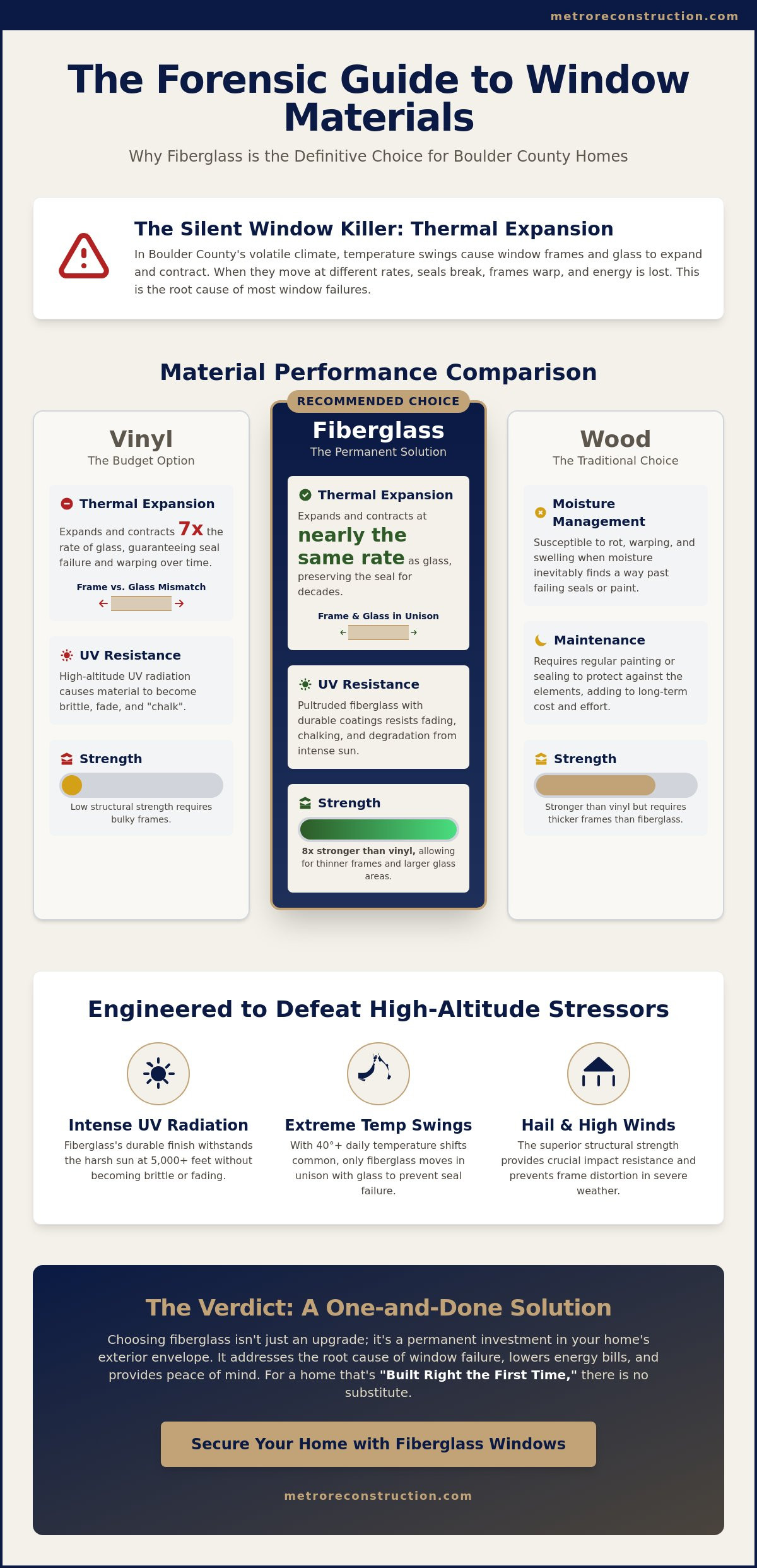
The Coefficient of Thermal Expansion (CTE) is a critical metric for any homeowner in Boulder County. It measures how much a material grows or shrinks during temperature fluctuations. In our region, it’s common to experience 40-degree temperature swings in a single afternoon. Vinyl frames expand and contract at approximately seven times the rate of the glass they hold. This constant mechanical movement eventually snaps corner welds and pulls the frame away from the glass. Fiberglass is composed primarily of glass fibers, meaning the frame and the pane expand at nearly identical rates. This physical synergy preserves the integrity of the insulated glass unit (IGU) and ensures superior thermal performance by preventing the air leaks that plague inferior materials.
UV Resistance and Color Retention
At an elevation of 5,430 feet, UV radiation is significantly more intense than at sea level. This exposure triggers a chemical breakdown in the molecular bonds of Polyvinyl Chloride (PVC), which is why older vinyl units often become brittle and “chalky.” Fiberglass frames utilize advanced powder-coated finishes that are baked on during the manufacturing process. This creates a molecular bond that resists fading, scratching, and peeling. Wood-clad windows often face a different struggle in Colorado’s dry climate; the wood can shrink and pull away from the exterior cladding, which traps moisture and leads to hidden rot within the exterior envelope. If you’ve noticed drafts or visible frame damage, a professional window replacement assessment can help identify if your current units have reached the end of their functional life.
Longevity is where the forensic evidence clearly favors fiberglass. While wood is susceptible to rot and vinyl is prone to structural warping, fiberglass windows typically offer a lifespan of 30 to 40 years. Maintenance requirements are equally disparate:
- Fiberglass: Stays square and true regardless of temperature. It requires only simple cleaning and zero periodic staining or painting.
- Vinyl: Frequently requires seal repairs due to high frame flex. Extruded colors can fade unevenly under intense Colorado sun.
- Wood: Demands consistent sanding and sealing to prevent moisture intrusion. Even clad versions require frequent inspection of the window-to-wall interface.
Why High-Altitude Climates Demand Fiberglass Solutions
Boulder’s climate isn’t just a backdrop for beautiful scenery; it’s a relentless mechanical stressor that tests the limits of every building component. At 5,000 feet and above, the environmental variables are significantly more aggressive than at sea level. We see this most clearly in the premature failure of standard materials that weren’t engineered for the specific pressures of the Front Range. To ensure your home remains protected, your choice of fiberglass replacement windows must account for the unique physics of high-altitude living.
The performance of a window at this elevation depends on its ability to resist air infiltration during heavy wind loads while maintaining its shape under intense solar heat. Because fiberglass frames are incredibly stiff, they don’t flex or bow when the wind picks up. This rigidity allows the weatherstripping to stay fully engaged, which is the primary reason fiberglass units offer such exceptional acoustic performance. Whether you live near the traffic of the 28th Street corridor or face the direct brunt of mountain gusts, the structural stability of fiberglass significantly reduces wind whistling and urban noise.
Managing UV Degradation at 5,000+ Feet
Solar radiation increases in intensity as the atmosphere thins, with UV levels rising approximately 4% for every 1,000 feet of elevation. This means a home in Boulder faces roughly 20% more UV stress than a property on the coast. This constant solar bombardment causes the chemical bonds in vinyl to break down, leading to the “chalking” and brittleness we often diagnose during forensic inspections. Fiberglass replacement windows are immune to this type of molecular degradation. The glass-reinforced matrix stays structurally sound despite decades of direct sun, and when paired with high-altitude Low-E coatings, they effectively manage solar heat gain without compromising the integrity of the exterior envelope.
Hail Impact and Structural Resilience
Hail is an inevitable reality for homeowners in “Hail Alley,” and the impact resistance of your window frames is your first line of defense. Thin-walled vinyl frames are susceptible to cracking or shattering when struck by large hailstones, whereas the pultruded fibers in fiberglass distribute the force of an impact across the entire profile. This resilience is vital for maintaining moisture management; a cracked frame is an immediate entry point for water. For mountain homes in Boulder County, a Design Pressure (DP) rating of 45 or higher is often the standard required to ensure the unit can withstand the specific wind loads and structural pressures of our high-altitude environment. By choosing a material that won’t rack or warp, you invest in a solution that is built right the first time and designed to endure for 40 years or more.
The Exterior Envelope: Integrating Fiberglass with Stucco and Masonry
A high-performance window is only as effective as its installation within the exterior envelope. While many contractors treat windows as standalone products, we view them as critical components of a complex moisture management system. In Boulder County, where wind-driven rain and melting snow are constant threats, the window-to-wall interface is the most common site of structural failure. Investing in premium fiberglass replacement windows won’t protect your home if the transition between the frame and the cladding isn’t engineered to redirect water away from the substrate.
The root cause of most window-related leaks isn’t actually a failure of the glass or the frame itself. Instead, it’s often a breakdown of the flashing system hidden behind your stucco or masonry. When we perform a forensic analysis of a failing home, we frequently find that original builders relied on temporary patches like caulk rather than permanent structural solutions. Because fiberglass is exceptionally rigid, it provides a stable substrate for high-performance sealants, but the flashing must be the primary defense against moisture intrusion.
Forensic Flashing: Preventing Moisture Intrusion
Proper moisture management requires a layered approach that includes stainless steel or high-density composite sill pans and rigid head flashings. These components ensure that any water reaching the window-to-wall transition is successfully shed back to the exterior. If your current windows have already allowed water to penetrate the wall cavity, you may require professional stucco restoration alongside your window upgrade. This holistic approach ensures that we aren’t just covering up a problem, but rebuilding the envelope to be built right the first time.
Full-Frame Replacement in Stucco and Masonry
For homes with stucco, stone, or brick exteriors, we generally advise against “pocket” installations. A pocket install leaves the old frame and potentially compromised flashing in place, which often traps moisture and leads to rot. A full-frame replacement involves the technical removal of the old nailing fin, allowing us to inspect the rough opening and install the new fiberglass unit with a modern, integrated flashing system. This methodology ensures a seamless transition between the new fiberglass replacement windows and your existing masonry, preserving the home’s structural integrity for decades. As you evaluate a window replacement company in Boulder, prioritize those who demonstrate a deep understanding of these forensic details over those who focus only on aesthetic fixes.
If you suspect your current windows are compromising your home’s exterior envelope, schedule a comprehensive forensic assessment with our team to identify the right long-term solution.
Investing in Quality: The Metro Reconstruction Services, Inc. Approach
At Metro Reconstruction Services, Inc., we operate under a foundational promise: every project must be built right the first time. We recognize that homeowners in Boulder County aren’t just looking for a cosmetic refresh; they’re seeking a permanent solution to complex environmental challenges. Our approach to fiberglass replacement windows is rooted in the belief that a window is only as good as the structure supporting it. Unlike volume-based installers who focus on rapid turnover, our methodology is engineering-led and focused on the long-term health of your home.
When we recommend fiberglass, we do so from a 40-year perspective. We’ve seen how inferior materials fail under the stress of the Front Range micro-climate, and we refuse to offer temporary patches. Our team prioritizes fiberglass because its structural profile aligns with our commitment to durability and moisture management. We treat every window installation as a surgical intervention into the exterior envelope, ensuring that the root cause of any previous failure is identified and corrected before the first new unit is ever ordered.
A forensic assessment is the first step in our comprehensive project management flow. We don’t simply measure the opening; we diagnose the condition of the surrounding substrate, the integrity of the existing flashing, and the performance of the window-to-wall interface. This meticulous attention to detail allows us to manage complex residential and commercial renovations where others might overlook hidden structural issues. By choosing a partner who understands the hidden mechanics of a building, you gain the peace of mind that comes from a high-performance, professional conclusion.
Beyond Aesthetics: A Structural Perspective
Our analysis extends far beyond the window frame to encompass the entire exterior envelope. As a family-owned firm with deep local expertise, we understand how Boulder’s specific soil conditions and weather patterns affect building movement. This local knowledge allows us to integrate high-performance products, such as Pella replacement windows, into a comprehensive system that protects your investment. We prioritize substance over style, ensuring that every component we install exceeds industry standards for air infiltration and thermal resistance.
Starting Your Window Reconstruction Project
Your journey begins with a forensic consultation where our experts evaluate your home’s current performance. We provide a transparent, detailed explanation of our findings, guiding you through technical complexities without high-pressure sales tactics. To ensure absolute clarity, we utilize fixed-price project fees for transparent budgeting, removing the uncertainty often associated with high-end reconstruction. This consultative process is designed to revitalize your home’s performance and aesthetic appeal while securing its structural future. When you’re ready to move beyond “budget” fixes and invest in a fiberglass replacement windows solution that lasts, our team is ready to deliver a result that is built right the first time.
Securing Your Home’s Structural Future
Protecting a home in the Front Range requires a shift from viewing windows as simple products to seeing them as vital structural barriers. We’ve explored how the pultrusion process creates a frame that mirrors the thermal expansion of glass, ensuring your investment doesn’t succumb to the seal failures common in inferior materials. By prioritizing the integrity of your exterior envelope and addressing the root cause of moisture intrusion, you can achieve a high-performance solution that lasts for decades. Choosing fiberglass replacement windows is the definitive step toward a more resilient, energy-efficient home.
At Metro Reconstruction, we bring over 40 years of Front Range expertise to every project. We specialize in the complex structural integration required for stucco and masonry homes, ensuring every component functions as part of a unified defense. Our forensic approach identifies hidden failures before they become costly repairs, guaranteeing your project is built right the first time. Schedule a Forensic Consultation for Your Window Replacement today to secure the peace of mind that comes from engineering-led results. We look forward to helping you revitalize your home’s performance and long-term value.
Frequently Asked Questions
Are fiberglass replacement windows worth the extra cost over vinyl?
Fiberglass replacement windows represent a superior long-term investment because they address the root cause of frame failure: thermal expansion. While the upfront cost is higher, you avoid the premature seal failure and frame warping that typically plague vinyl units in the Front Range. This durability ensures the window remains a permanent part of your exterior envelope for 30 to 40 years, rather than a temporary fix that requires replacement a decade later.
How long do fiberglass windows typically last in Colorado’s climate?
You can expect a lifespan of 30 to 40 years with minimal maintenance. The material is engineered to withstand the intense UV radiation and extreme temperature swings common in high-altitude environments. Because the frame expands at nearly the same rate as the glass, the structural integrity of the unit remains intact far longer than wood or vinyl alternatives. This provides reliable protection against the elements for decades without the need for constant repairs.
Can fiberglass windows be painted if I want to change my home’s color scheme?
Yes, fiberglass frames are unique because they can be painted without compromising their structural integrity. Unlike vinyl, which cannot be painted effectively due to adhesion issues and heat absorption, the pultruded surface of fiberglass accepts high-quality coatings. This flexibility allows you to update your home’s aesthetic appeal in the future while still benefiting from the high-performance characteristics of a rigid, glass-reinforced frame that stays square and true.
Do fiberglass windows provide better energy efficiency than wood?
Fiberglass often provides superior energy efficiency because it doesn’t warp or shrink, which prevents the air infiltration that occurs when wood frames pull away from the wall. The hollow-core chambers within the frame act as thermal breaks, trapping air to enhance insulation. This stability ensures that your home meets the strict 2026 ENERGY STAR standards for U-factors, significantly lowering your energy bills compared to aging or poorly maintained wood units.
What is the difference between a full-frame and an insert window replacement?
A full-frame replacement involves removing the entire window, including the frame and the original nailing fin, to allow for a complete inspection of the rough opening. This is the only way to ensure the flashing is integrated correctly into the exterior envelope. An insert or “pocket” installation leaves the old frame in place. This often hides existing moisture damage and fails to address the structural root cause of previous leaks or drafts.
How do fiberglass windows perform during Colorado hail storms?
Fiberglass provides exceptional impact resistance because the pultruded glass fibers distribute the force of an impact across the entire frame. This rigidity prevents the shattering or cracking that often occurs with thin-walled vinyl during severe hail events. By maintaining its structural shape, the frame protects the insulated glass unit and prevents moisture from entering the wall cavity through new fractures in the window profile after a major storm.
Is it possible to replace windows without damaging my existing stucco exterior?
Yes, it’s possible to replace windows without significant damage, but it requires a specialized forensic approach to ensure the window-to-wall transition remains watertight. Our team utilizes precise cutting and flashing techniques to integrate new fiberglass replacement windows into your existing stucco or masonry. This meticulous process preserves the integrity of your home’s exterior while ensuring the new moisture management system is built right the first time.
What Low-E glass options are best for high-altitude homes in Boulder?
High-altitude homes benefit most from Low-E 366 glass, which features triple layers of silver to reflect heat while allowing visible light to pass through. For homes above 5,000 feet, we also specify units with capillary tubes to equalize pressure between the glass panes. This prevents the glass from bowing or cracking due to atmospheric changes. It ensures the high-performance coatings function as intended throughout the year to protect your interior from UV damage.