
The highest-rated window on the national market often becomes a structural liability the moment it crosses the 5,000-foot mark of the Front Range. While many homeowners assume a premium price tag guarantees longevity, the reality is that atmospheric pressure differentials at Boulder’s 5,430-foot elevation can cause standard insulated glass units to bow, leak, or implode within just a few seasons. You likely already recognize the signs of this failure, such as the persistent fogging between panes or the noticeable draft during a Chinook wind event. Investing in energy efficient windows Boulder requires more than just looking at an R-value; it demands a technical understanding of how high-altitude environments stress the entire exterior envelope of your home.
This guide helps you navigate these complexities to achieve a “one and done” solution that protects your investment for decades. You’ll learn how to identify the root cause of seal failure and why specific capillary tubes or high-altitude breathers are non-negotiable for Colorado homes. We will also examine how to mitigate the 300 days of intense annual UV exposure that fades interiors and degrades inferior frame materials. By the end of this article, you’ll have the technical roadmap needed to select high-performance windows that lower your utility bills and reinforce your home’s long-term structural integrity.
Key Takeaways
- Understand how Boulder’s high elevation and dramatic temperature swings impact window seal integrity and long-term durability.
- Navigate energy-efficiency ratings by identifying why the U-Factor is the most critical metric for maintaining comfort during harsh Colorado winters.
- Compare high-performance materials like fiberglass and triple-pane glazing to determine which energy efficient windows Boulder homeowners should choose for maximum UV resistance.
- Learn why a window’s performance depends on its precise integration with the entire exterior envelope to prevent moisture intrusion and structural damage.
- Discover how a forensic approach to reconstruction ensures your home’s high-altitude upgrades are built right the first time for lasting protection.
The Boulder Factor: Why Standard Windows Fail in the Front Range
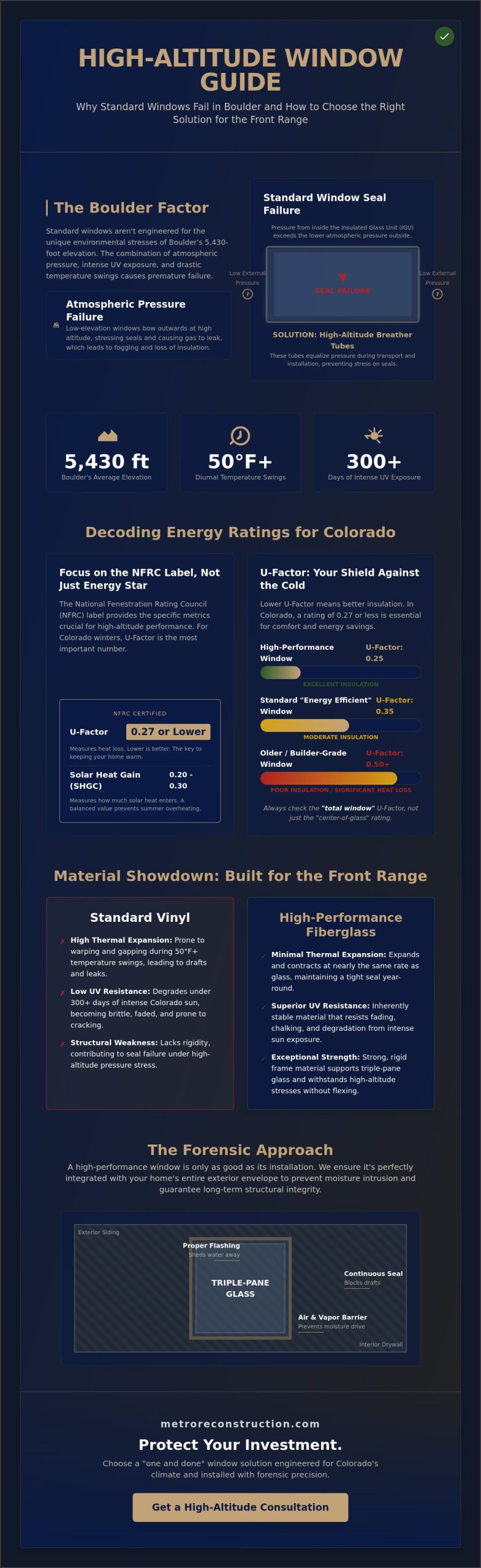
Boulder sits at an average elevation of 5,430 feet. This altitude creates a unique set of physical demands on the exterior envelope that standard products simply cannot meet. When homeowners invest in energy efficient windows Boulder, they often overlook the fact that atmospheric pressure drops significantly as elevation increases. This pressure differential is the primary reason why windows manufactured at sea level or in low-elevation factories often fail within the first 24 months of installation in Colorado. Without specific engineering adjustments, the very components designed to save energy become the points of failure.
High-Altitude Pressure and Seal Failure
The physics of high-altitude performance involve the pressure trapped between glass panes. An Insulated Glass Unit (IGU) manufactured in a low-elevation factory contains air or gas pressurized for that specific environment. When that unit is transported to Boulder, the lower external air pressure causes the glass to bow outward like a balloon. This constant tension stresses the primary and secondary seals, eventually leading to a permanent breach. To prevent this, professional-grade installations require breather tubes or capillary tubes. These small stainless steel components allow the internal and external pressures to equalize during transport and acclimation. Without them, the loss of argon or krypton gas is inevitable, rendering the Window insulation ineffective and resulting in the characteristic fogging that signals a total system failure.
The Front Range Weather Profile
Boulder experiences over 300 days of sunshine annually, but this statistic hides the volatility of the local climate. Diurnal temperature swings in the Front Range can exceed 50 degrees Fahrenheit in less than 12 hours. This rapid cycling causes window frames to expand and contract at different rates than the surrounding wall structure. Standard vinyl frames from big-box retailers often lack the structural reinforcement to handle these shifts, leading to gaps in the sealant and subsequent moisture intrusion. High-altitude UV radiation also accelerates the degradation of low-quality polymers, making frames brittle and prone to cracking during sudden hail events. When selecting energy efficient windows Boulder, durability and material composition must be prioritized over initial cost savings.
Thermal stress is the physical tension created when uneven heat distribution across a glass surface causes the material to expand at different rates, potentially leading to spontaneous fractures. We focus on identifying the root cause of these failures to ensure your home remains protected from the elements. This commitment to technical precision ensures your investment is built right the first time.
Decoding Energy-Efficiency Ratings for Colorado Homeowners
Selecting energy efficient windows Boulder homeowners can rely on requires looking past the blue Energy Star logo. While that certification provides a helpful baseline, it represents a broad national standard that often fails to account for the specific thermal stresses of the Front Range. True performance is found in the National Fenestration Rating Council (NFRC) label. This label reveals three specific metrics that dictate how your home will respond to 300 days of intense sun and sub-zero winter nights.
U-Factor: Your Shield Against the Continental Divide Chill
U-Factor measures the rate of non-solar heat loss; essentially, it tells you how well the window prevents your furnace’s heat from escaping. For the Colorado climate, the Department of Energy recommends a U-Factor of 0.27 or lower. We often see homeowners confused by “center-of-glass” ratings. These only measure the insulation of the pane itself. A high-performance installation must prioritize the “total window” U-Factor, which includes the frame and spacers. If the frame is poorly constructed, it acts as a thermal bridge that bypasses even the best triple-pane glass.
Solar Heat Gain Coefficient (SHGC) and Visible Transmittance (VT) complete the performance profile. SHGC measures how much solar radiation enters your home. In Boulder, we look for a balanced SHGC, usually between 0.20 and 0.30, to prevent summer overheating while allowing some passive solar heating during the winter months. VT measures the amount of natural light allowed through. High-performance glass should maintain a VT above 0.50 to ensure your living spaces remain bright without sacrificing thermal resistance.
Low-E Coatings: The Invisible UV Filter
Low-Emissivity (Low-E) coatings are microscopic layers of silver applied to the glass surfaces. These layers reflect long-wave infrared energy, keeping heat inside during the winter and outside during the summer. In our high-altitude environment, UV radiation is 20% to 30% more intense than at sea level. This makes the choice between coatings critical for the longevity of your home’s interior.
- Low-E 272: This coating is ideal for north-facing windows where you want to maximize natural light and retain some passive heat gain.
- Low-E 366: This is the gold standard for west-facing elevations. It prevents the “greenhouse effect” during summer afternoons and offers superior insulation.
Investing in the right coating protects your hardwood floors and artwork from fading while stabilizing the interior temperature of your entire exterior envelope. This technical approach ensures that your energy efficient windows Boulder project addresses the root cause of energy loss rather than just providing a temporary aesthetic fix. When components are matched correctly to the home’s orientation, the result is a significant reduction in HVAC strain and a more durable building structure.
Frame Materials and Glazing: Comparing High-Performance Options
Selecting the right frame material is the foundation of a high-performance exterior envelope. In the Boulder valley, windows must endure extreme UV exposure and rapid temperature shifts that can fluctuate 40 degrees in a single afternoon. We focus on materials that maintain their structural integrity under these specific stresses to ensure your investment provides a long-term solution rather than a temporary fix.
Fiberglass: The Gold Standard for Stability
Fiberglass frames represent a significant engineering advantage for energy efficient windows Boulder homeowners can rely on for decades. Because fiberglass consists primarily of glass fibers and resin, its thermal expansion rate nearly mirrors that of the glass panes it holds. This alignment prevents the frame from pulling away from the glass during intense cold snaps. Vinyl frames can expand and contract at a rate seven times greater than glass; this discrepancy often leads to seal failure and air infiltration within 10 to 15 years.
- Durability: Fiberglass resists warping and brittle fracturing even under Colorado’s intense sun.
- Maintenance: Unlike wood, fiberglass does not require frequent painting or sealing to prevent rot.
- Lifespan: A high-quality fiberglass frame is designed for a 40-year functional life.
Glazing Innovations: Double vs. Triple Pane
Deciding between double and triple-pane glazing requires a technical analysis of your home’s orientation. Triple-pane units add a third layer of glass and a second insulating gas space, which can increase the window’s insulating value by up to 50 percent compared to standard double-pane units. These are particularly effective for north-facing rooms or walls exposed to the constant winds coming off the Flatirons.
Beyond thermal performance, triple-pane glass provides superior sound attenuation. If your property sits near Broadway or Highway 36, the extra layer reduces decibel transfer significantly. It’s a matter of quiet comfort. However, triple-pane units increase the weight of the sash by roughly 33 percent. We must verify that your home’s structural headers can support this additional load before moving forward with an installation.
Gas Fills and Impact Resistance
The space between panes is typically filled with Argon or Krypton gas to slow heat transfer. Argon is the industry standard because it’s cost-effective and provides reliable performance in most residential applications. Krypton is denser and performs better in the thinner gaps found in triple-pane units. While Krypton offers higher thermal resistance, the performance gap must be weighed against the increased cost.
Boulder experiences an average of 3 to 4 significant hail days per year according to historic weather patterns. While standard tempered glass meets safety codes, impact-rated laminated glass offers an extra layer of protection for the energy efficient windows Boulder residences require. Laminated glass uses a PVB interlayer that holds the shards together if the glass breaks. This prevents water intrusion and protects the interior of your home during severe Front Range storms. We view this as a critical component of a comprehensive moisture management strategy.
The Forensic Approach: Integration with the Exterior Envelope
Even the most advanced energy efficient windows Boulder homeowners can buy will fail if the installation ignores the surrounding wall assembly. Most window-area leaks don’t originate from the glass or the frame itself. Instead, the root cause is almost always a failure in the transition between the window unit and the building’s exterior envelope. When moisture bypasses the outer layer, it becomes trapped within the wall cavity, leading to structural rot that remains hidden for years. This is a common issue in high-altitude environments where wind-driven rain and rapid freeze-thaw cycles put immense pressure on every joint.
Metro Reconstruction treats every installation as a forensic exercise. We analyze how water moves across your specific facade, whether it’s stone, siding, or traditional hard-coat stucco. A window is essentially a hole in your home’s protective shell. If that hole isn’t integrated with surgical precision, you aren’t just losing thermal efficiency; you’re risking the structural integrity of your property. We focus on the science of moisture management to ensure that your investment in energy efficient windows Boulder is protected by a robust, weather-tight seal.
Flashing and Moisture Management
Effective moisture management relies on two critical components: sill pans and head flashing. We install custom-fabricated sill pans that act as a secondary drainage plane, ensuring any water that reaches the rough opening is directed back to the exterior. We don’t view this as a simple swap. We treat window replacement as a mini-reconstruction project. This often involves detailed stucco restoration to ensure the new flashing is lapped correctly behind the existing weather-resistive barrier. Doing the job right the first time means looking behind the surface to prevent wall rot before it starts.
Avoiding the “Budget Contractor” Trap
Many installers in Boulder County practice “caulk-and-walk” methods. They rely on beads of sealant to keep water out rather than mechanical flashing. This is a temporary fix that usually fails within 24 to 36 months as the house settles and materials expand. Beyond the leak risk, improper installation frequently voids manufacturer warranties. If a unit isn’t plumb, level, and flashed to AAMA standards, the manufacturer won’t honor claims on seal failures or frame warping. You should watch for these signs of poor window-to-wall integration:
- Hairline cracks in stucco radiating from window corners.
- Discoloration or “shadowing” on interior drywall near the base of the window.
- Musty odors near the floorboards after a heavy rain or snowmelt.
- Condensation trapped between panes due to frame torque from improper shimming.
High-performance units require a high-performance installation. Choosing a partner who understands the entire exterior envelope is the only way to guarantee the peace of mind you expect from a premium upgrade.
Investing in Your Boulder Home with Metro Reconstruction
Selecting energy efficient windows Boulder homeowners can rely on involves more than choosing a frame style; it requires a deep understanding of structural physics. Since 1982, Metro Reconstruction has provided specialized solutions across the Front Range and Mountain communities. Our 42-year history as a family-owned firm is built on a foundation of structural forensic repair. We don’t just swap out components. We analyze the root cause of performance failures to ensure your home’s exterior envelope is revitalized and protected against the elements. Our guiding principle is that every project must be built right the first time.
Our comprehensive project management removes the burden of coordination from the homeowner. We handle the technical complexities that often stall high-performance renovations, including:
- Detailed moisture management analysis and forensic inspections.
- Direct coordination with local building departments for all necessary permits.
- Expert integration with existing siding, including specialized stucco and EIFS touch-ups.
- Rigorous quality control throughout the entire installation process.
This holistic approach ensures that your window replacement isn’t an isolated event, but a strategic upgrade to your property’s structural integrity. We understand the specific demands that high-altitude UV exposure and rapid temperature swings place on a building’s seal. By addressing these factors with technical precision, we provide a result that exceeds standard construction practices.
The Peace of Mind of Fixed-Price Reconstruction
Renovating older Boulder properties frequently reveals hidden structural issues that lead to financial surprises with lesser contractors. We mitigate this risk through our authoritative, fixed-price model. By conducting an exhaustive assessment during the planning phase, we develop a precise scope of work that accounts for the unique requirements of your high-value property. This transparency ensures there aren’t any unexpected costs once the project begins. Our professional methodology prioritizes long-term durability over quick aesthetic fixes, providing a level of reliability that matches the investment you’ve made in your home.
Next Steps: Evaluating Your Exterior Envelope
A high-performance window is only as effective as the system surrounding it. When you schedule a consultation with Metro Reconstruction, you aren’t just getting a sales pitch; you’re receiving a technical evaluation from a seasoned expert. We examine the interaction between your windows, flashing, and siding to identify thermal bridges and potential water intrusion points. This analytical approach ensures your new energy efficient windows Boulder installation delivers the exact performance metrics promised by the manufacturer.
You can contact Metro Reconstruction for a high-performance window evaluation to secure your home’s future. Our team is ready to provide the quiet confidence and technical precision your project deserves. We’ll guide you through the evaluation process and provide a clear, professional roadmap for your home’s exterior restoration.
Securing Your Home’s High-Altitude Performance
Investing in high-performance glazing is only the first step toward securing your home’s thermal integrity. In Boulder’s unique environment, where elevations often exceed 5,400 feet, standard installations frequently fail because they ignore the pressure differentials and intense UV exposure specific to the Front Range. True efficiency requires a forensic understanding of how each unit integrates with your entire exterior envelope. When moisture management is neglected, even the most expensive energy efficient windows Boulder homeowners can buy will eventually lead to structural decay.
Metro Reconstruction brings over 40 years of Boulder County expertise to every project. As an A+ rated, family-owned firm, we don’t just swap out glass; we analyze the root cause of failure to ensure your home is built right the first time. Our specialists focus on the critical transition points between your windows and siding, providing a comprehensive shield against the elements. You deserve the peace of mind that comes from a durable, engineering-led solution.
Schedule Your Forensic Window Evaluation with Metro Reconstruction to protect your property for the long term. Your home is your most significant asset, and it’s time to treat it with the technical precision it requires.
Frequently Asked Questions
How much can energy-efficient windows save on heating bills in Boulder?
Installing energy efficient windows Boulder residents trust can reduce annual heating and cooling costs by an average of 12% according to ENERGY STAR data. This reduction occurs because high-performance glazing minimizes heat transfer through the glass. By stabilizing the internal temperature, you lower the demand on your HVAC system. We focus on the entire exterior envelope to ensure these savings aren’t lost through gaps in the surrounding frame.
Do I need special windows for high-altitude locations in Colorado?
High-altitude locations require windows equipped with capillary tubes or breather tubes to equalize pressure between the glass panes. Because Boulder sits at an elevation of 5,328 feet, the atmospheric pressure is lower than at sea level. Without these tubes, the insulating glass unit can bow or even burst. We ensure every unit is engineered for the specific pressure demands of the Front Range to prevent seal failure.
What is the best time of year to replace windows in Boulder County?
Late spring and early autumn, specifically the months of May and September, offer the ideal conditions for window installation in Boulder County. These windows of time provide moderate temperatures that allow sealants to cure correctly without the interference of extreme heat or freezing cycles. While our team installs year-round, these specific months minimize the duration your home’s interior is exposed to the elements. Proper timing ensures moisture management systems are installed under optimal conditions.
Will new windows require me to repair my home’s stucco exterior?
Modern installation techniques often allow for window replacement without damaging your home’s stucco exterior, provided a retrofit or flush fin method is used. However, if the existing moisture barrier is compromised, a full-frame replacement may require localized stucco patching to maintain the integrity of the exterior envelope. We analyze the root cause of any existing leaks before beginning. Our goal is to preserve your home’s aesthetic while ensuring the new interface is built right the first time.
What is the difference between U-Factor and R-Value in windows?
U-Factor measures the rate of heat loss through a window, while R-Value measures the material’s resistance to heat flow. For homeowners seeking energy efficient windows Boulder, a lower U-Factor is the more critical metric because it indicates better insulating properties. Most high-performance windows feature a U-Factor between 0.20 and 0.30. In contrast, R-Value is typically used for walls and insulation, where a higher number represents better thermal performance.
How long do energy-efficient windows typically last in the Front Range climate?
High-quality windows typically last between 20 and 25 years in the Front Range climate before the seals or hardware begin to degrade. The intense UV radiation at our altitude and frequent freeze-thaw cycles place extreme stress on the exterior envelope. Choosing materials like fiberglass or high-grade vinyl helps resist the warping that often affects cheaper alternatives. Regular inspections of the perimeter caulking can extend this lifespan by preventing moisture intrusion into the wall cavity.
Does Boulder County have specific energy codes for window replacement?
Boulder County currently enforces the 2021 International Energy Conservation Code (IECC) with specific local amendments that mandate high thermal performance. Residential window replacements must typically meet a U-Factor of 0.30 or lower to comply with these standards. These regulations ensure that all new installations contribute to the county’s broader climate goals. We handle the permitting process to ensure your project meets or exceeds every local building requirement.
Can I replace just the glass or do I need a full-frame replacement?
You can replace just the glass if the frame is structurally sound, but a full-frame replacement is necessary if there’s evidence of rot or water damage in the rough opening. Replacing only the glass, known as an insert, is a faster solution that maintains the original trim. However, a full-frame approach allows us to inspect the flashing and address the root cause of any thermal leaks. This comprehensive method ensures the entire opening is built right the first time.