
Last January, a homeowner near Gold Hill discovered that their expensive new glazing had clouded over, a direct result of pressure imbalances at 8,300 feet. This common failure happens when standard glass units are installed without the necessary capillary tubes required for high-altitude environments. Selecting custom windows for mountain homes in Boulder County requires more than just an eye for aesthetics; it demands an engineering-led approach to the entire exterior envelope. You already know that the intense UV rays and 100-mph wind gusts of the Front Range will test any material you put in their path.
We agree that your home should be a sanctuary where you can enjoy the Continental Divide without feeling the bite of a winter draft. This guide will show you how to navigate the technical requirements of high-performance glass, including the 2015 Wildland-Urban Interface (WUI) codes that now govern most mountain builds. We’ll examine the critical relationship between proper flashing, thermal breaks, and long-term structural integrity. This ensures your investment protects both your comfort and your view for decades.
Key Takeaways
- Understand why standard residential units often fail at 8,000 feet and how to identify “mountain-grade” engineering designed for extreme diurnal temperature swings.
- Learn why common Low-E coatings can be counterproductive at high altitudes and how to manage solar heat gain without sacrificing your Front Range views.
- Evaluate the structural advantages of fiberglass over vinyl to ensure your investment in custom windows for mountain homes can withstand intense wind loads and UV exposure.
- Discover the “forensic” approach to installation, which treats the window as a vital part of the entire exterior envelope to prevent long-term moisture intrusion.
- Identify the critical difference between a cosmetic window replacement and a comprehensive structural solution that addresses the root cause of performance issues.
The Unique Challenges of Custom Windows for Mountain Homes in Boulder County
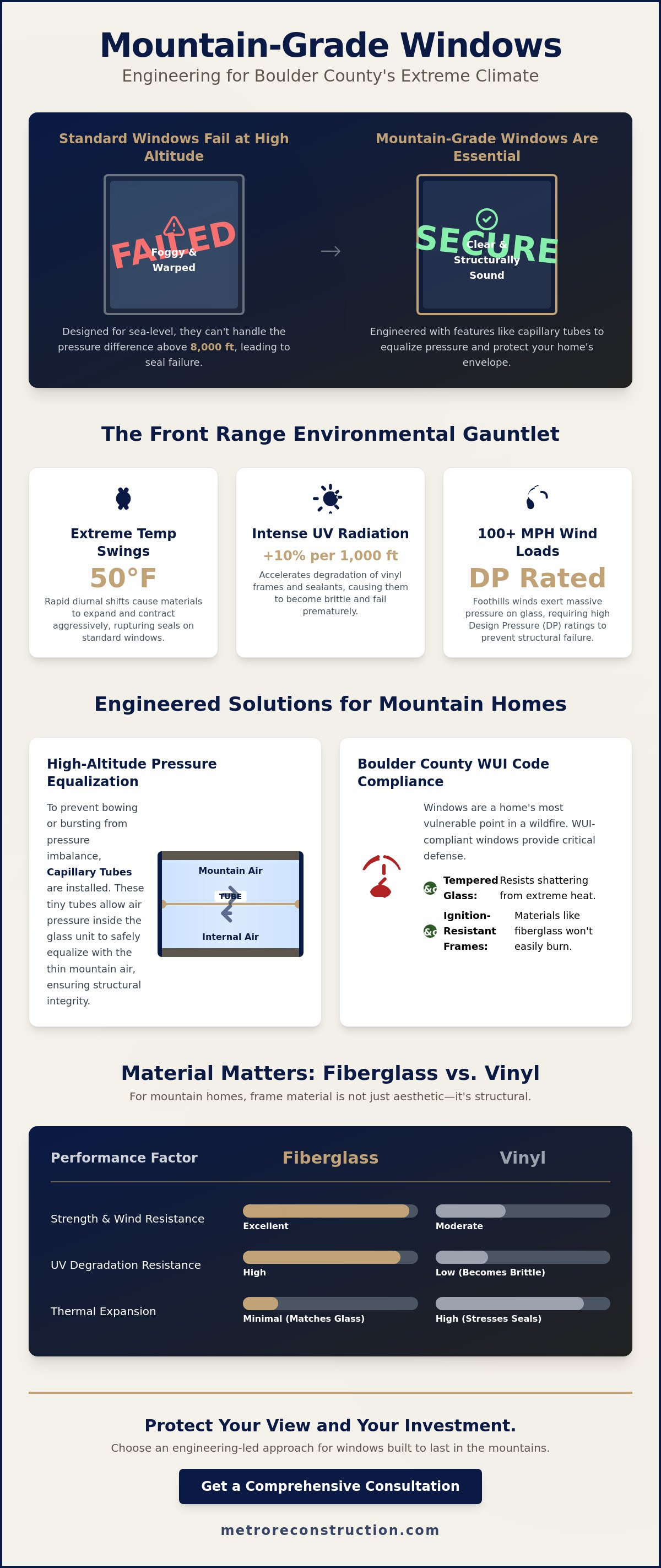
Mountain-grade windows aren’t a luxury; they’re a technical requirement for homes situated above 8,000 feet. Standard residential units designed for sea-level pressures often fail within five years when installed in the Front Range. The atmospheric pressure at high elevations is approximately 25% lower than at sea level, which creates a permanent internal pressure pushing outward against the glass. Without specific engineering, this pressure compromises the structural integrity of the unit. For homeowners in Boulder County, custom windows for mountain homes must be built to withstand these specific mechanical stresses to protect the entire exterior envelope.
The root cause of most window failures in our region stems from Boulder County’s extreme diurnal temperature shifts. It isn’t uncommon to see a 50-degree temperature swing within a single 12-hour period. These rapid fluctuations force window frames to expand and contract aggressively. If the frame material doesn’t match the expansion rate of the glass, the seal will rupture. Additionally, UV radiation increases by roughly 10% for every 1,000 feet of elevation gain. This intensified exposure accelerates the degradation of standard vinyl and sealants, leading to brittle frames and foggy glass. Our approach focuses on high-performance materials that resist this solar breakdown.
Local climate factors demand a higher standard of durability. We regularly account for the following environmental loads:
- 100mph Wind Loads: Foothills winds can exert massive pressure on large glass spans, requiring high Design Pressure (DP) ratings.
- Snow Accumulation: Heavy drifts against basement or garden windows can lead to moisture intrusion if the sills aren’t properly flashed.
- Thermal Stress: Intense alpine sun on cold glass can cause spontaneous thermal fractures in non-tempered units.
Boulder County WUI Codes and Wildfire Protection
Boulder County enforces strict Wildfire Urban Interface (WUI) regulations to mitigate the risk of home ignition. Windows are often the most vulnerable point in a home’s defense during a wildfire. When standard glass shatters from heat, it allows embers to enter the structure directly. WUI-compliant custom windows for mountain homes utilize tempered glass and ignition-resistant frame materials. These components are designed to remain intact longer during a fire event, providing a critical barrier that can prevent a total loss. We ensure every installation meets these life-safety standards to protect your investment.
High-Altitude Seal Failure and Capillary Tubes
Standard insulated glazing technology often relies on Argon gas fills to provide thermal resistance. However, if a sealed Argon unit is manufactured at sea level and transported to the mountains, the internal pressure will cause the glass to bow outward or explode. To prevent this, we utilize specialized hardware. Capillary tubes are the essential pressure-relief valve for mountain glass. These small tubes allow the internal air pressure between the panes to equalize with the thin mountain atmosphere, preventing seal rupture and maintaining the flat profile of the glass. While this process replaces the Argon with dry air, it ensures the window remains structurally sound and “built right the first time.”
Engineering for Performance: High-Altitude Glass and UV Protection
In high-altitude environments like Boulder County, standard glass packages often fail to protect the building’s exterior envelope from the unique stressors of the Front Range. Many homeowners assume that “Low-E 366” glass is the universal gold standard for efficiency. However, in mountain homes where passive solar heating is a design asset, this coating can actually be counterproductive. Low-E 366 is engineered to block heat from entering, which is excellent for a desert climate but can increase heating costs during a Colorado winter. Choosing the right custom windows for mountain homes requires an analytical look at the Solar Heat Gain Coefficient (SHGC).
For south-facing elevations, a glass package with a higher SHGC allows the sun to naturally warm the interior during the winter months, reducing the load on the HVAC system. When comparing these specifications, homeowners should consult the labels provided by the National Fenestration Rating Council (NFRC). These labels provide standardized data on U-factors and SHGC, allowing for an objective comparison of how different glass configurations will perform under the specific stressors of 7,000 feet and above.
High-altitude sunlight contains significantly more UV radiation than sea-level light. This intensity accelerates the fading of hardwood floors and expensive artwork. To mitigate this, we specify glass that filters out 95% or more of ultraviolet rays without sacrificing clarity. For residents living near high-traffic canyons or exposed ridgelines, triple-pane glass offers a dual benefit. Beyond its thermal resistance, the third layer of glass and the additional gas-filled chamber provide superior sound dampening. This creates a sanctuary from wind noise and road traffic, ensuring the home remains a quiet retreat.
Visible Light Transmittance vs. Thermal Performance
Balancing expansive views with energy efficiency is a technical challenge. High-performance coatings can sometimes introduce a slight green or gray tint to the glass. Selecting a Visible Light Transmittance (VLT) rating of 0.70 or higher ensures that the natural colors of the Continental Divide remain vivid. This balance prevents the “cave effect” often found in over-engineered windows. For those selecting custom windows for mountain homes, maintaining color accuracy is just as vital as stopping heat loss.
The Importance of Warm-Edge Spacers
The spacer is the component that separates the glass panes. Traditional aluminum spacers conduct cold, which leads to condensation and eventual mold growth within the window sash. We recommend stainless steel or composite warm-edge spacers. These materials reduce heat transfer at the edge of the glass by up to 50% compared to aluminum. This detail is a critical part of investing in a durable exterior envelope that prevents moisture-related structural failures and keeps the window frame dry during deep freezes.
Material Comparison: Choosing the Right Frame for the Front Range
Selecting custom windows for mountain homes requires a technical evaluation of how materials respond to extreme environmental stressors. In Boulder County, where wind gusts frequently exceed 100 mph and UV intensity increases by roughly 10% for every 1,000 feet of elevation, the choice of frame material determines the longevity of the entire exterior envelope. Many homeowners initially consider vinyl due to its lower entry cost. However, vinyl’s high thermal expansion coefficient makes it a poor investment for high-altitude environments. Because vinyl expands and contracts at a rate significantly different from glass, the constant movement often leads to seal failure and argon gas loss within five to seven years. We prioritize materials that maintain structural integrity under pressure to ensure long-term moisture management.
Fiberglass: The High-Altitude Champion
Pultruded fiberglass stands as the premier choice for the Front Range because its base material is essentially the same as the glass it holds. This match in expansion rates ensures that the seals remain intact during the 50-degree temperature swings common in Colorado afternoons. Fiberglass is roughly eight times stronger than vinyl; it won’t warp or sag in high-wind zones. It also offers superior resistance to the intense solar radiation found above 5,000 feet, where lesser plastics become brittle and chalky. For homeowners seeking a high-performance solution that addresses the root cause of energy loss, fiberglass provides a durable, low-maintenance profile that lasts for decades.
Wood-Clad Windows for Mountain Modern Aesthetics
Wood-clad systems offer the traditional warmth required for mountain modern architecture while utilizing an exterior shield of extruded aluminum or fiberglass. Premium brands like Pella utilize heavy-duty cladding to protect the organic interior from the elements. However, the dry climate of the Colorado high country poses a unique challenge. Indoor humidity levels often drop below 20% in winter, which can cause interior wood to shrink or crack if the home’s envelope isn’t properly balanced. To protect your investment, we recommend specific maintenance protocols:
- Apply a high-quality, UV-resistant finish to interior wood every three to five years to prevent desiccation.
- Inspect the exterior weep holes annually to ensure the drainage path is clear of pine needles and debris.
- Monitor the transition between the cladding and the glass to ensure the factory seals remain flexible.
Aluminum frames with integrated thermal breaks are also gaining traction in contemporary designs. These systems allow for the massive glass spans typical of custom windows for mountain homes while preventing the frame from conducting freezing exterior temperatures into the living space. By focusing on the structural demands of the site rather than just the visual appeal, we ensure your windows are built right the first time.
The Forensic Installation: Protecting the Exterior Envelope
Homeowners often ask why professional installation for custom windows for mountain homes commands a premium price compared to standard residential replacements. The answer lies in the distinction between a simple swap and a forensic integration. A window isn’t a standalone component; it’s a critical aperture in your home’s exterior envelope. This envelope is a complex, multi-layered system designed to keep the interior climate separate from the harsh Colorado elements. When an installer fails to understand how a window interacts with the surrounding wall assembly, the result is often catastrophic moisture intrusion that remains hidden behind the walls for years.
We view the installation process through a lens of risk mitigation. Improper flashing is the primary cause of structural rot and masonry failure in the Front Range. Repairing the damage from a leaked window often costs five times the price of the original unit. This makes “Built Right the First Time” a financial necessity. Investing in a forensic installation protects your equity and provides the peace of mind that your home’s structural integrity is secure against the next hundred-year storm.
Moisture Management and Flashing Details
Our approach prioritizes the management of bulk water. In Boulder County, heavy spring snowmelts can dump several inches of water against your home’s facade in a single afternoon. We utilize custom-fabricated sill pans and rigid head flashings to ensure water is directed away from the structural framing. This is especially vital during stucco restoration projects. If the transition between the window frame and the stucco isn’t handled with forensic precision, water will find its way behind the lath, causing the substrate to swell and crack. We ensure every layer of the moisture barrier is shingled correctly to prevent even microscopic leaks.
Air Sealing and Structural Fastening
Boulder County canyons frequently experience wind gusts exceeding 100 mph. These forces create immense pressure differentials that can pull air and moisture through the smallest gaps in a building’s skin. We don’t rely on standard expanding foam that can degrade over time. Instead, we use high-performance sealants that maintain flexibility at temperatures as low as -30°F. Our technicians follow rigorous protocols to ensure your custom windows for mountain homes are secured for the long term:
- Engineered Fastening: We use specific fastening patterns that meet or exceed local wind load requirements for high-altitude zones.
- Backer Rods: We install closed-cell backer rods to provide a proper two-point bond for sealants, preventing three-point adhesion failure.
- Industrial Caulking: We apply specialized, UV-resistant caulking that remains elastic despite the intense solar radiation found at 7,000+ feet.
By combining these technical steps, we create a multi-layered barrier that ensures long-term air tightness and structural stability. Contact Metro Reconstruction today to discuss a forensic installation plan that secures your mountain home against the elements.
Why Metro Reconstruction is the Trusted Choice for Boulder Mountain Homes
Since 1982, Metro Reconstruction Services, Inc. has specialized in the unique environmental demands of the Front Range and its surrounding mountain communities. Replacing custom windows for mountain homes requires more than a simple cosmetic swap; it demands a deep understanding of how high-altitude pressure and extreme temperature swings affect the entire exterior envelope. As a family-owned firm, we provide personalized project management for complex builds that larger, volume-driven contractors often overlook. We don’t just install products. We restore the structural health of your home through a combination of engineering-led solutions and dedicated craftsmanship.
- Over 40 years of experience in rugged Colorado climates.
- Comprehensive expertise in stucco, foundation repair, and moisture management.
- A commitment to long-term home preservation over quick fixes.
- Direct oversight from a team that values integrity and technical precision.
Our Forensic Assessment Process
We begin every project by identifying the root cause of your current window failure before recommending a replacement. Many mountain homes suffer from improper flashing or subsurface moisture intrusion that isn’t visible to the untrained eye. Our forensic approach ensures that we aren’t just treating a symptom; we’re protecting the building’s integrity. We provide a fixed-price reconstruction fee, which offers homeowners peace of mind by eliminating the surprise costs typical of mountain renovations. For example, during a 2023 project in the Boulder heights, our assessment revealed that a window leak was actually caused by a failing EIFS system three feet above the frame. By solving the structural issue first, we ensured the new installation would last for decades.
Commitment to High-Performance Craftsmanship
The materials we select are chosen for their longevity in punishing environments. We frequently recommend premium fiberglass for custom windows for mountain homes because its thermal expansion rate nearly matches that of the glass itself. This synergy prevents the seal failures and drafts that commonly plague vinyl or wood alternatives at high elevations. Our team operates with a quiet confidence that comes from decades of solving the most difficult building envelope failures in Colorado. We believe a project should be built right the first time, ensuring your investment is protected against the elements. We invite you to experience a more professional, analytical approach to home restoration.
Protecting Your High-Altitude Investment for the Long Term
Investing in custom windows for mountain homes requires more than an eye for design; it demands an engineering-first approach to the entire exterior envelope. High-altitude environments in Boulder County expose glazing to intense UV radiation and extreme pressure differentials that can cause standard units to fail prematurely. Selecting the right frame material and specialized glass is only half the battle. Without a forensic installation that addresses moisture management at the structural level, even the most expensive window won’t perform as intended.
Metro Reconstruction brings 40+ years of Boulder County expertise to every project, ensuring your home remains protected against the Front Range’s volatile weather. Our A+ rating for structural integrity and craftsmanship reflects a commitment to identifying the root cause of failures rather than applying temporary fixes. We believe every mountain home deserves to be built right the first time. We’re ready to help you secure your home’s future with solutions that endure.
Request a Forensic Window Assessment for Your Boulder Mountain Home
Your home is your most significant investment, and we’re here to help you preserve it for decades to come.
Frequently Asked Questions
Do I really need special windows for high altitude in Boulder County?
Yes, you must install windows specifically engineered for elevation because standard units often fail at altitudes above 5,000 feet. The atmospheric pressure in Boulder County varies significantly from the plains to the peaks. If you install a standard sealed unit, the internal pressure will cause the glass to bow outward, which eventually leads to seal failure or glass breakage. We ensure every unit is pressurized correctly for your specific mountain site.
What are capillary tubes, and are they necessary for my mountain home?
Capillary tubes are small metal breathers inserted into the window spacer to equalize the internal air pressure with the external atmosphere. These tubes are essential for homes located at 7,000 feet or higher where the air pressure is roughly 20 percent lower than at sea level. Without these tubes, the pressure differential creates a “pillowing” effect that distorts your view and compromises the structural integrity of the glass panes.
How do mountain windows impact my homeowners insurance in wildfire zones?
Installing windows with tempered, multi-pane glass can positively influence your risk rating in Wildland-Urban Interface (WUI) zones. Insurance providers often look for compliance with the Boulder County Wildfire Partners program standards, which prioritize ignition-resistant materials. Since standard glass can shatter at 1,200 degrees Fahrenheit during a fire event, upgrading to high-performance units helps protect the interior of your home from ember intrusion and heat transfer.
Can I replace my windows without damaging my existing stucco exterior?
You can replace your windows without damaging the stucco by utilizing a specialized flange-cut method or an insert installation. Preserving the exterior envelope is our priority because 90 percent of moisture intrusion occurs at the interface between the window and the wall. We use technical precision to extract the old unit while keeping the existing drainage plane intact, ensuring the new installation integrates seamlessly with your home’s original moisture management system.
What is the best window frame material for extreme Colorado UV rays?
Fiberglass is the superior choice for custom windows for mountain homes because it remains stable under intense solar radiation. UV intensity increases by roughly 4 percent for every 1,000 feet of elevation, which causes lower-grade materials to warp or become brittle. Because fiberglass has a thermal expansion rate nearly identical to glass, the frames won’t pull away from the panes. This stability prevents the seal failures common in high-altitude environments.
How long does a typical custom window installation take in the mountains?
A comprehensive installation for a standard mountain residence typically requires 3 to 5 business days to complete correctly. Logistical factors like steep terrain and wind speeds exceeding 40 mph can influence the timeline. We coordinate our schedule around local weather patterns to ensure your home’s interior is never exposed to the elements for longer than necessary. Our team focuses on a methodical pace to guarantee every seal is built right the first time.
Why are my mountain windows foggy or showing condensation between the panes?
Fogging between glass panes is the primary symptom of a total seal failure. This occurs when the seal’s desiccant becomes saturated, allowing moisture to penetrate the insulating glass unit. In the mountains, this failure often results from extreme temperature swings and pressure changes. Once the seal breaks, your window loses up to 50 percent of its R-value, making it a liability for your home’s energy efficiency and thermal comfort.
What is the difference between a standard installation and a forensic installation?
A standard installation simply swaps one unit for another, while a forensic installation addresses the root cause of previous failures within the exterior envelope. We examine the surrounding flashing, house wrap, and structural headers to identify hidden moisture damage or air leaks. This high-performance approach ensures that your new custom windows for mountain homes are part of a fully integrated, weather-tight system rather than just a cosmetic upgrade.