Stucco remains one of the most durable exterior finishes available today.
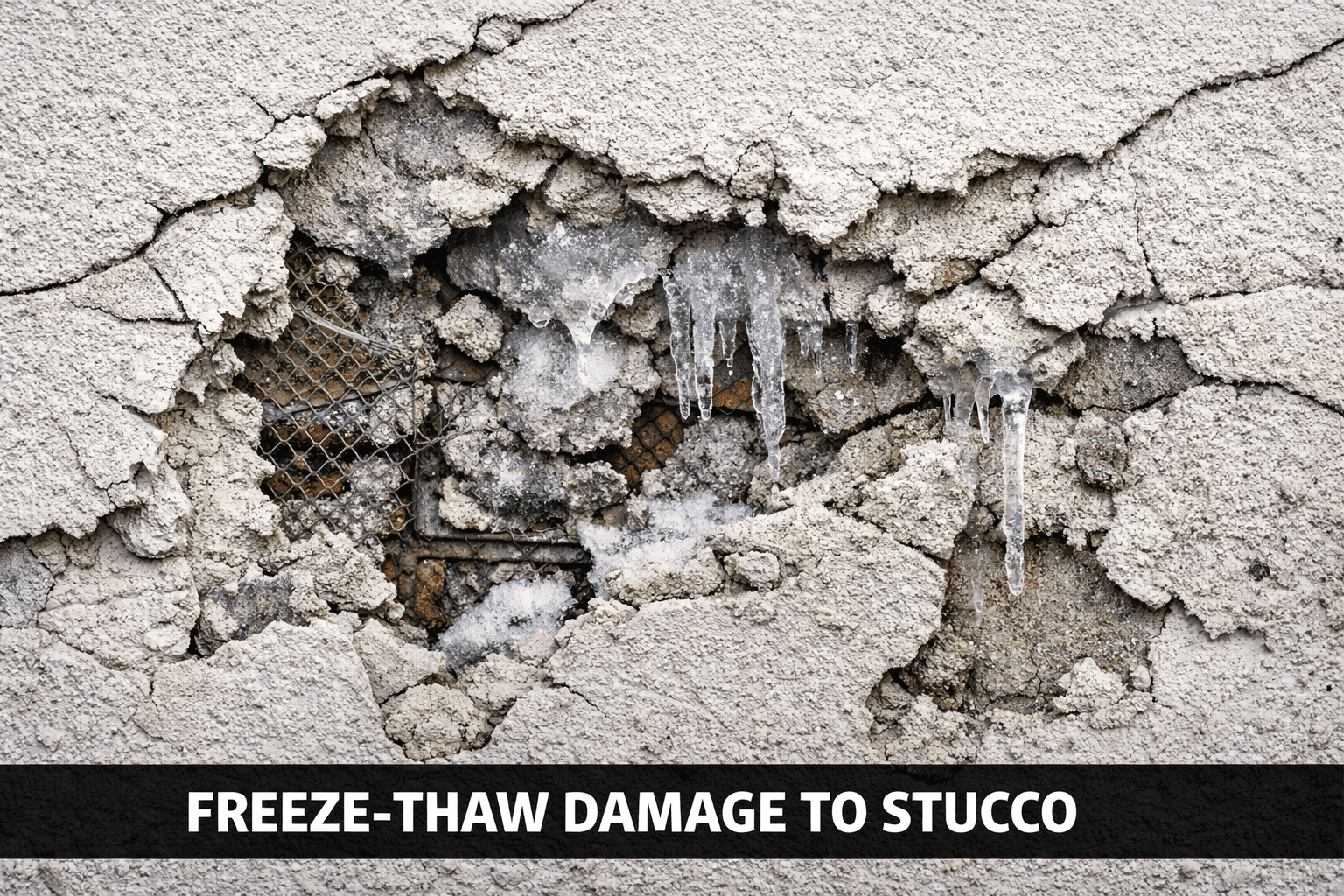
However, in freeze-thaw climates, poor stucco design can cause serious damage.
One of the most common design mistakes involves flat stucco surfaces.
Although flat surfaces may look clean and modern, they often create long-term problems.
More importantly, these problems worsen when temperatures frequently rise and fall.
Because of this, moisture becomes the biggest threat to stucco performance.
Understanding why flat stucco surfaces fail helps homeowners make better decisions.
As a result, costly repairs and structural damage can often be avoided.
This is especially important in regions with snow, ice, and seasonal temperature swings.
How Freeze-Thaw Cycles Damage Stucco
Freeze-thaw cycles occur when water repeatedly freezes and expands.
Then it thaws and contracts as temperatures rise again.
Over time, this expansion puts extreme pressure on exterior materials.
Stucco is a porous system by design.
Therefore, it naturally absorbs small amounts of moisture.
When that moisture cannot drain properly, serious damage can develop.
Flat stucco surfaces allow water to sit instead of shedding away.
Because of this, moisture penetrates deeper into the stucco layers.
Once temperatures drop, trapped water freezes and expands.
Consequently, cracks, delamination, and surface failures begin to appear.
Even worse, repeated cycles accelerate deterioration beneath the surface.
Eventually, structural components behind the stucco may become compromised.
Why Flat Stucco Surfaces Are a Design Risk
Flat surfaces prevent proper water drainage.
Instead of directing moisture away, they create collection points.
Over time, standing water becomes unavoidable.
Additionally, snow accumulation worsens the problem.
Snow melts slowly and continuously feeds moisture into the stucco.
As a result, freeze-thaw damage becomes much more aggressive.
Flat architectural details such as ledges, bands, and trim are common failure areas.
Because they lack slope, water remains in constant contact with the stucco finish.
This leads to premature aging and visible surface breakdown.
Furthermore, flat surfaces increase the risk of hidden moisture intrusion.
Water can migrate behind the stucco system unnoticed.
Eventually, interior framing and sheathing may suffer long-term damage.
The Importance of Proper Slope and Drainage
Proper stucco design always includes positive drainage.
This means surfaces should slope away from the structure.
Even minimal slope dramatically improves water shedding.
Sloped surfaces prevent water from pooling.
As a result, moisture exposure time is significantly reduced.
This directly limits freeze-thaw stress on the stucco system.
In professionally designed stucco assemblies, drainage planes are intentional.
These systems direct water out and away from vulnerable areas.
Because of this, longevity and performance are greatly improved.
At the same time, expansion joints and control joints play a critical role.
They allow natural movement without cracking.
When combined with proper slope, they reduce long-term failure risks.
Why Professional Stucco Design Matters
Stucco is not just a finish material.
It is a complete exterior system that requires expert planning.
Because of this, professional installation and design are essential.
Experienced contractors understand climate-specific challenges.
They design stucco details that account for moisture, snow, and ice.
As a result, the system performs reliably year after year.
Professional stucco design also considers transitions and penetrations.
Windows, doors, and trim must properly integrate with the stucco system.
Without correct detailing, moisture intrusion becomes inevitable.
Metro Reconstruction Services approaches stucco with long-term performance in mind.
Each project is designed to reduce water exposure and improve durability.
Therefore, homeowners receive an exterior built to withstand harsh conditions.

Long-Term Cost Implications of Flat Stucco Surfaces
Flat stucco details often lead to early repairs.
Initially, damage may appear minor or cosmetic.
However, underlying problems usually continue to grow.
Repairing freeze-thaw damage can become expensive.
In many cases, full sections of stucco must be removed.
Additionally, hidden structural repairs may be required.
Preventative design costs far less than corrective repairs.
Proper slopes, drainage, and detailing extend system life significantly.
Because of this, professional design protects both property and investment.
Over time, well-designed stucco improves home value.
It also reduces maintenance frequency.
This creates long-term peace of mind for homeowners.
When to Evaluate Your Stucco System
Homes with visible cracking or staining should be evaluated promptly.
These signs often indicate moisture retention issues.
Flat surfaces are frequently the root cause.
Additionally, peeling paint or surface bubbling signals deeper problems.
Freeze-thaw damage rarely resolves without intervention.
Early evaluation prevents escalation.
If your home experiences harsh winters, proactive assessment is critical.
Professional inspection identifies design weaknesses early.
This allows corrective planning before major damage occurs.
Why Choose Metro Reconstruction Services
Metro Reconstruction Services specializes in stucco systems designed for performance.
Their expertise includes EIFS, traditional stucco, and custom exterior solutions.
Every project considers climate-specific challenges.
Their team prioritizes proper drainage, slope, and detailing.
As a result, flat surface failures are avoided from the start.
This approach ensures durability, appearance, and long-term value.
If your stucco system includes flat architectural elements, evaluation is essential.
Professional solutions prevent costly repairs and structural issues.
Now is the time to protect your home.
Contact our team
If you’re concerned about stucco performance in freeze-thaw conditions, take action today.
Contact Metro Reconstruction Services to schedule a professional consultation.
👉 Fill out the Contact Us form:
https://metroreconstruction.com/contact-us/
📞 Or call directly: 303-543-9549
If your looking for a third-party stucco inspection, please reach out to our sister company Swift Stucco Inspections at 303.875.5843