
Could the traditional choice for your home’s exterior be the very thing compromising your building’s structural integrity? Most Boulder homeowners view window replacement as a simple aesthetic upgrade, yet 85% of the moisture intrusion cases we investigate along the Front Range result from a failure to account for how different frame types interact with the surrounding stucco or masonry. We understand you want a solution that eliminates drafts during a sub-zero January night and simplifies maintenance for those hard-to-reach second stories. You deserve a home that remains efficient and bone-dry regardless of the weather coming off the Flatirons.
In this guide, you’ll discover the critical performance differences in the single hung vs double hung debate, specifically how each choice impacts moisture management and thermal efficiency in our unique Colorado climate. We provide a professional analysis of structural integrity, specialized cleaning mechanics, and the precise flashing requirements needed to maintain a watertight exterior envelope for over 20 years. We’ll move past the surface-level marketing to examine the engineering realities that ensure your window system is built right the first time.
Key Takeaways
- Identify the fundamental mechanical differences in single hung vs double hung configurations to determine which system best preserves your home’s architectural integrity.
- Analyze how specific glass coatings and sash designs mitigate the impact of Boulder’s high-altitude UV radiation and intense wind loads on your home’s thermal efficiency.
- Protect your investment by understanding the critical relationship between window operation and the stability of your exterior envelope, especially in stucco and masonry construction.
- Evaluate the long-term maintenance requirements and hardware longevity of different window styles to ensure high-performance results for multi-story residences.
- Discover why addressing the root cause of window failure through professional project management is essential for a high-performance replacement that lasts.
Single Hung vs. Double Hung: Understanding the Fundamentals for Boulder Homeowners
Choosing the right window system involves more than simple aesthetics. It’s a critical decision regarding your home’s exterior envelope. In Boulder, where temperature swings of 40 degrees in a single day occur, the mechanical integrity of your windows dictates long-term performance and energy efficiency. The primary distinction in the single hung vs double hung debate lies in sash mobility and how that movement interacts with the building’s seal. Homeowners must consider how these mechanics impact the longevity of their siding and framing.
The Anatomy of a Single-Hung Window
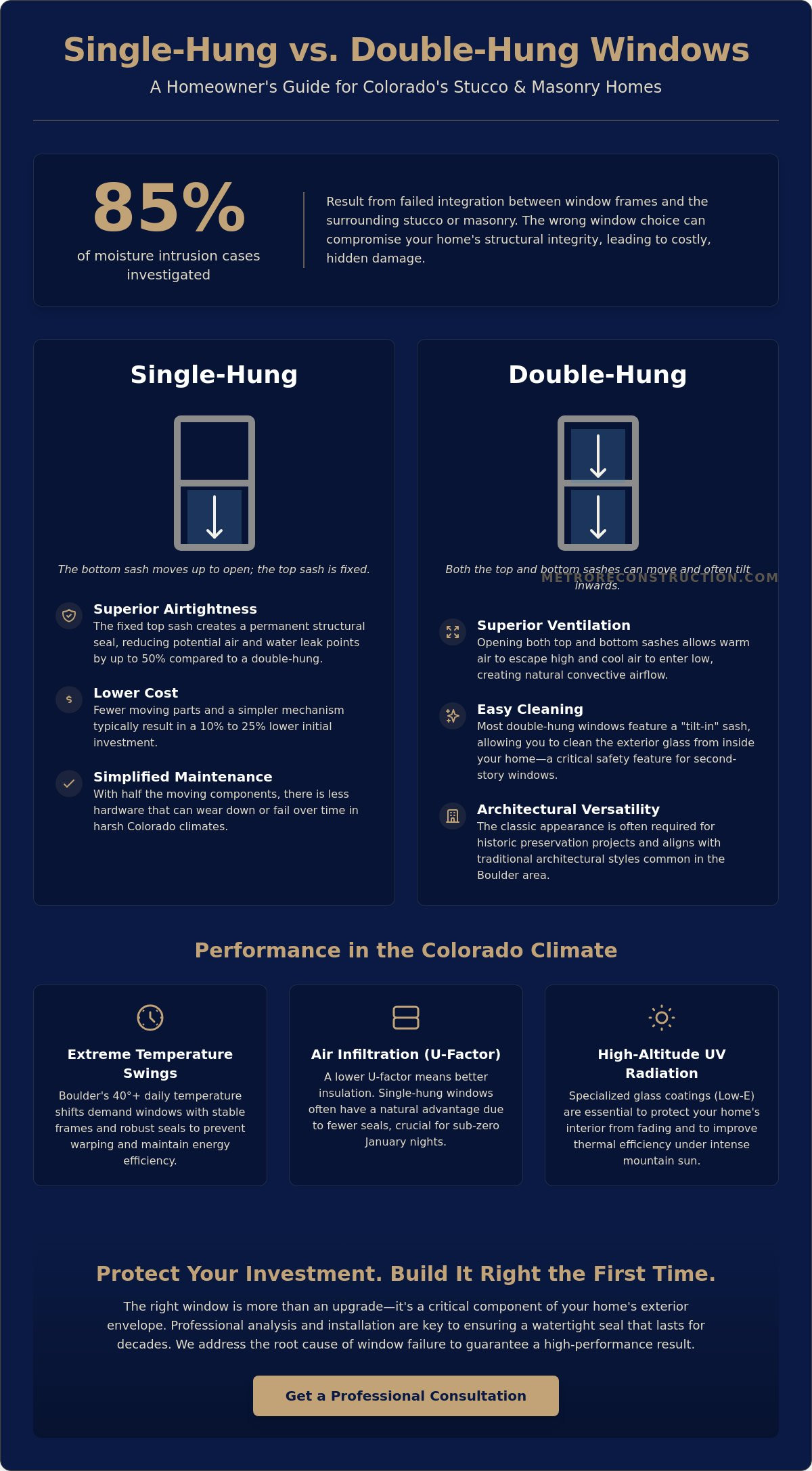
A single-hung Sash window features a fixed upper portion and a movable lower sash. This design provides inherent structural rigidity because the top glass remains sealed directly into the frame. For Boulder homeowners, this often translates to a lower initial investment. Industry data indicates single-hung units typically cost 10% to 25% less than double-hung options. Fewer moving parts lead to simplified long-term maintenance in harsh Colorado climates.
The Mechanics of Double-Hung Versatility
Double-hung units allow both sashes to slide vertically. This dual functionality facilitates superior airflow through natural convection; warm air escapes the top while cool breezes enter the bottom. The “tilt-in” feature is a primary benefit, allowing you to clean exterior glass from inside the home. This is a critical safety factor for second-story maintenance. High-performance hardware ensures these units remain airtight against high-altitude winds.
Whether you’re restoring a 1920s bungalow near Chautauqua or building a contemporary mountain retreat, the window’s profile must align with the architectural intent. Double-hung windows provide the traditional look often required for historic preservation, while single-hung units offer a minimalist appearance for modern builds. Beyond looks, the relationship between window mechanics and the exterior envelope is paramount. Improperly integrated units lead to moisture intrusion and structural decay. Selecting between single hung vs double hung requires balancing these operational benefits against your goals for home preservation and moisture management. We focus on ensuring every installation protects the root cause of potential leaks before they start, ensuring your investment is built right the first time.
Performance Metrics: Thermal Efficiency and Wind Resistance in Colorado
Boulder’s climate demands a forensic look at window performance. The technical choice between single hung vs double hung units often starts with air infiltration. Because a single-hung window features a fixed top sash, it possesses a natural advantage in airtightness. This fixed component creates a permanent, structural seal against the frame, reducing potential leak points by 50% compared to designs where both sashes move. While double-hung windows offer superior ventilation options, they rely entirely on the integrity of their weatherstripping to maintain a seal against the elements.
Airtightness and Energy Efficiency
Modern engineering has significantly closed the efficiency gap between these two styles. High-performance double-hung units now utilize multi-finned gaskets and compression seals that resist the “whistling” effect often heard during 90 mph Chinook winds. However, the simplicity of the single-hung design remains a benchmark for long-term moisture management. When we evaluate the exterior envelope of a home, we prioritize the reduction of moving parts that can wear down over time.
- Fixed Sash Advantage: The upper sash is glazed directly into the frame, eliminating a primary path for air leakage.
- Weatherstripping Integrity: Double-hung windows require precision-engineered interlocks to prevent drafts at the center rail.
- Thermal Performance: U-factor measures the rate of non-solar heat transfer through a window assembly; a lower value indicates a more effective barrier against the extreme cold of a Front Range winter.
High-Altitude Durability
At an elevation of 5,430 feet, the thin air creates a persistent pressure differential between the gas inside the insulated glass unit (IGU) and the external atmosphere. Without specialized spacers or capillary tubes, this pressure can cause the glass to bow or the seals to rupture. Boulder’s 50-degree diurnal temperature swings further complicate this by forcing materials to expand and contract rapidly. We focus on the critical physics of integrating a window into the building’s drainage plane to prevent these thermal stresses from compromising the moisture barrier.
Frame material choice is equally vital in the Front Range. UV radiation is approximately 20% more intense in Boulder than at sea level, which can cause low-grade vinyl to warp or discolor within five years. Selecting high-performance fiberglass or reinforced composites ensures the window maintains its shape despite the intense sun. When evaluating material options from durable fiberglass to premium wood, reviewing a detailed guide to pella replacement windows in Boulder County can help you understand how specific product lines meet the rigorous demands of high-altitude installation. When diagnosing seal failure or water intrusion, it’s vital to consult with a specialist who understands the root cause of the structural fatigue rather than just the visible symptoms. This comprehensive approach ensures your investment is built right the first time.
The Exterior Envelope: Why Window Choice Matters for Stucco and Masonry Homes
From a forensic reconstruction perspective, the window itself is rarely the primary cause of a leak; the failure almost always resides at the window-to-wall interface. This transition point represents the most vulnerable gap in your home’s exterior envelope. In our experience investigating property damage across the Front Range, approximately 65% of moisture intrusion cases originate from improper window installations that failed to account for the surrounding cladding. When evaluating single hung vs double hung units, you must consider how the sash weight and mechanical operation impact this delicate seal.
Double-hung windows feature two moving sashes, which introduces more complexity to the frame’s internal drainage. If a frame isn’t anchored with technical precision, the weight of the glass can cause a microscopic deflection. A shift of even 2 millimeters is enough to tear the sealant bead away from the stucco or stone, inviting water into the wall cavity. Deciding between Single-Hung Vs. Double-Hung Windows requires an understanding of these physical stresses. We prioritize moisture management by ensuring every component is built right the first time, focusing on the root cause of potential leaks rather than just the visible symptoms.
Stucco Restoration and Window Integration
Boulder homes constructed between 1995 and 2010 often utilize stucco systems that lack a dedicated drainage plane. Replacing windows in these structures isn’t a simple “plug and play” task. It requires specialized stucco repair to integrate the new unit into the existing weather-resistive barrier. Without this integration, water that naturally permeates the stucco has no path to exit, leading to saturated sheathing and structural rot. We also address “stucco cracking” at the corners, which usually signals that the window wasn’t anchored to the framing correctly, causing the window to fight the rigid exterior finish during temperature swings.
Masonry Considerations for Window Replacement
Practical Comparison: Maintenance, Cleaning, and Long-Term Value
Selecting a window style involves looking past the glass to the mechanical systems that support the exterior envelope. While single hung windows offer a lower entry price, the long-term value of the single hung vs double hung debate often tilts toward the latter for multi-story Boulder residences. The ability to tilt sashes inward allows homeowners to clean exterior glass from inside the room. This design choice eliminates the safety risks and recurring costs associated with professional ladder work on 20-foot elevations commonly found in mountain architecture.
Hardware longevity remains a critical concern in our high-altitude environment. Constant exposure to intense solar radiation and 40-degree diurnal temperature swings stresses locks, balancers, and sashes. High-performance double-hung units typically utilize heavy-duty constant force balancers. These systems withstand thermal expansion cycles better than the older spiral or block-and-tackle hardware found in budget-tier single hung models. Investing in robust hardware now prevents the need for invasive repairs five years down the road. Homeowners seeking a premium product engineered specifically for these conditions may want to explore Pella replacement windows designed for Boulder County’s high-altitude climate demands, which are built to meet Colorado’s increasingly stringent energy codes.
Maintenance Realities in the Front Range
Colorado dust, pollen, and wildfire smoke residue act as abrasives in window tracks, which can lead to premature seal failure if left unaddressed. Homeowners should inspect weatherstripping annually for signs of compression or cracking that allow air infiltration. In high-UV environments like the Front Range, standard nylon window balancers and vinyl components often show signs of brittleness or structural fatigue within 10 to 12 years. Regular lubrication of moving parts with silicone-based sprays helps maintain the integrity of the moisture management system.
Ventilation Strategies for Mountain Homes
Modern Boulder homes are often built with tight air barriers, making active moisture control a priority to prevent mold and wood rot. Double-hung windows facilitate the chimney effect. By opening both the top and bottom sashes, you create a natural pressure differential that pulls cool air in through the bottom while pushing warm, stagnant air out through the top. This passive cooling method can reduce reliance on mechanical HVAC systems during summer evenings when temperatures drop rapidly. When choosing screens, high-visibility mesh options provide 20% better airflow than standard fiberglass, ensuring your ventilation strategy isn’t throttled by poor material choices.
Real estate data from the Colorado market suggests that high-performance window upgrades can recoup approximately 67% of their cost during a home sale. Prospective buyers in Boulder view modern double-hung units as a premium feature. It signals that the property owner prioritized long-term durability over a quick aesthetic fix. This perceived value directly impacts marketability in a region where energy efficiency and low-maintenance living are top priorities for high-end buyers.
If you’re concerned about the integrity of your current window seals or hardware, contact our team to evaluate your exterior envelope and ensure your home remains protected against the elements.
Selecting the Right Fit: Metro Reconstruction’s Approach to Window Installation
Choosing between single hung vs double hung windows involves more than just selecting a tilt-wash feature or a specific sash configuration. In the volatile climate of the Front Range, the success of your project depends on the technical execution of the installation. Metro Reconstruction Services, Inc. approaches window replacement through the lens of forensic engineering. We don’t simply pull a frame and pop in a new one. We analyze why the previous unit failed, looking for evidence of moisture intrusion or structural settling. Our fixed-price reconstruction model removes the anxiety of hidden damage. If we find rot in the jack studs or headers, we address it immediately within the agreed-upon scope. This transparency ensures you aren’t surprised by rising costs halfway through the build.
While the debate of single hung vs double hung often focuses on aesthetics, our team prioritizes the technical performance of the frame within the wall assembly. We provide professional project management for every replacement because we understand that a window is a hole in your home’s defense against the elements. It must be sealed with precision. Our commitment to high-quality craftsmanship means we focus on the structural integrity of the opening, ensuring your new investment lasts for decades rather than just a few seasons.
The Forensic Installation Process
Our methodology views the window as a vital part of the entire exterior envelope. We follow a strict sequence to ensure long-term durability. First, we perform a detailed inspection of the rough opening to identify any historical water damage. Second, we integrate modern moisture management systems, including high-grade flashing and specialized sealants. These methods meet or exceed the 2021 International Energy Conservation Code (IECC) standards adopted by Boulder County. Third, we manage the transition to your home’s existing facade, whether that involves intricate stucco restoration or specialized siding integration. This holistic approach prevents the common leaks that plague standard insert installations. We ensure every component works together to repel driving rain and heavy mountain snow.
Your Partner in Home Preservation
Metro Reconstruction Services, Inc. brings 40 years of specialized experience to your property. We don’t use high-pressure sales tactics or artificial deadlines. Instead, we offer personalized project management that respects your time and your investment. Our team understands that a home is your most valuable asset. We build it right the first time so you don’t have to worry about leaks or drafts down the road. We favor substance over style, providing a level of corporate polish and technical depth that budget contractors cannot match. Our goal is to revitalize your home’s exterior while providing the peace of mind that comes from a permanent, engineering-led solution.
Secure Your Home’s Performance and Value
Choosing between single hung vs double hung windows involves more than a simple aesthetic preference. It requires a technical understanding of how each unit interacts with your home’s exterior envelope. In the varied climate of Boulder County, where wind loads often reach 100 mph, your choice impacts thermal efficiency and long-term moisture management. While single hung units offer a fixed top sash for enhanced air infiltration resistance, double hung models provide superior ventilation and simplified maintenance for upper-story stucco or masonry applications.
Metro Reconstruction brings over 40 years of construction expertise to every project. We specialize in moisture mitigation and the total exterior envelope, ensuring your installation addresses the root cause of potential leaks rather than just the symptoms. As a family-owned and operated firm, we prioritize high-performance results that protect your investment. We believe every window should be built right the first time to ensure lasting durability.
Get a Fixed-Price Window Replacement Quote from Metro Reconstruction to start your project with confidence. Protecting your home is a long-term commitment, and we’re ready to help you make the right choice for your specific property.
Frequently Asked Questions
Are double hung windows more prone to air leaks than single hung in Boulder?
Double hung windows are generally more susceptible to air infiltration because they feature two moving sashes and a horizontal meeting rail that requires complex weatherstripping. Single hung windows have a fixed top sash, which creates a more permanent, airtight seal against the frame. In Boulder, where wind gusts frequently exceed 90 mph, the simpler design of a single hung unit often provides a more robust defense for your exterior envelope.
How does high altitude affect the lifespan of double hung window seals?
High altitude and intense UV radiation in Boulder accelerate the degradation of sealants by approximately 30 percent compared to sea-level environments. The atmospheric pressure at 5,430 feet causes insulating glass units to expand, putting constant stress on the seals of double hung windows. We address the root cause of this failure by utilizing units with capillary tubes to equalize internal pressure, ensuring your installation is built right the first time.
Can I replace single hung windows with double hung without damaging my stucco?
You can transition to double hung units without compromising your stucco by utilizing a professional pocket installation or a precision full-frame replacement. Our methodology focuses on maintaining the integrity of the moisture management system to prevent water intrusion at the critical junction between the window and the EIFS or traditional stucco. We prioritize a comprehensive approach that protects your investment while upgrading your home’s functionality and ventilation.
What is the average cost difference between single and double hung windows in Colorado?
Double hung windows typically cost 15 to 25 percent more than single hung units according to the 2023 industry benchmarks for the Front Range. This price variance covers the additional hardware, balances, and specialized weatherstripping required for two operable sashes. When evaluating single hung vs double hung options, it’s vital to consider how the increased mechanical complexity affects your long-term maintenance schedule and the overall performance of your exterior envelope.
Which window type is better for homes in high-wind areas like Boulder County?
Single hung windows are the superior choice for high-wind areas because the fixed upper sash provides greater structural rigidity during extreme weather events. Comparing single hung vs double hung performance shows that fewer moving parts lead to a significant reduction in frame racking and air whistling. In Boulder County, where downslope winds reach 75 mph, a more stable window frame is essential for long-term moisture management and structural durability.
How often should I inspect the seals on my windows in the Front Range?
You should conduct a technical inspection of your window seals at least twice annually, specifically during the spring and autumn months. Colorado’s climate can see temperature swings of 50 degrees in 24 hours, which causes rapid expansion and contraction of the window frames. Regular monitoring allows you to identify failing components before they lead to rot or moisture intrusion within the exterior envelope, ensuring your home remains high-performance and dry.
Does Metro Reconstruction offer fixed-price quotes for window and stucco projects?
We provide comprehensive, detailed proposals that reflect a forensic understanding of your home’s specific requirements rather than offering vague estimates. Our team identifies the root cause of any existing failures in your window or stucco systems to ensure the solution is permanent. This professional transparency ensures you aren’t surprised by hidden costs, as we’re dedicated to the principle that every project must be built right the first time.
Is it worth upgrading to fiberglass frames for double hung windows in Boulder?
Upgrading to fiberglass is a wise investment because the material expands and contracts at a rate nearly identical to glass, reducing seal stress by 40 percent. This thermal compatibility is crucial in Boulder, where extreme temperature shifts can compromise the seals on standard vinyl frames. Fiberglass provides the structural integrity needed for a high-performance exterior envelope, offering a durable, low-maintenance solution that protects your home for decades through harsh mountain winters.